1. Military Origins: Where the Design Comes From
Landing craft were born from large-scale amphibious operations. During World War II, the Allies designed flat-bottomed, shallow-draft boats with bow ramps to land troops and equipment on enemy shores without docks, and during the Normandy landings more than 4,000 landing craft put tanks, trucks and soldiers directly onto the beaches. These early landing craft were mostly steel, simple in structure and built for a single purpose, but they established the two principles that still define civilian landing craft: they work without a dock, and they land directly on the beach. After the war, many decommissioned landing craft were bought by civilians and put to work, which is why modern civilian landing craft still keep the bow ramp and flat bottom.
2. Early Civilian Use: Repurposed Military Boats
In the 1950s and 1960s, coastal communities found these beach-capable craft very useful in peacetime. Fish farmers used them to carry feed to cages with no docks, island residents hauled building materials and everyday supplies, and survey teams delivered drilling rigs to remote beaches. Most early civilian landing craft were converted military boats: durable but very heavy, with steel hulls that needed frequent rust removal and repainting, so running costs were high. Still, this period showed the commercial value of landing craft and created demand for craft designed for civilian work.
3. The Materials Revolution: The Rise of Aluminum Landing Craft
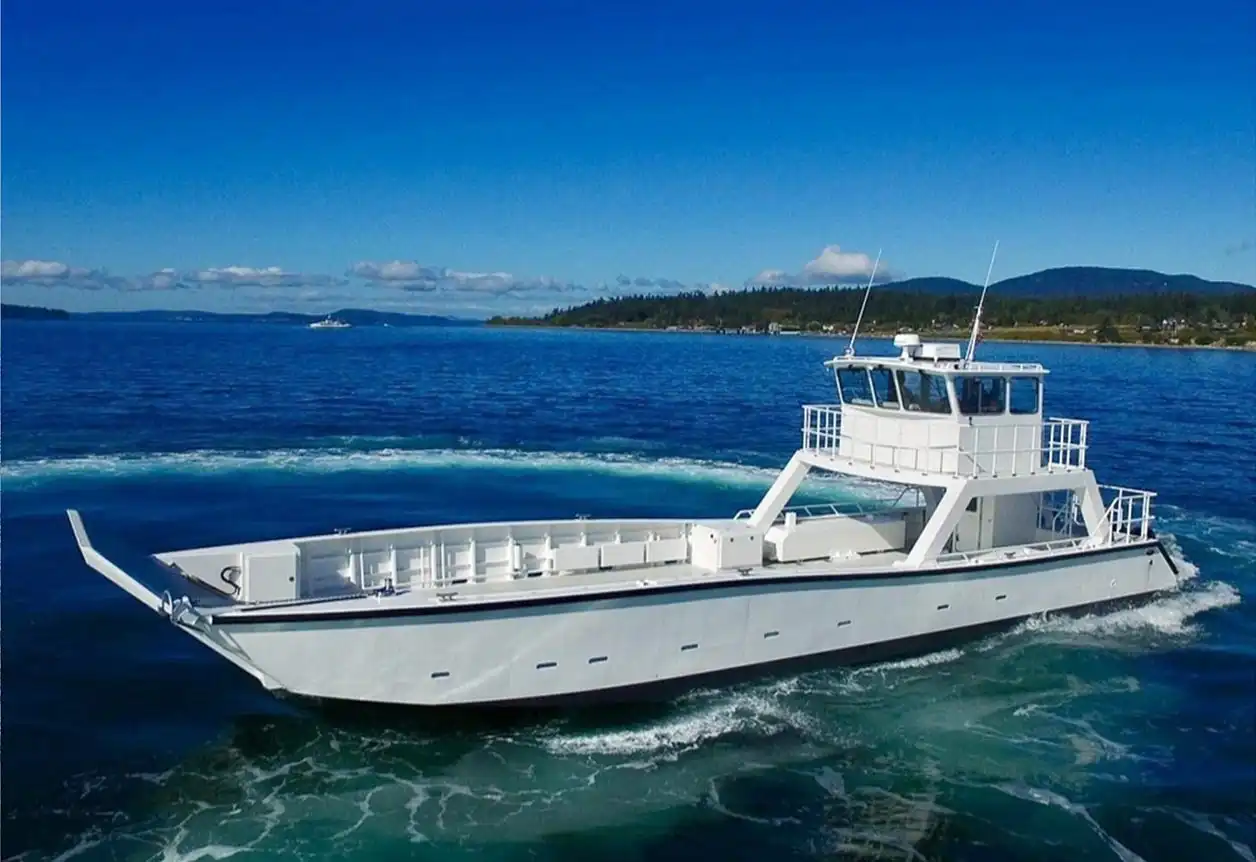
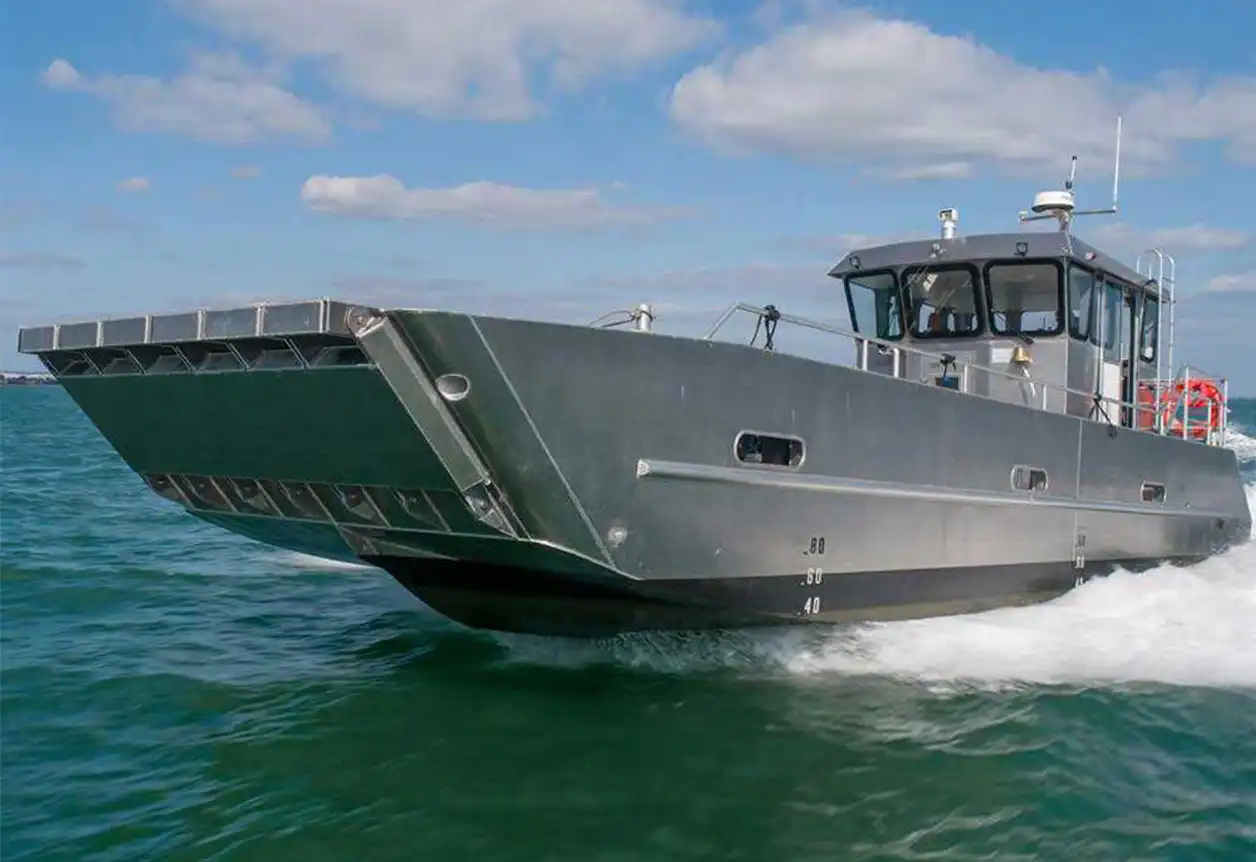
The move from steel to aluminum alloy was the most important step in the development of civilian landing craft. Marine-grade aluminum such as 5083 alloy is only one-third the density of steel, yet strong enough to withstand beach landings. An aluminum hull weighs 30% to 50% less than a steel hull of the same size, so the landing craft can carry more at the same draft or draw less water with the same load. Marine-grade aluminum also resists seawater corrosion naturally, so the regular repainting steel boats need is no longer necessary and maintenance costs fall sharply. These advantages turned civilian landing craft from heavy but durable boats into light, economical, low-maintenance work tools. As a captain with thirty years of experience told us: “Since switching to an aluminum boat, the money I save on repainting each year is enough to take my whole family on a vacation.”
4. Commercialization: Standard Sizes and Payloads
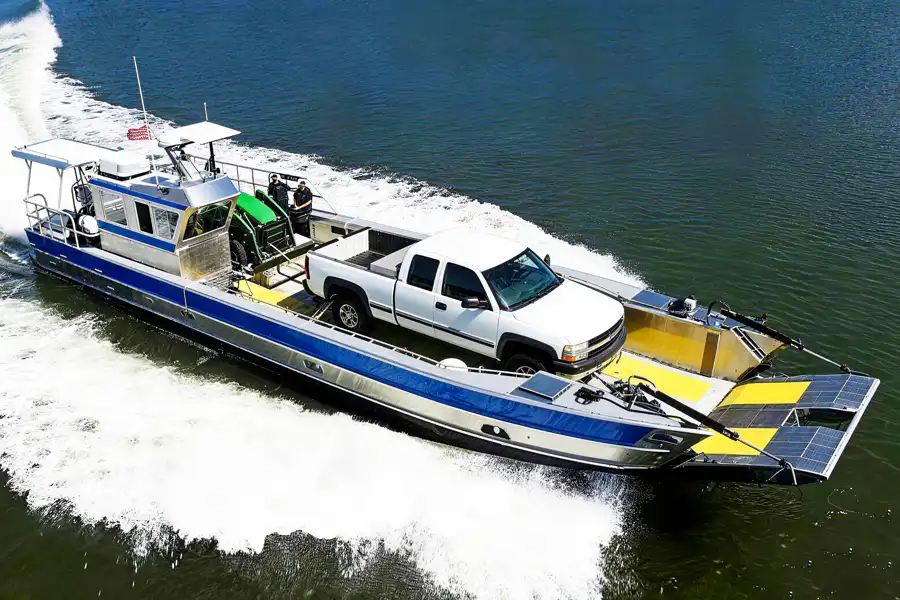
As materials and building methods matured, civilian landing craft settled into standard sizes and payload classes. The 7.9-meter model carries 1 ton and suits small aquaculture farms and short resupply runs; the 9- to 10-meter models carry 3 to 4 tons, enough for pickup trucks or small construction machinery, and are the mainstay of island logistics; the 12- to 14-meter models carry 6 to 10 tons and can take two trucks at once for large construction projects and port supply; and models over 18 meters serve passenger-cargo services and heavy logistics. This clear structure lets buyers choose a model by payload and operating depth, much like choosing a truck. Standardized production has also brought more consistent quality and faster delivery.
5. Diversification: From Cargo Carrier to Multi-Role Platform
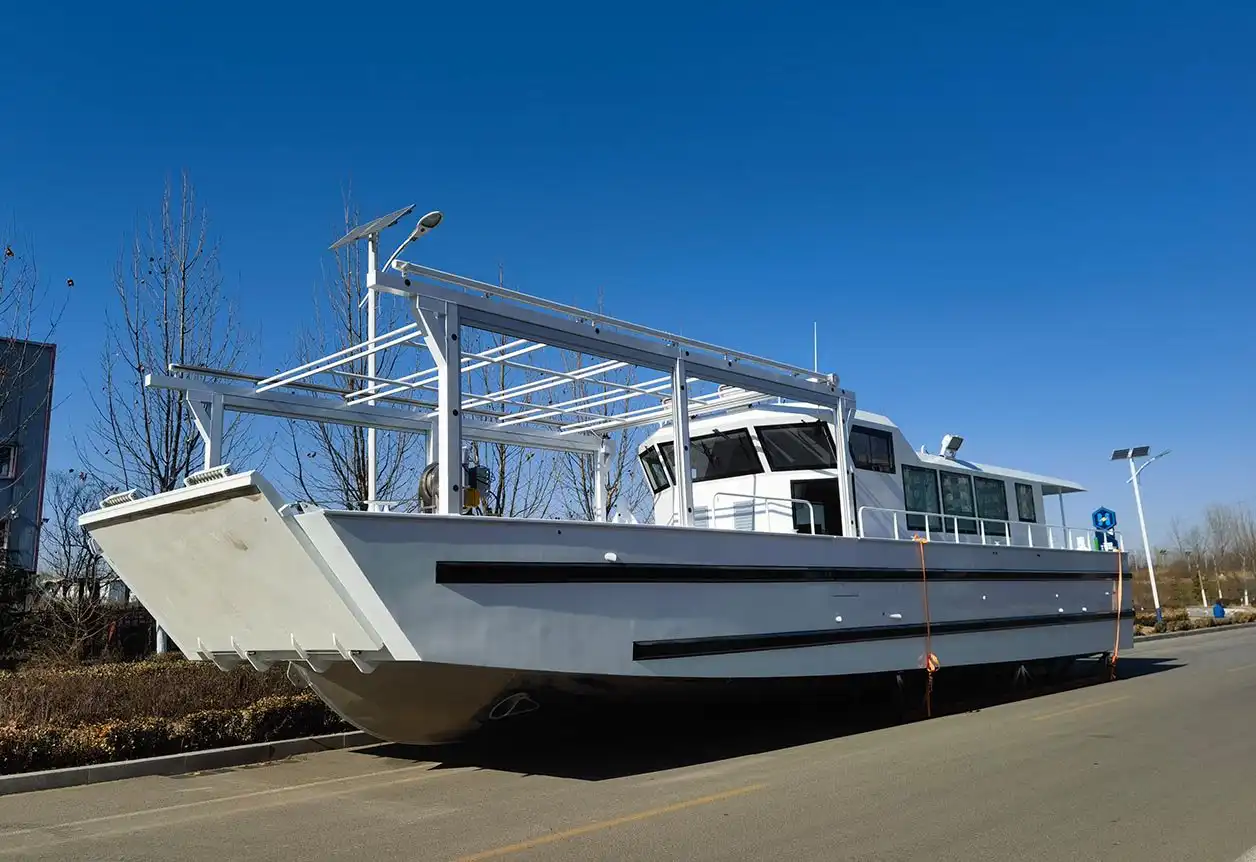
Today, civilian landing craft are much more than cargo carriers. Builders offer passenger-cargo versions with seats and awnings for island-hopping tours, engineering support versions with deck mounts for cranes or drilling equipment, and emergency response versions with reinforced compartments for rescue supplies and medical teams. Aluminum is easy to fabricate, which makes this kind of customization practical. When a client wanted to turn a 9-meter landing craft into a dive support boat, we fitted a folding ladder and scuba tank racks at the side door and finished the work in a week, a level of flexibility steel boats find hard to match. For small businesses, an aluminum landing craft that can handle several jobs means several revenue streams from one investment.
6. Specialized Manufacturing: The Growing Role of Chinese Builders
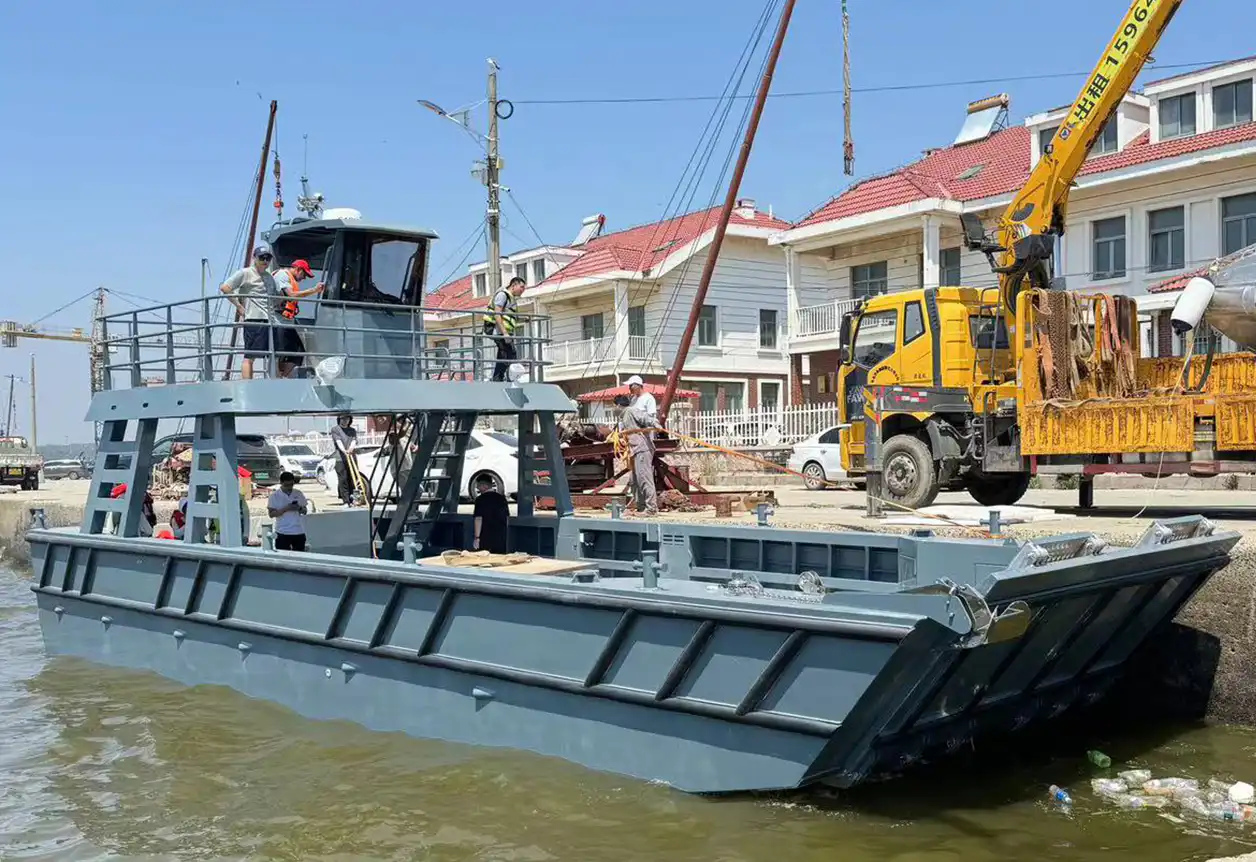
From the mass production of British and American shipyards in World War II to today’s global supply chains, the center of civilian landing craft manufacturing has moved east. Chinese builders such as Poseidon Boat now produce aluminum landing craft at scale and meet international standards in material certification (CCS, CE), welding (double-sided full-penetration welds with non-destructive testing) and custom design. Poseidon Boat’s shipyard covers 21,000 square meters and employs more than 300 people, including over 100 certified welders. Our range runs from 7.9 to 21 meters, and we have delivered landing craft to more than 30 countries and regions. For B2B buyers, that means shorter lead times, competitive prices and dependable quality, and an experienced manufacturer is a far safer choice than an unknown low-cost builder.
7. Looking Ahead: Electrification and Smart Technology
The next stage for civilian landing craft is already taking shape. Electric propulsion is starting to appear on small and medium-sized landing craft, and its zero emissions and low noise make it well suited to ecologically sensitive waters. Autonomous navigation and remote monitoring are also being applied, letting owners track a craft’s position, fuel use and mechanical condition in real time. These technologies are still at an early stage, but forward-looking owners are already watching them. Over the next decade, civilian landing craft will become cleaner, smarter and more efficient, and lightweight marine-grade aluminum hulls are well placed to carry these new systems. If you are planning a long-term investment, keep these trends in mind so that today’s purchase also fits tomorrow’s needs. Talk to us about your plans and we will help you choose a landing craft that can grow with your operation.
To turn these trends into a specification for your own craft, see our landing craft buyer’s guide.