I. Don’t Ask “How Far Can It Go?”—Ask “How Far Can It Go at Full Load?”
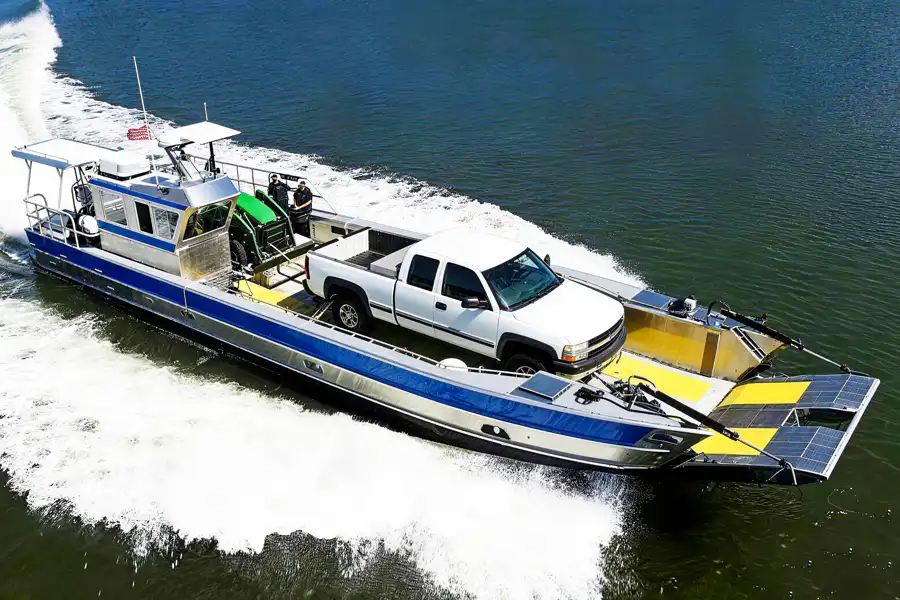
Many buyers, when looking at range, tend to immediately check the highest number listed in the product manual. However, that figure is typically measured under light load, ideal sea conditions, and at economical speed. In real-world operations—with cargo on board, fighting the current, and factoring in safety margins—the usable range is often reduced by 30%. A 42-foot aluminum landing craft with a full load of 5 metric tons and cruising at 28 knots has a range of about 380 nautical miles; whereas a small boat cruising at 23 knots might have a range of only 135 nautical miles. The difference isn’t in the fact that it’s “aluminum”—it’s in how much you’re carrying, how fast you’re going, and how much fuel reserve you’ve left in the tank. Before making a purchase, ask yourself: How far can I go when fully loaded?
II. The Range of an Aluminum Landing Craft Depends on the Balance Between Length and Payload
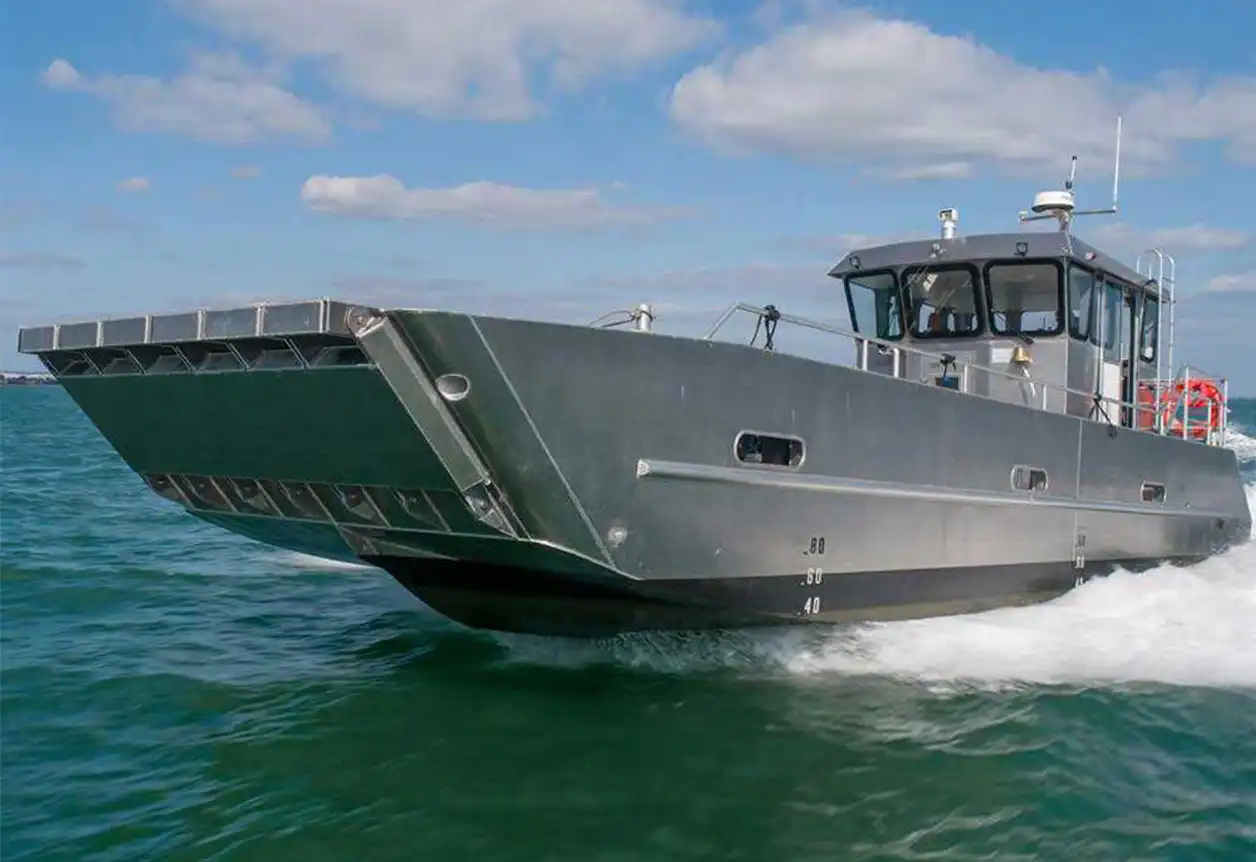
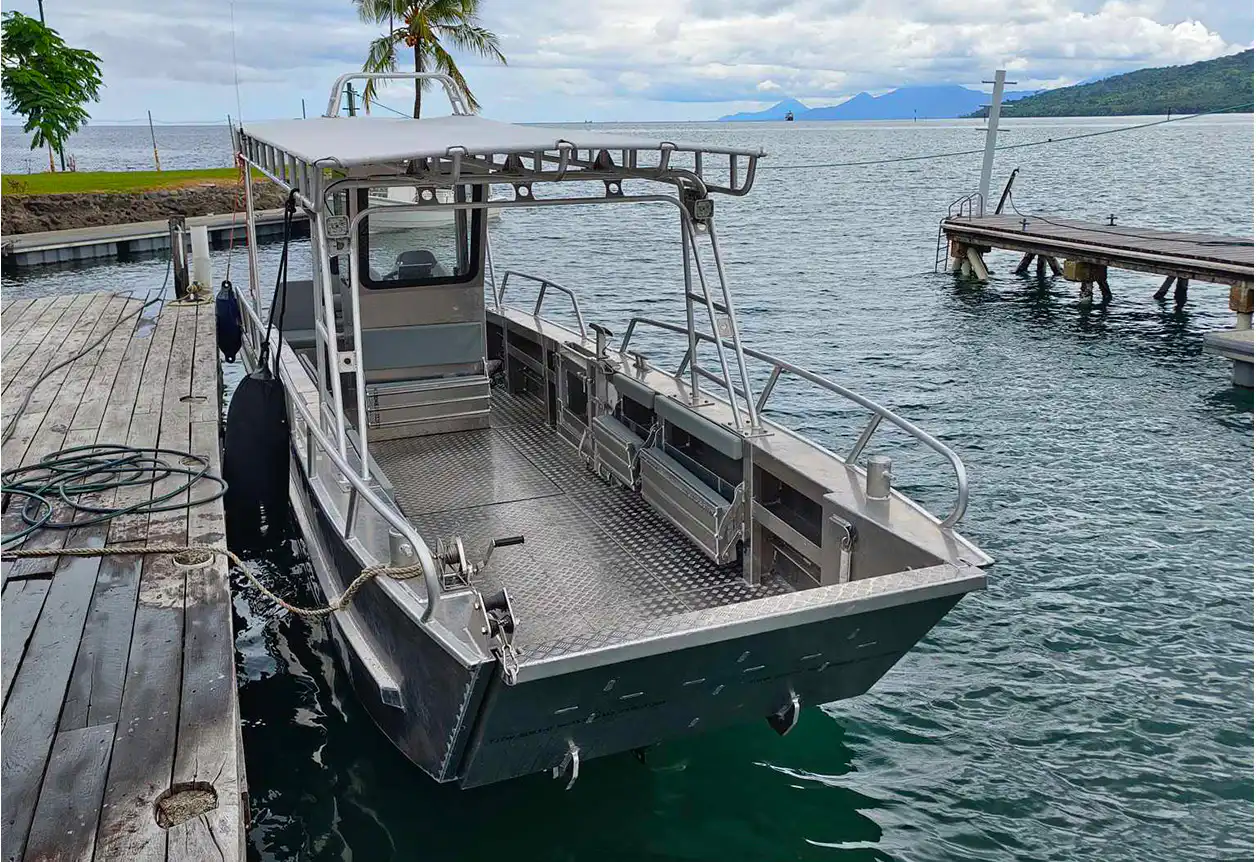
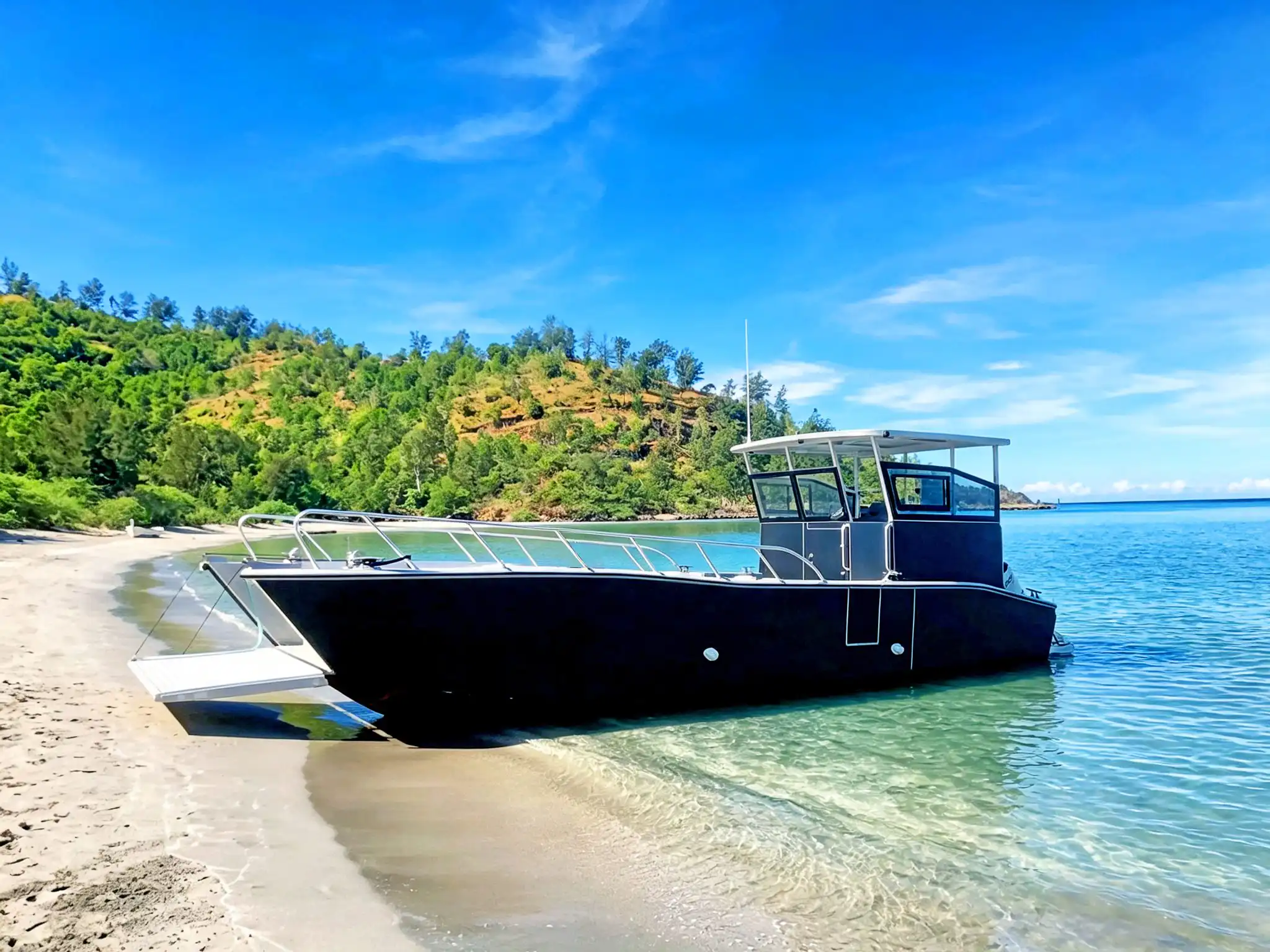
The boat’s length determines fuel tank capacity and maximum payload, while the payload in turn affects fuel consumption and actual range; these two factors are variables that must be considered together. Aluminum landing craft measuring 7.9–9 meters in length with a payload capacity of 1–3 metric tons are suitable for routine aquaculture resupply and short-distance transport in shallow waters, where the required range is typically within a one-day round trip; 10–12-meter vessels with a 4–6-metric-ton capacity are suited for island freight and passenger transport; 14–15-meter vessels with a 5–10-metric-ton capacity can carry vehicles and small equipment; and 18–21-meter vessels with a 15–30-metric-ton capacity are required for large-scale logistics and ferry operations. Opting for a slightly longer vessel does provide more fuel capacity and cargo space, but it also increases fuel costs and imposes stricter berthing requirements. A longer range isn’t necessarily better—it’s only beneficial if it aligns with your actual operational radius.
III. 5083, 5086, 5052: How Aluminum Alloy Grades Indirectly Affect Range
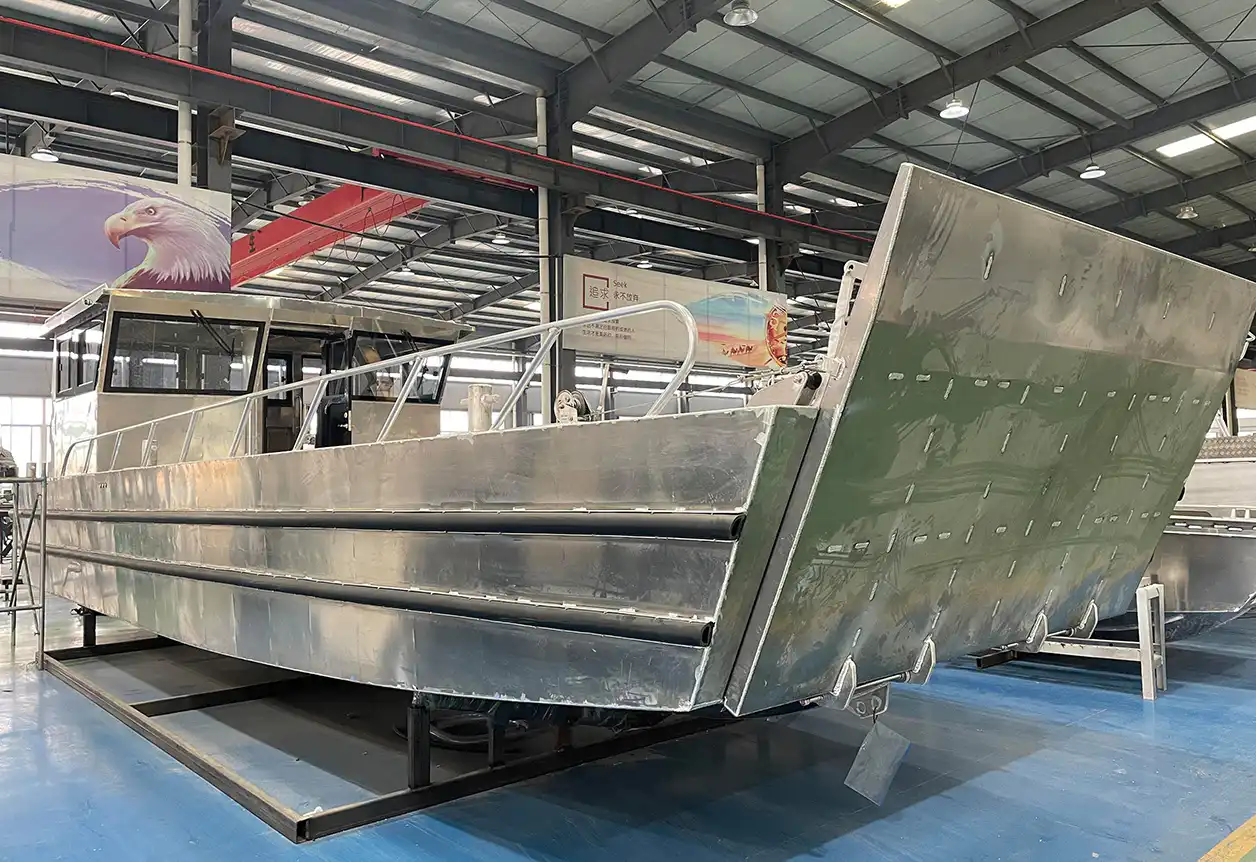
One of the underlying variables affecting range is weight, and the choice of aluminum alloy grade directly impacts structural weight and long-term operating costs. The 5083 aluminum-magnesium alloy has low density and a balanced combination of corrosion resistance and weldability, making it a common choice for hull bottom outer plates and main structural elements on the sides; the 5086 alloy offers outstanding corrosion resistance and is often used for decks and hull bottom outer plates; 5052 offers good fatigue strength at a lower cost and is commonly used for internal components and general sheet metal. Compared to steel landing craft of the same size, aluminum landing craft can reduce fuel consumption by approximately 25% and maintenance costs by about 60%. These savings in weight and expenses ultimately translate into lower operating costs per nautical mile. Choosing the right grade is not merely a display of materials science expertise; it ensures that range figures remain valid over a five-year operational cycle.
IV. Compared to Other Materials, the “Range Advantage” of Aluminum Landing Craft Lies Not in the Fuel Tank, but in Weight
Fiberglass is corrosion-resistant and low-maintenance, but it is heavier than aluminum alloy for the same dimensions, limiting both load capacity and range with the same fuel capacity; steel hulls offer high strength but have greater deadweight, requiring more fuel to achieve the same range, and anti-corrosion coatings represent an ongoing expense. Aluminum alloy isn’t positioned as offering “absolute peak performance,” but rather as striking a balance—more favorable for small businesses—between weight, corrosion resistance, maintenance costs, and initial construction costs. For operators who must run the boat daily, load cargo, and calculate fuel costs, this balance itself is part of the range. Every kilogram of weight you save ultimately translates into a few more nautical miles of range.
Recommendations for Selecting a Model: Deriving Range Requirements from Your “Mission Profile”
Start by noting three figures: the maximum one-way distance, typical single-trip payload, and the number of round trips per day. If the one-way trip is within 20 nautical miles and the payload is less than 3 metric tons, a 7.9–9-meter aluminum landing craft will have sufficient fuel capacity and cruising efficiency; if the one-way trip exceeds 40 nautical miles and requires transporting vehicles or equipment, models over 14 meters in length with a payload capacity of 5–10 metric tons are worth considering. Also, confirm whether the fuel tank can be upgraded to a larger capacity or if there are interfaces for modular auxiliary fuel tanks. The definitive answer to range isn’t found on a single page of a product manual—it’s in your route schedule. Once you’ve clearly defined these three figures, you’re halfway to selecting the right vessel.