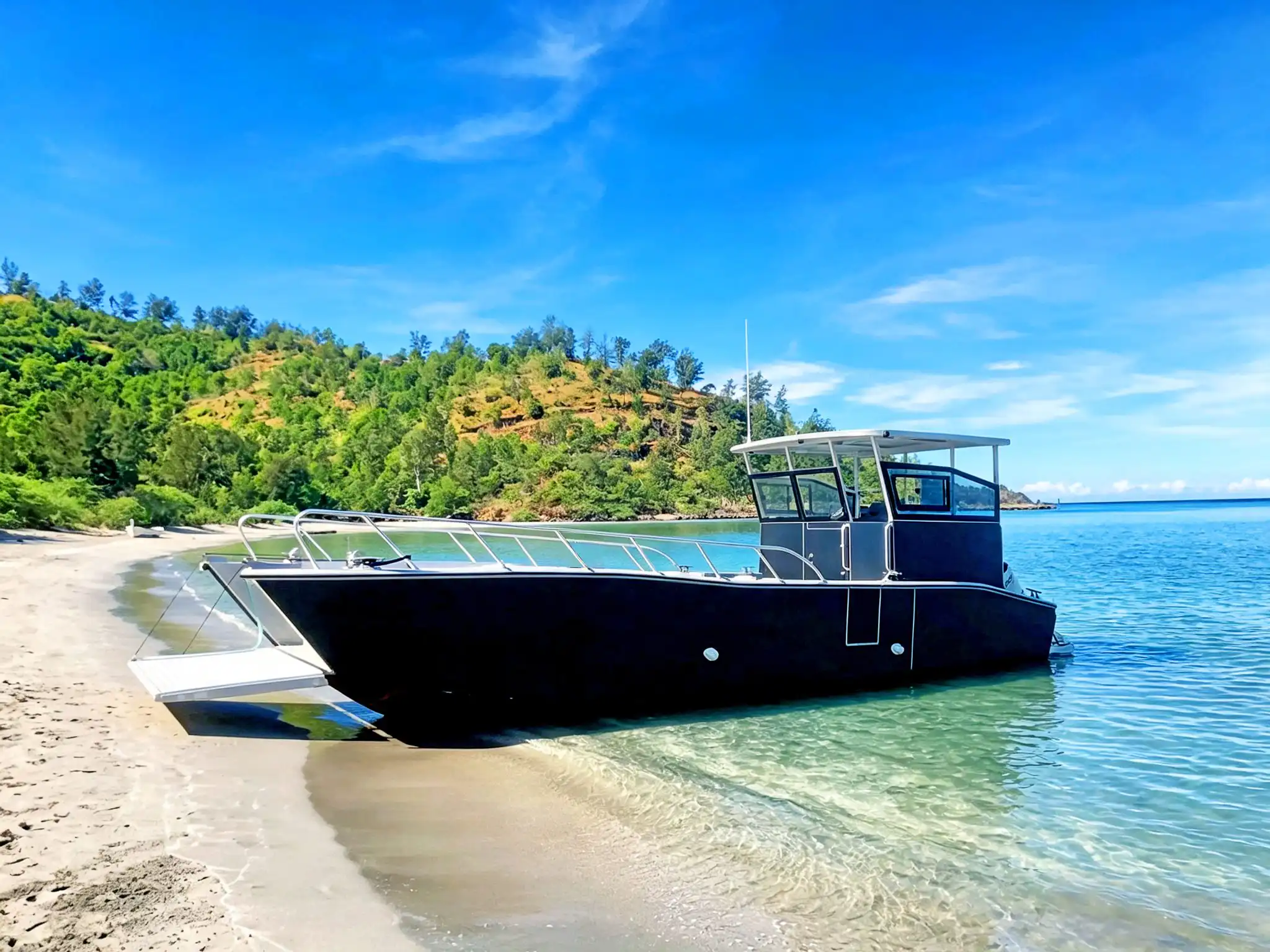
1. Shallow Draft and Direct Beaching: The Core Capabilities
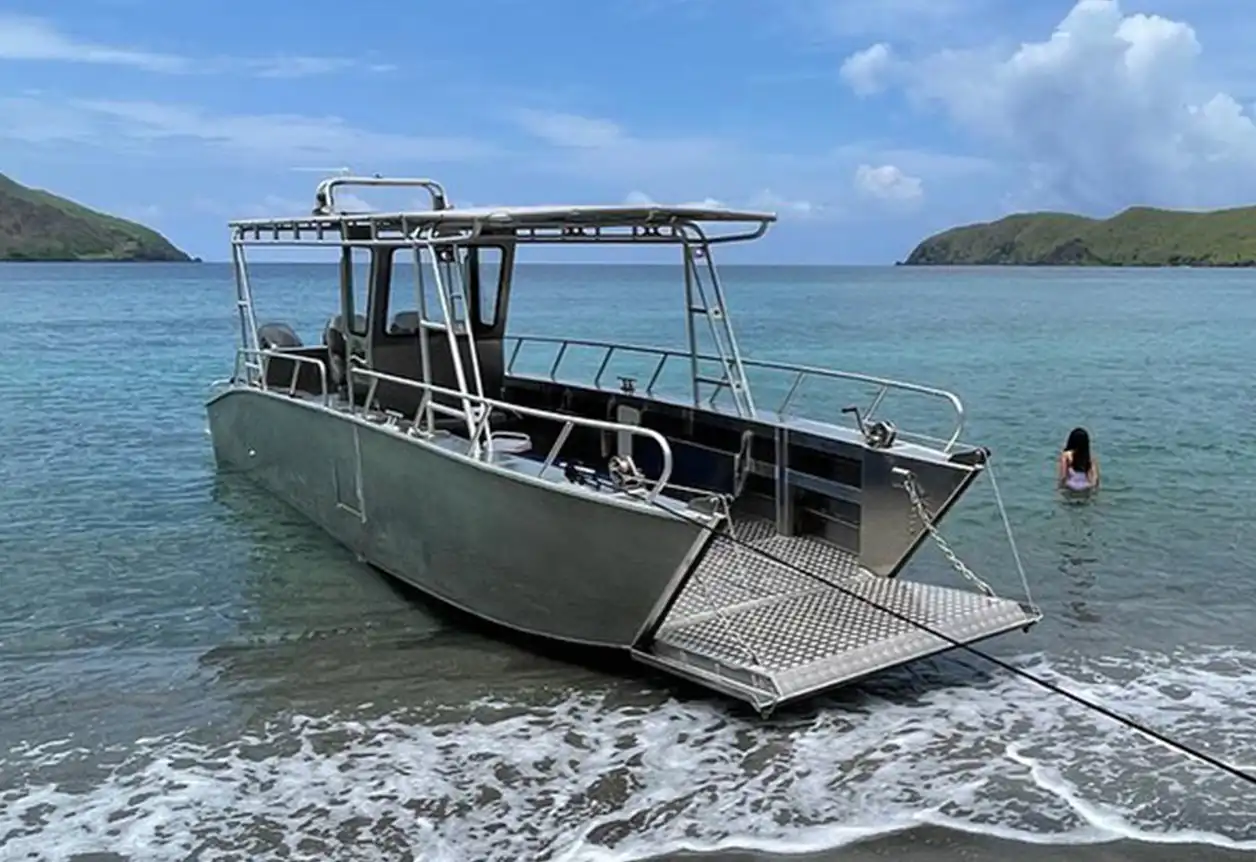
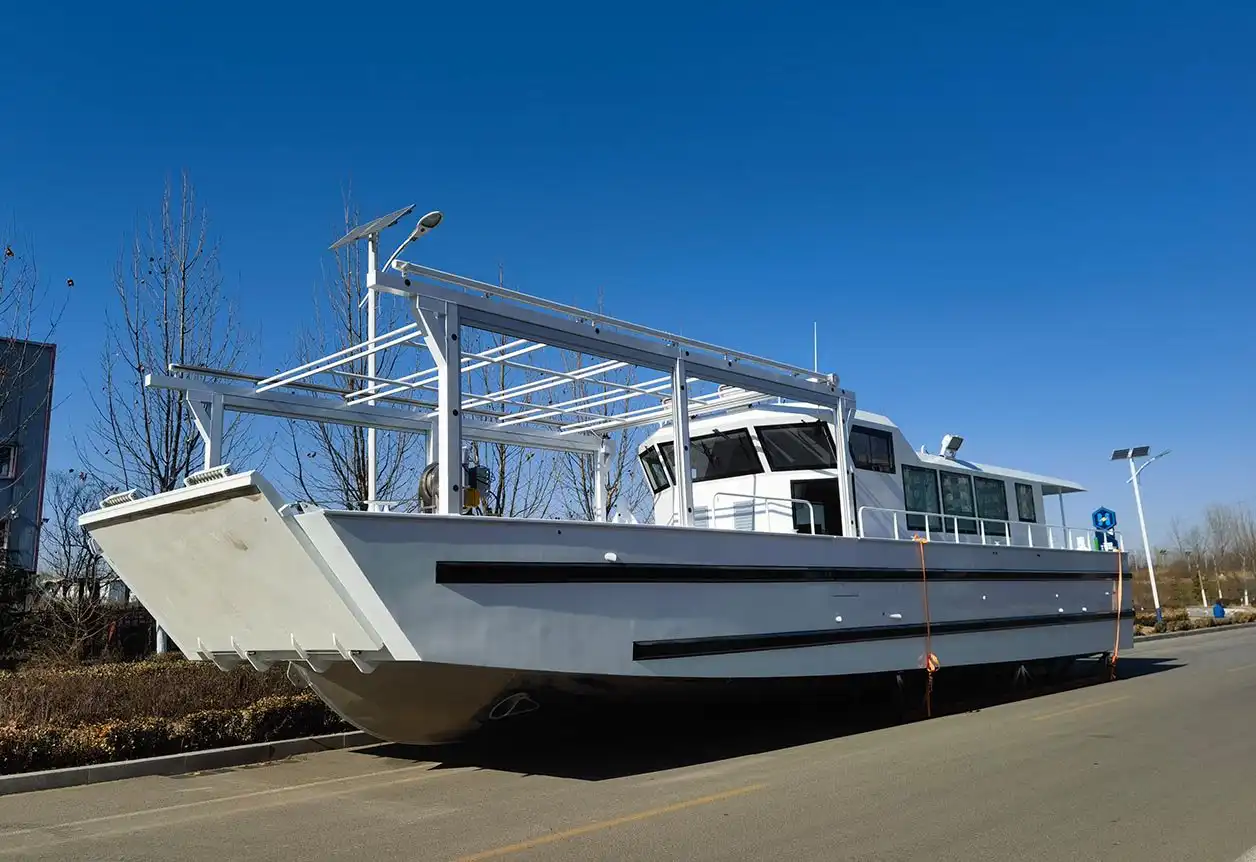
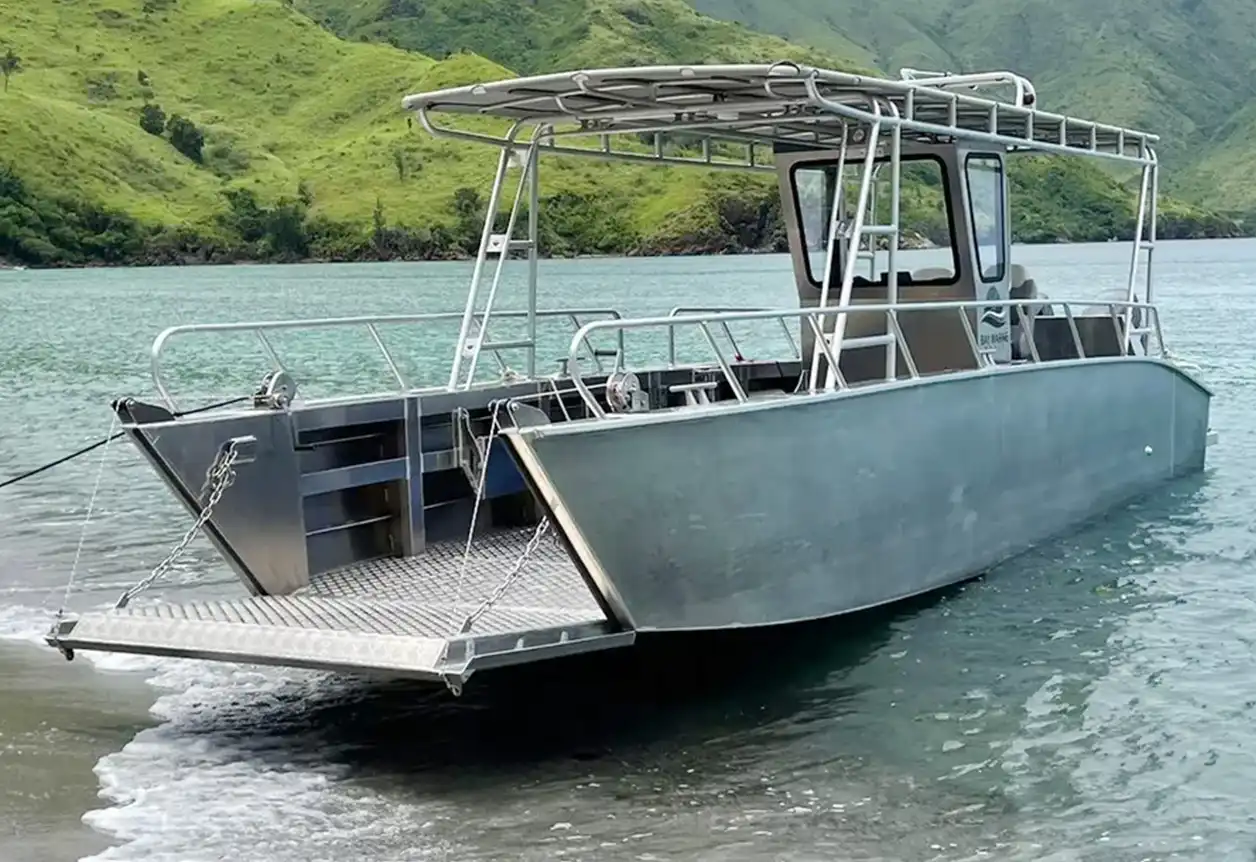
What sets civilian landing craft apart from other workboats is their very shallow draft and their ability to land directly on a beach. The 7.9-meter aluminum landing craft, for example, draws just 0.35 meters fully loaded and carries 1 ton; the 9-meter wide-body version draws as little as 0.31 meters and carries 3.5 tons, enough for a pickup truck or 3 tons of building materials; the 10-meter model draws 0.4 meters and carries 4 tons, enough for a small excavator; and the 11-meter model draws 0.31 meters and carries 5 to 6 tons. All of these figures point to one core capability: on islands, tidal flats and riverbanks with very shallow water and no docks, a landing craft can run straight onto the beach, lower its bow ramp and roll cargo on and off. For island resorts, aquaculture farms and coastal construction crews, this removes the need for fixed docks, saving the large cost of building one and the long approval process that goes with it. A client running a resort in the Philippines worked out that a simple roll-on/roll-off dock would cost $200,000, while a landing craft costs far less and can work from almost any beach.
2. Marine-Grade Aluminum Hulls: Light Weight and Corrosion Resistance
Almost all professional civilian landing craft are built from marine-grade aluminum, and 5083-H116 aluminum-magnesium alloy is the most widely used grade. 5083 aluminum weighs only about one-third as much as steel and has a tensile strength of 305 to 420 MPa, combining strength with light weight. Marine-grade aluminum forms a dense oxide film on its surface that resists chloride attack in seawater, and the H116 temper is specifically tested for resistance to exfoliation and intergranular corrosion, so it performs reliably in salt spray and seawater. Aluminum landing craft therefore do not need the regular rust removal and repainting that steel boats require, which greatly reduces maintenance costs. One customer worked out that his steel boat cost $3,000 a year in painting alone, a cost that disappeared when he switched to aluminum. The lighter hull also leaves more capacity for payload and is one of the reasons landing craft can achieve such a shallow draft.
3. A Multi-Role Deck: One Landing Craft for Several Jobs
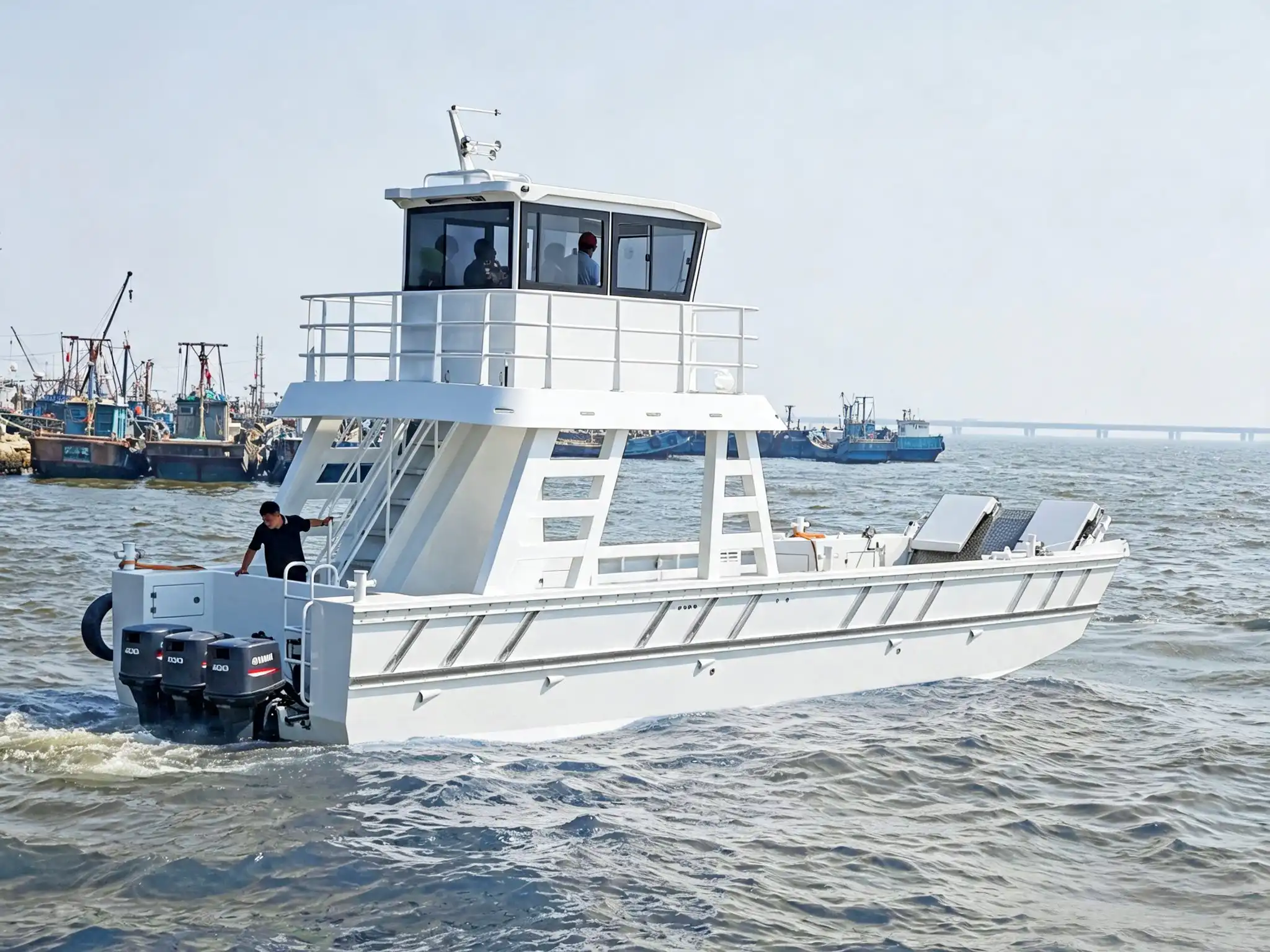
Civilian landing craft also stand out for their flexible deck layouts. In cargo mode, the deck is flat and open with plenty of lashing points for vehicles, construction machinery or bulk building materials. In passenger mode, folding seats and awnings can be fitted; with all seats in place, some models can carry dozens of passengers, and with the seats folded away, the deck becomes a work platform for four-wheel-drive vehicles, minibuses or palletized cargo. Models of 11 meters and above can also be fitted with an enclosed restroom, a galley area and storage lockers for comfort on longer trips. Marine-grade aluminum is easy to fabricate, which makes these changes practical: seat bases, lashing rails and partitions can all be made removable, and a conversion usually takes no more than half a day. For owners with varied work, an aluminum landing craft can switch between cargo, passengers and engineering support, making much better use of the craft.
4. How Civilian Landing Craft Differ from Military Craft and Other Workboats
To understand civilian landing craft, it also helps to see how they differ from military landing craft, conventional cargo ships and specialized workboats. Military landing craft prioritize protection and assault speed, while civilian versions focus on cargo efficiency, operating costs and comfort. Conventional cargo ships depend on docks, and specialized workboats usually do only one job. A civilian aluminum landing craft, by contrast, is a multi-purpose transport platform that does not need a dock: its shallow draft gives it access, its light aluminum hull gives it payload efficiency and fuel economy, and its flexible deck lets it adapt to different work. For small business owners, choosing a civilian landing craft means finding the right balance between carrying more and reaching more places. If you are not sure which size suits you, tell us your cargo types and typical routes, and we will recommend a model.
To compare sizes, payloads and layouts across the range, read our aluminum landing craft buyer’s guide.