1. The Numbers: What a 0.3–0.7 m Draft Means
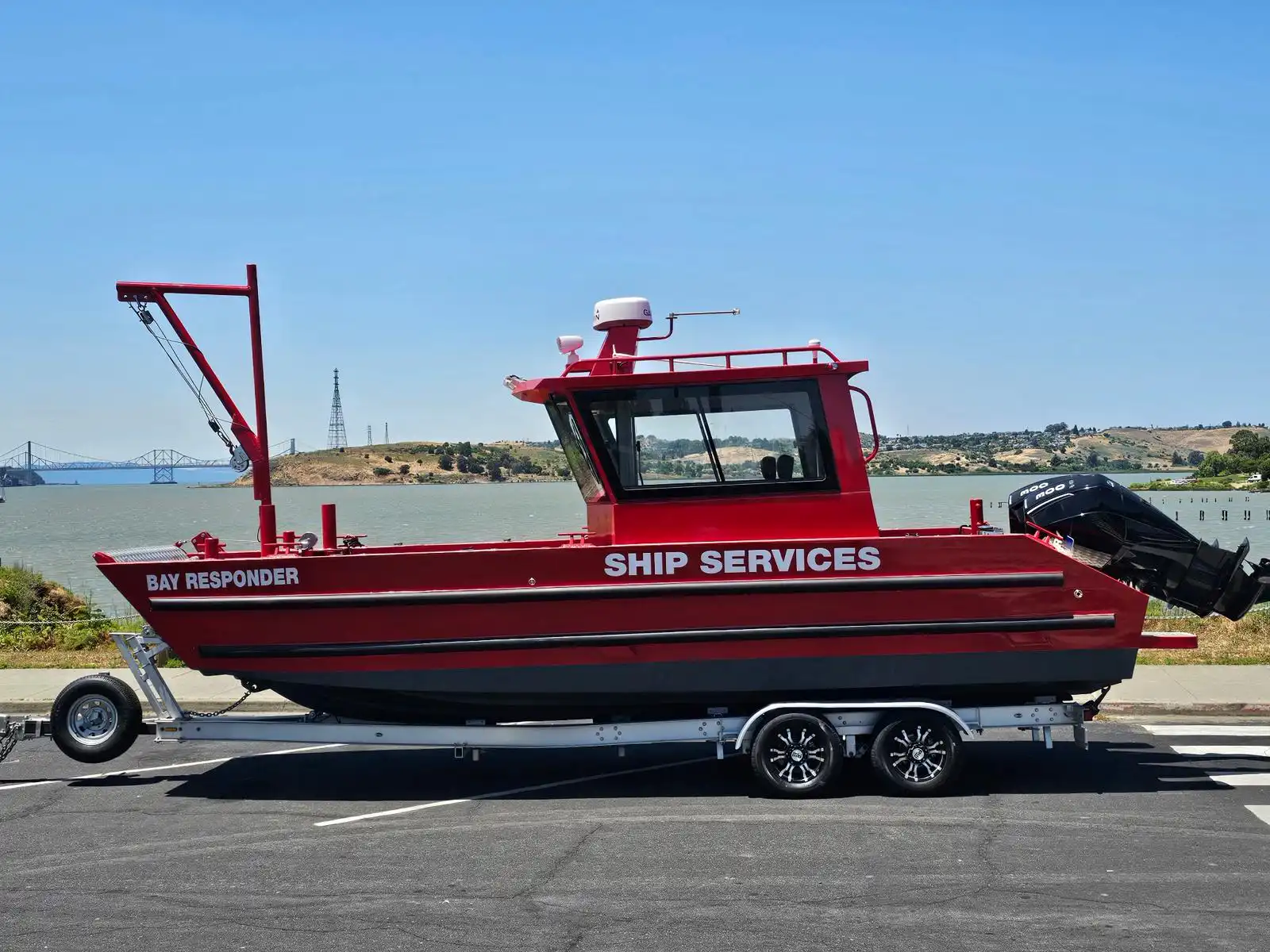
The key measure of shallow-water landing ability is draft, the depth of the hull below the waterline. The shallower the draft, the closer the landing craft can get to shore. Our 9-meter aluminum landing craft, for example, draws just 0.35 meters, and the 14-meter model draws 0.7 meters, while ordinary cargo boats usually draw 1.5 meters or more. At low tide, when ordinary boats have to wait offshore, landing craft can keep working. For the same craft, every 10 centimeters less draft lets it come several meters closer to the shore, and in areas with large tidal ranges that can be the difference between landing and not landing. For operators who work often in the intertidal zone, a few dozen centimeters of draft decide whether the job can go ahead.
2. Flat-Bottomed Design: Sliding onto the Beach
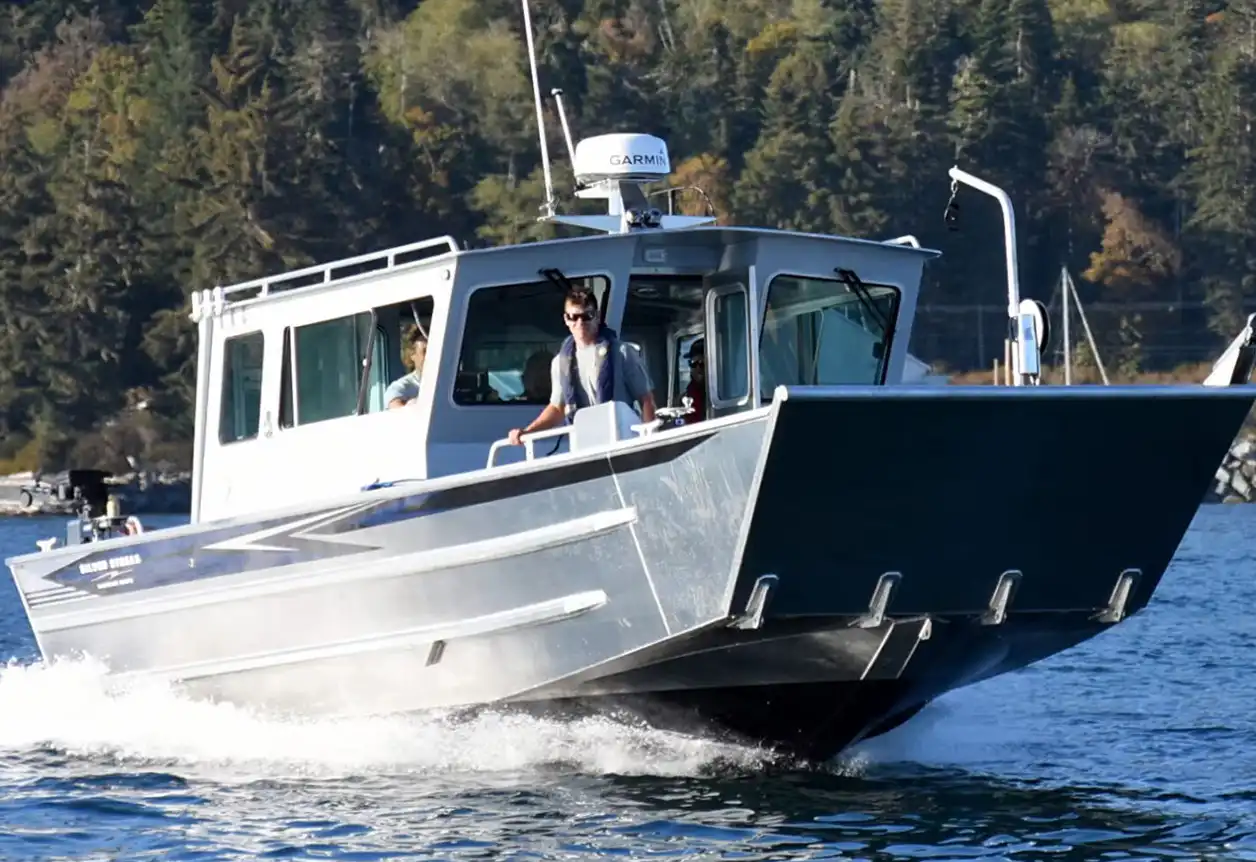
Shallow draft is only the start; what really lets a landing craft come ashore is its flat or shallow-V bottom. The rounded hull of a cargo boat is like an egg: once it touches the seabed, it sticks. A landing craft’s flat bottom meets the beach over a wide area, so the craft slides up like a sled rather than digging in. The hull then settles evenly without listing or sinking into the sand. On soft bottoms such as mudflats and sandbars, this stability is a major advantage over ordinary boats. When our 9-meter aluminum landing craft works on mudflats, the crew can walk the deck safely even after the tide goes out and the hull is sitting on the bottom.
3. Bow Ramp: The Bridge from Deck to Shore
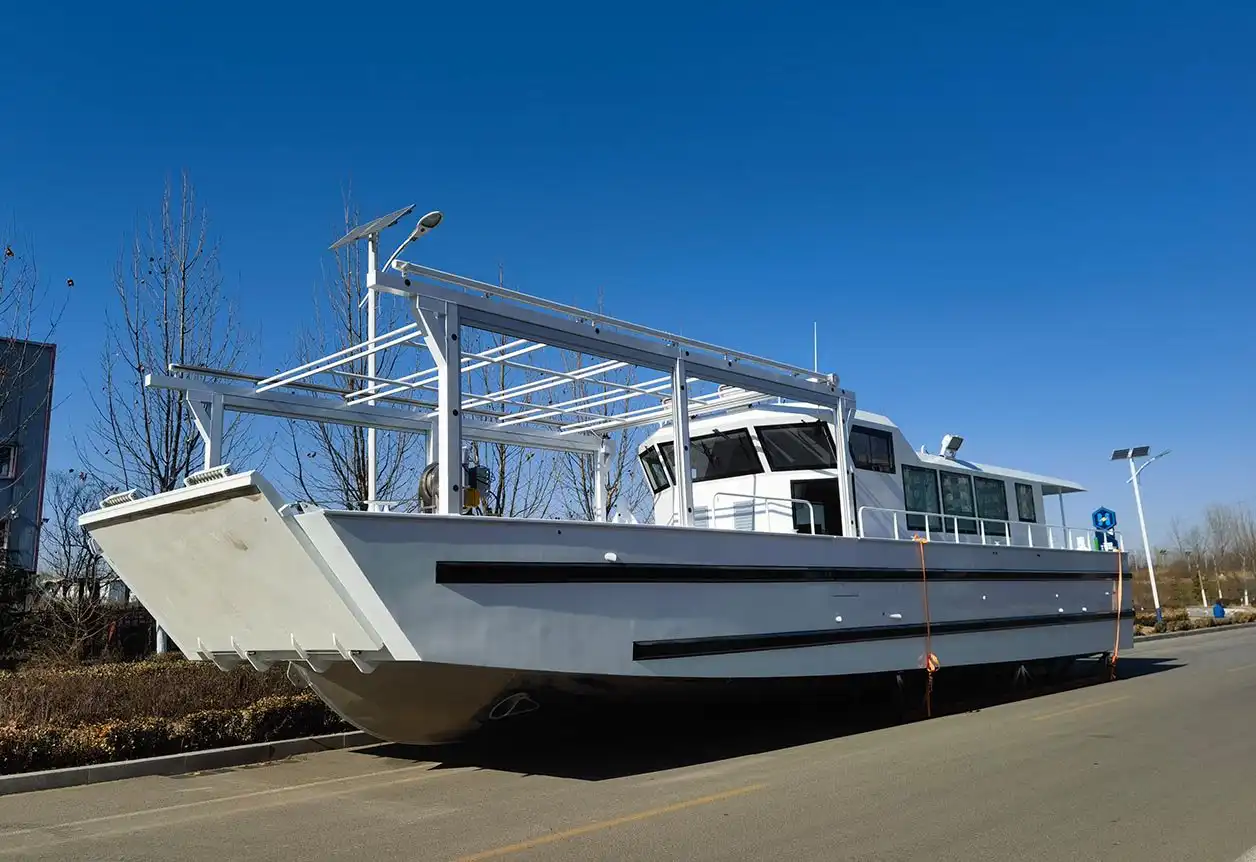
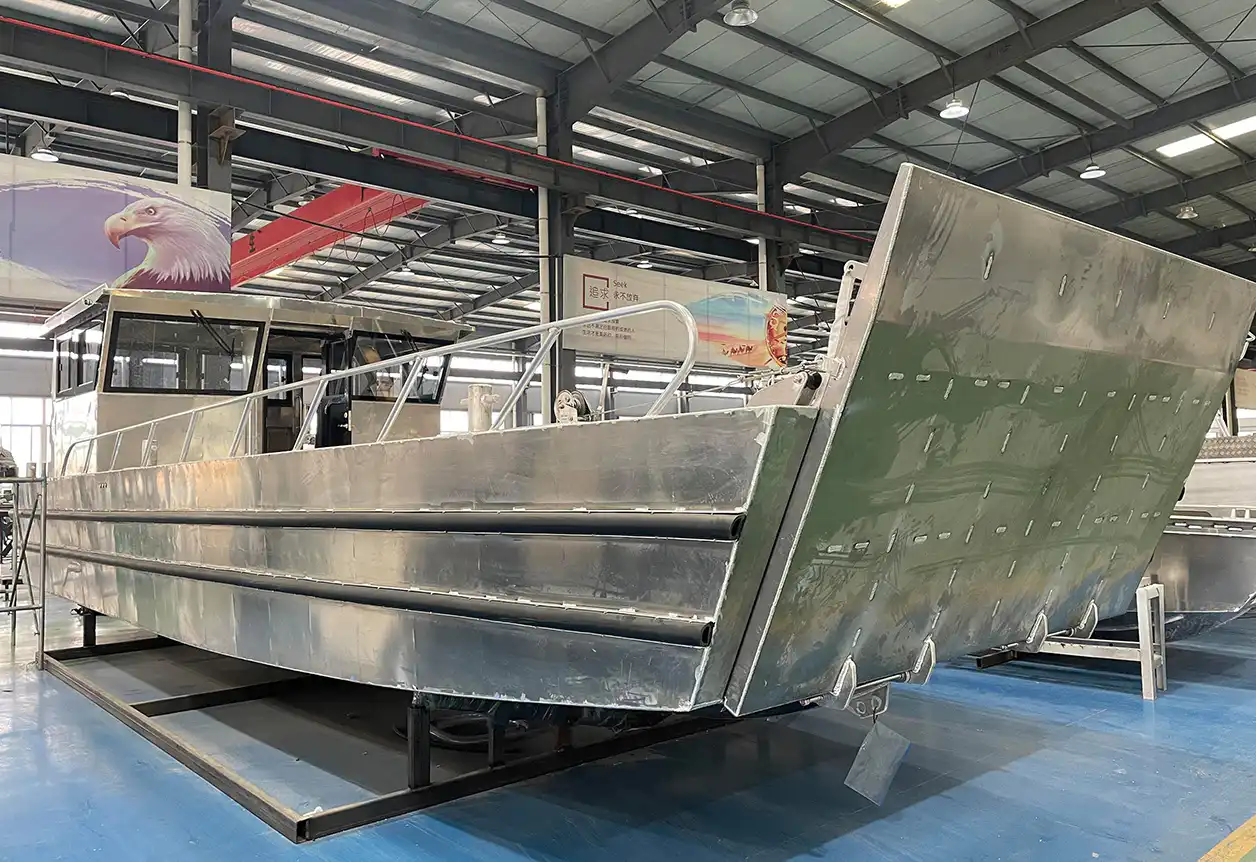
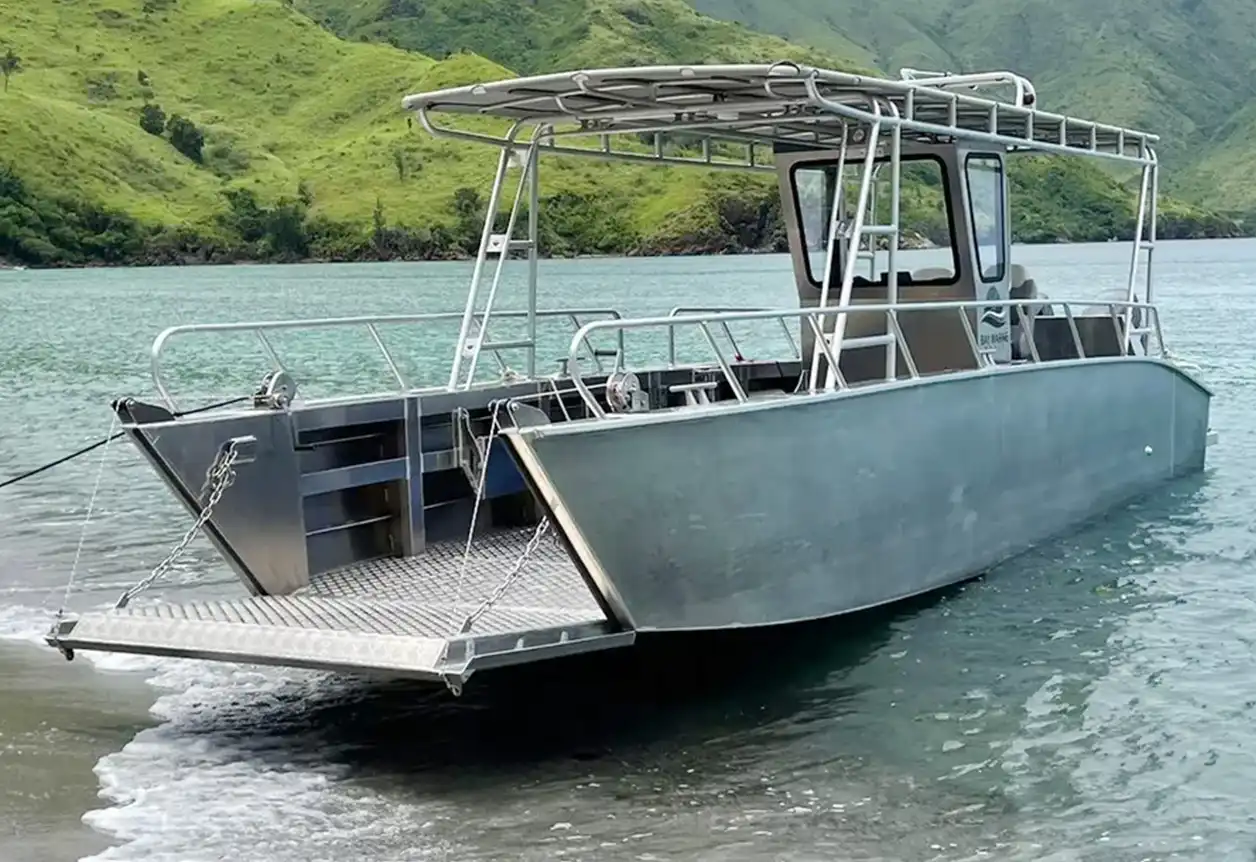
The bow of a landing craft has a ramp and bow door that span the full width of the hull, operated by a manual winch or hydraulics depending on the model. After beaching, the ramp is lowered with its front edge on the sand, forming a gentle slope. On our 9-meter aluminum landing craft, for example, the lowered ramp usually sits at 15 to 20 degrees, so ordinary vehicles, forklifts and even small excavators can drive on and off under their own power. When loading is finished, the landing craft backs off the beach into deeper water using reverse thrust or the bow winch. A skilled operator can usually complete the whole process, from beaching to unloading to leaving, in under 15 minutes, with no cranes, docks or extra equipment. A client who runs an island resort said: “In the past, unloading a truckload of cargo meant waiting for the tide, renting a small boat, and manual handling—it was a huge hassle. Now, we just beach the craft, lower the ramp, drive the forklift in, and it’s all done in about ten minutes.”
4. Which Beaches Work and Which Do Not
Landing craft are capable, but they cannot land everywhere. Three factors decide whether a landing is feasible. First, the beach surface: fine sand and mudflats are ideal, gravel beaches are possible but wear the hull faster, and rocky shores should be avoided entirely. Second, the slope: ramps are typically designed for beaches of 15 degrees or less, and steeper slopes stop the ramp from seating properly. Third, the tide: the more beach exposed at low tide, the easier the landing; at high tide, if the water is much deeper than the craft’s draft, the hull cannot settle onto the beach. Before you buy, we recommend measuring the low-tide depth and beach slope at your main landing sites, as these are key to choosing the right model. Our engineers can also tailor hull protection and ramp length to the conditions at your site.
5. Aluminum Hulls: Lighter Craft Beach More Easily
Shallow-water performance depends on materials as well as design. Steel boats are heavy, so they tend to sink into the sand when beaching and need more power to break free. Aluminum landing craft are built from marine-grade aluminum such as 5083 alloy and weigh 30% to 50% less than steel boats of the same size. A lighter hull puts less pressure on the beach, so it is less likely to get stuck; it needs less reverse thrust to back off; and it has a better power-to-weight ratio with the same engines. A customer who works on muddy beaches told us: “When we used steel boats, we’d get stuck in the mud every time the tide went out and had to wait for the next high tide to leave. After switching to aluminum landing craft, we can back out in a single maneuver.” The corrosion resistance of marine-grade aluminum also keeps the hull sound despite constant contact with sand and seawater.
6. Real-World Examples: From Island Logistics to Emergency Response
In the Maldives, resort operators use our aluminum landing craft to carry food and luggage across the intertidal zone every day; the dock is simply a white sand beach with just 0.5 meters of water at low tide, where ordinary boats cannot land. In Indonesia’s mudflat aquaculture areas, farmers use 9-meter aluminum landing craft to deliver feed right up to the fish cages, replacing manual carrying and saving tens of thousands of dollars a year in handling costs. During typhoon season in Japan, disaster response agencies use aluminum landing craft to bring relief supplies and medical teams to flooded coastal communities when roads and piers are cut off. In each case there is no pier, the water is very shallow and time matters, which is exactly where landing craft do their best work. Tell us about your landing sites and we will recommend a model with the right draft.
To see how draft fits with size, layout and power when you choose a model, read our aluminum landing craft buyer’s guide.