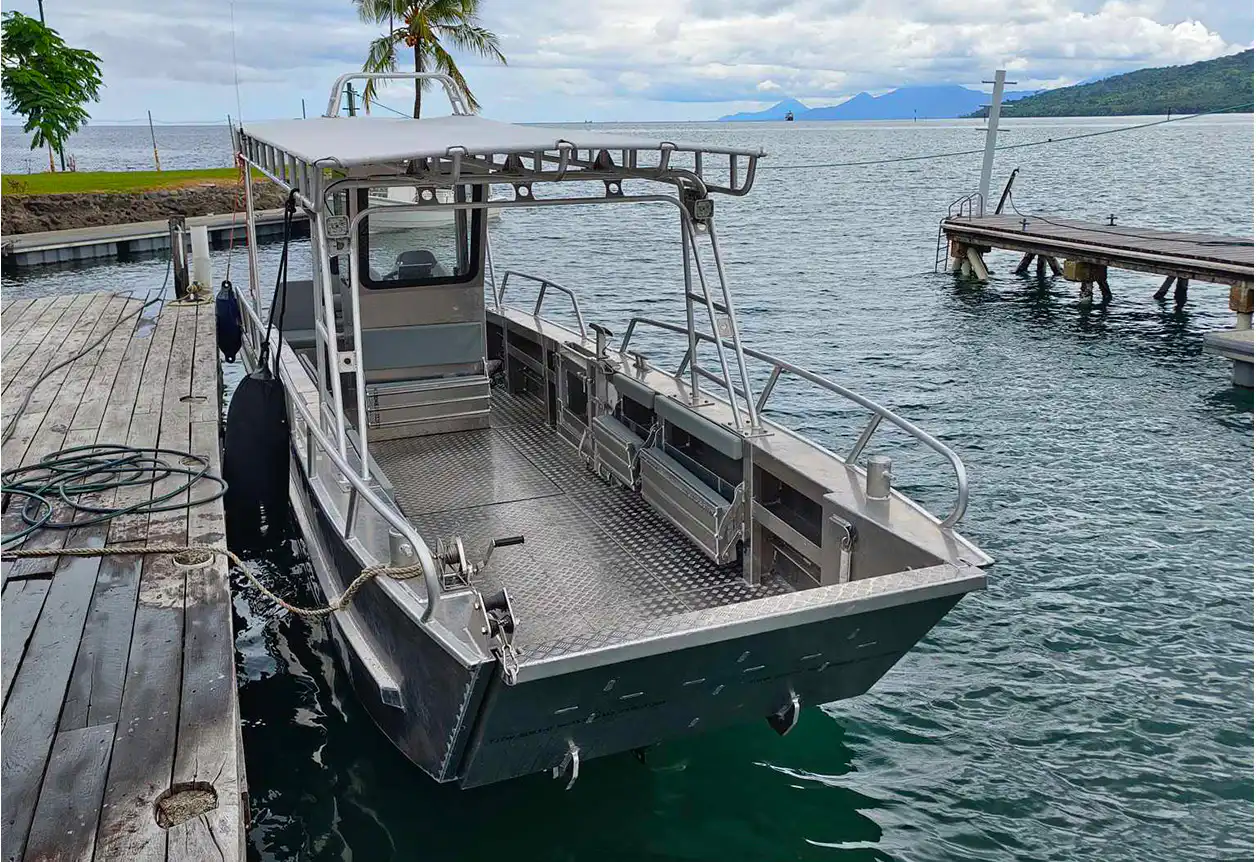
1. Built for Places Without Docks: Why Landing Craft Suit Inland Waterways
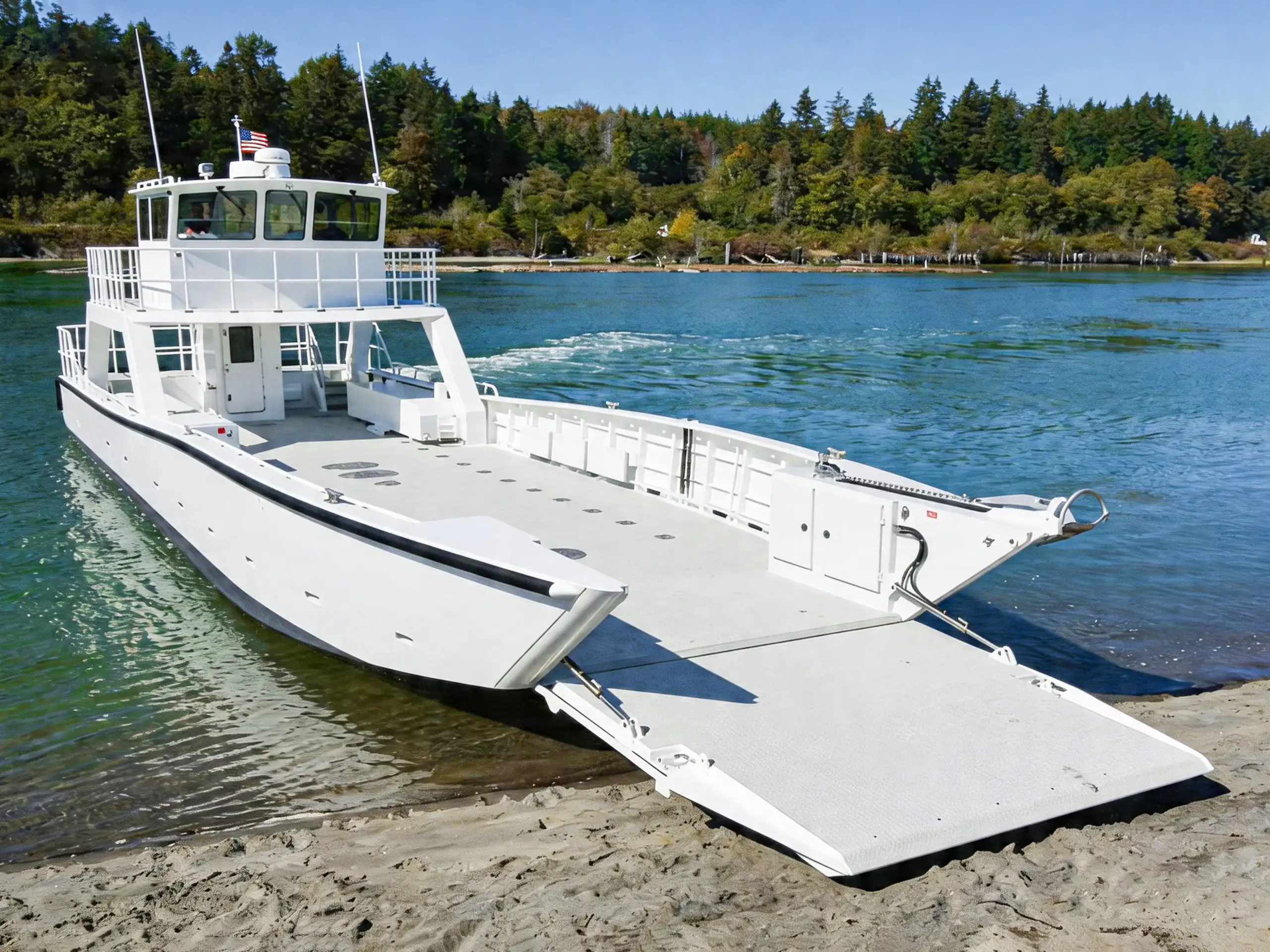
Landing craft were designed from the start for places without docks: their original purpose was to carry vehicles, troops and cargo to coasts and inland waterways that had no ports. Because they need no port and can beach directly, they are naturally suited to rivers. For businesses along a river, that means no dependence on deep-water docks; landing craft can load and unload directly on shoals or riverbanks. A client who carries building materials on a tributary of the Yangtze told us that since switching to landing craft, he no longer has to travel an extra ten kilometers or more to find a dock. On the upper and middle reaches of rivers, where docks are few and far apart, being able to land anywhere on the bank fills an important gap.
2. Shallow Draft: The Key to River Navigation
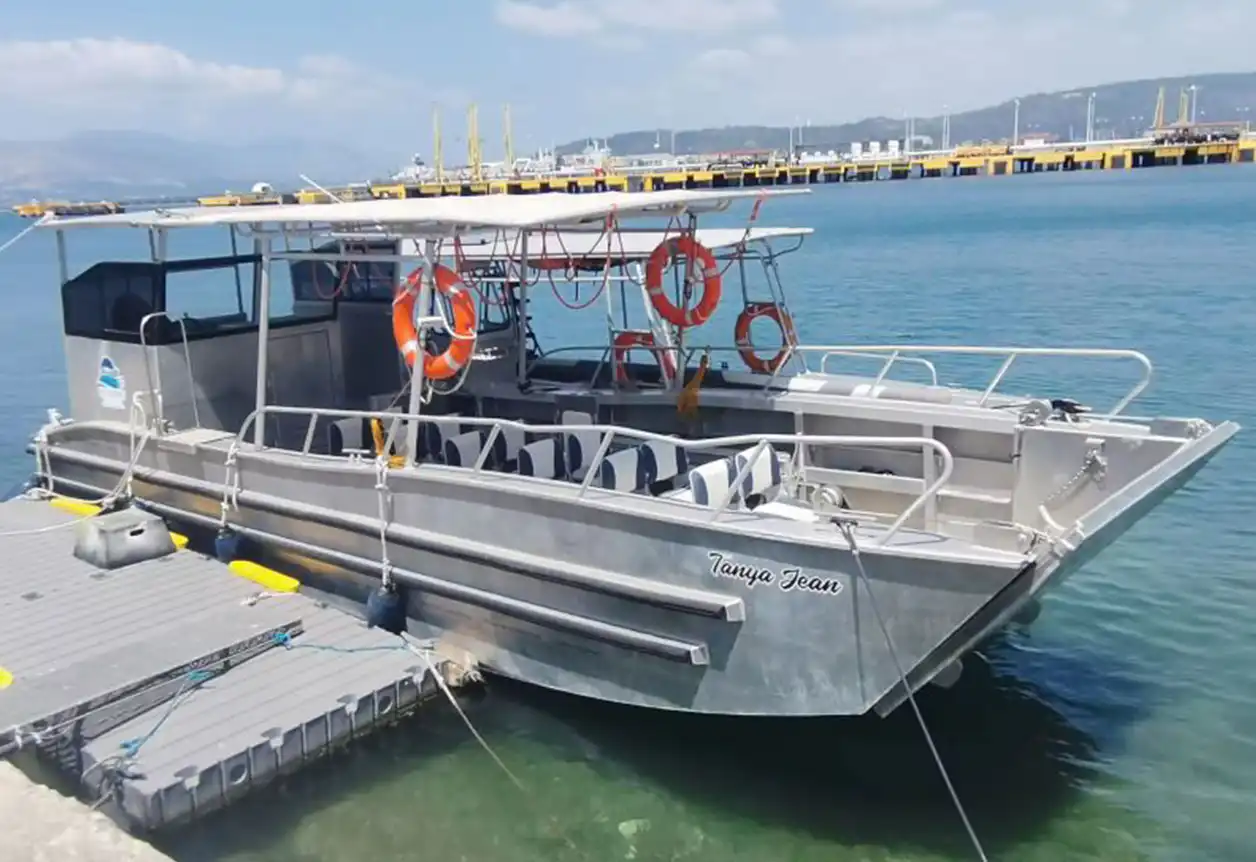
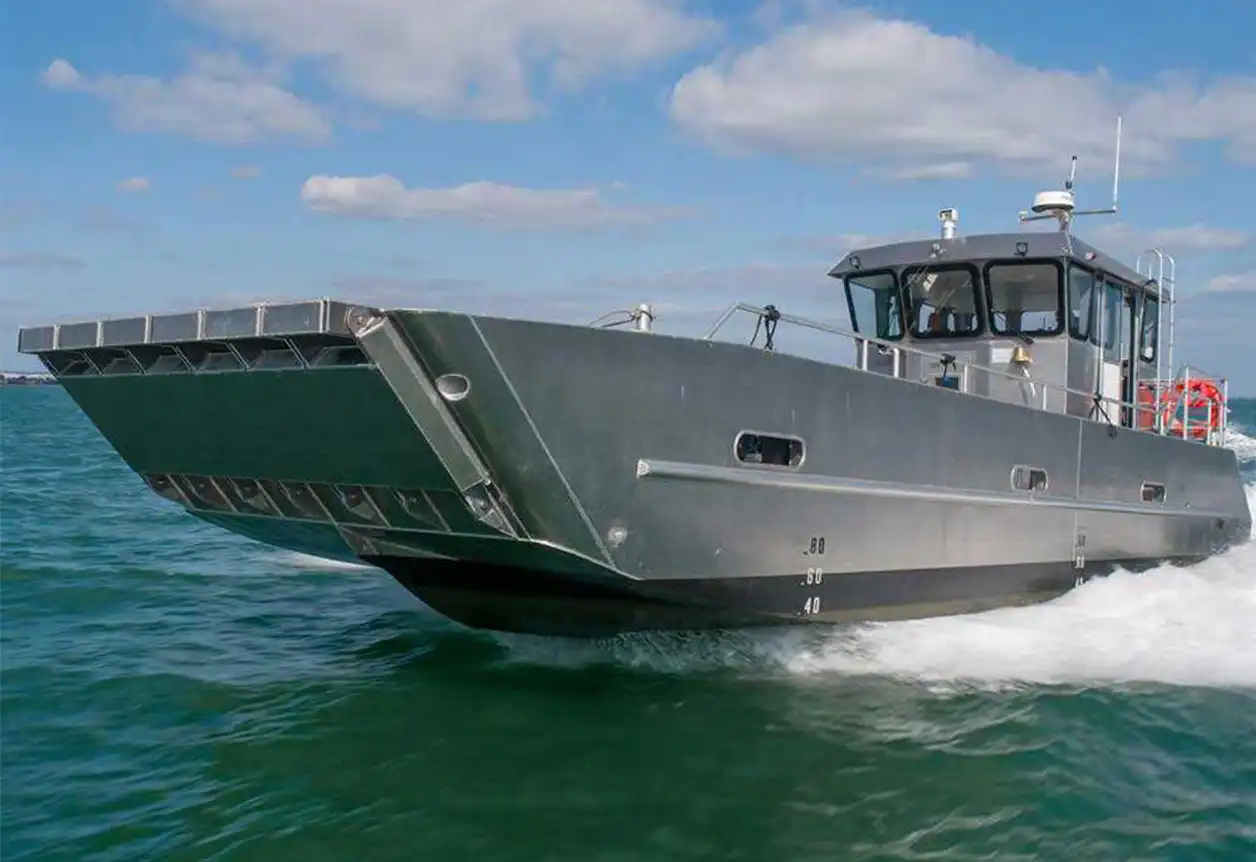
River depths change a lot: shoals appear in the dry season and water levels rise in the wet season. Ordinary cargo boats usually draw more than 1.5 meters and cannot operate at all when the water is low. Aluminum landing craft typically draw 0.3 to 0.7 meters fully loaded; a 9-meter aluminum landing craft, for example, has a design draft of just 0.5 meters, and the 11-meter model draws even less. That means landing craft can keep running safely through low-water periods. For inland logistics businesses, year-round navigation means stable schedules and reliable commitments to customers, especially on seasonal rivers where low water can last for months and ordinary boats have to stop and wait.
3. Flat-Bottomed Hulls: Made for Shoals and Sandbars
Shallow draft is the foundation, but what really lets landing craft move freely on rivers is their flat or shallow-V hull. Round-bilge hulls tend to stick when they touch the riverbed, while a flat bottom slides over shoals and sandbars like a sled instead of digging in. Aluminum landing craft can therefore cross river shoals and sandbars easily and even beach to unload when the water is low. A client on the Mekong River told us: “The sandbars in the river change every year, and ordinary boats have to constantly sound the water, but my landing craft can just sail right over them.” On inland waterways, where the riverbed is always changing, this ability is a real operational advantage.
4. Maneuverability on Bends and Narrow Channels
Rivers have many bends, narrow channels and low bridges. Landing craft handle these well: the flat bottom makes them nimble, and the shallow draft lets them turn around in shallow water. With capable outboard motors, an 11-meter aluminum landing craft moves easily on rivers and lakes, and some models offer folding masts and low-profile cockpits for passing under bridges. For delivery services that run between city waterways and rural streams, this maneuverability is something traditional cargo boats cannot match. In some tourist cities, landing craft on river sightseeing routes pass easily under bridges and stop at any stretch of bank, so visitors can step off right at the attraction.
5. Aluminum Hulls: Just as Durable in Fresh Water
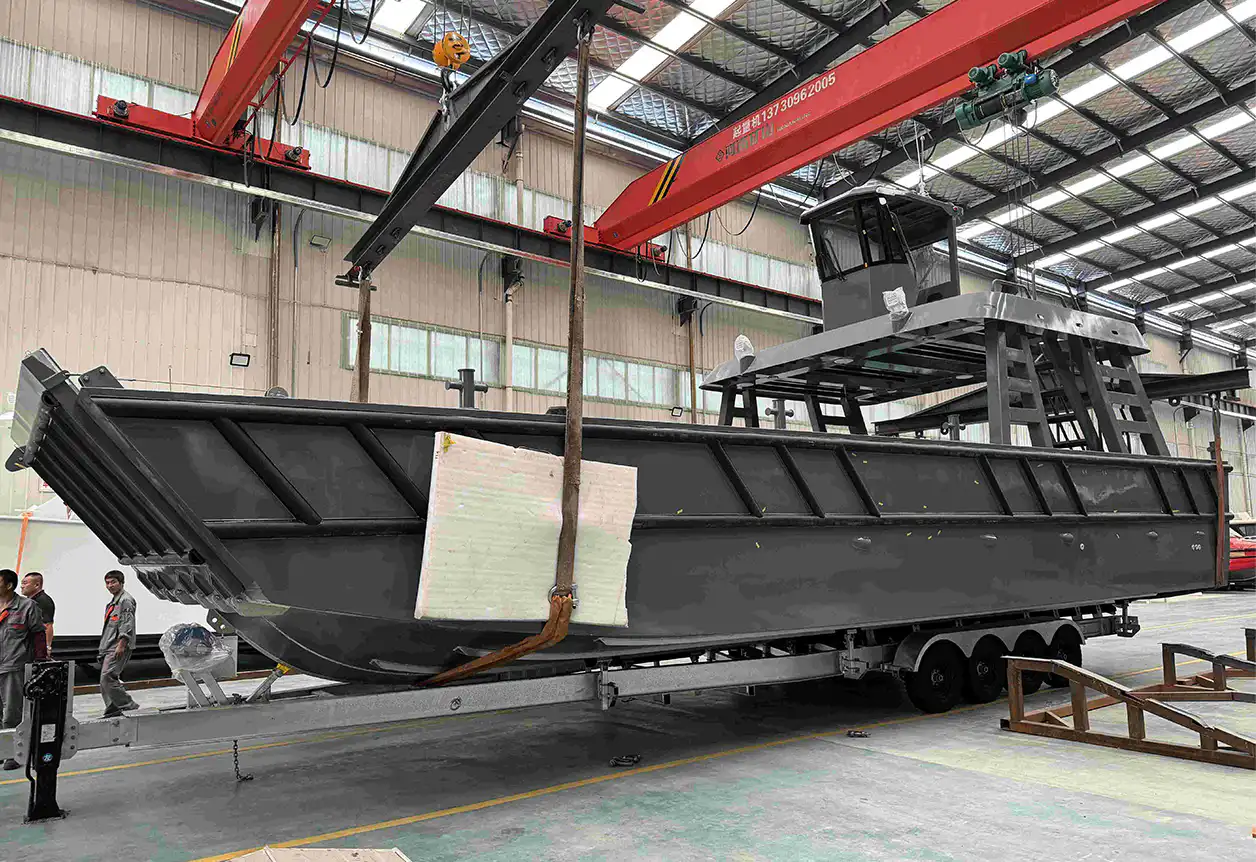
Many people assume marine-grade aluminum is only for saltwater, but that is not the case. Marine-grade aluminum such as 5083 alloy earns its name by resisting corrosion even in harsh seawater, so in fresh water it lasts even longer. Aluminum landing craft need no regular rust removal and repainting as steel boats do, which keeps maintenance costs and downtime low and extends hull life. In fresh water, an aluminum hull can go essentially its whole life without paint. A customer on the Pearl River said: “Our old steel boats required major overhauls every three years, but our current aluminum boats are still in pristine condition after five years of use.”
6. Inland Waterway Applications
Landing craft have many uses on rivers. On the Yangtze and Pearl River systems, they carry construction materials and deliver heavy equipment to riverside job sites. On the Mekong and Irrawaddy in Southeast Asia, they supply river islands and riverside villages. On inland lakes, they carry aquaculture feed and support harvesting. During floods, their shallow draft and beaching ability make them vital for delivering emergency supplies and evacuating people. Whether for commercial transport, construction or emergency response, landing craft bring real value to river operations.
7. How to Choose a Landing Craft for River Work
If you plan to use a landing craft on a river, check a few key points. First, draft: measure the minimum depth on your route in the dry season and choose a model whose full-load draft is less than that. Second, beam: on narrow waterways, make sure the craft’s width leaves enough room to pass. Third, power: rivers often have strong currents, so choose enough engine power to run against them. Finally, the ramp: if you load and unload often on riverbanks, choose a model with a strong bow ramp. A simple rule of thumb: check the water depth first, then the bends in the river, then how you will load and unload. Our engineers can recommend a model for the specific conditions on your river, and our guide to using landing craft on rivers covers river setup in more detail.
To choose a model for your river or canal routes, see our aluminum landing craft buyer’s guide.