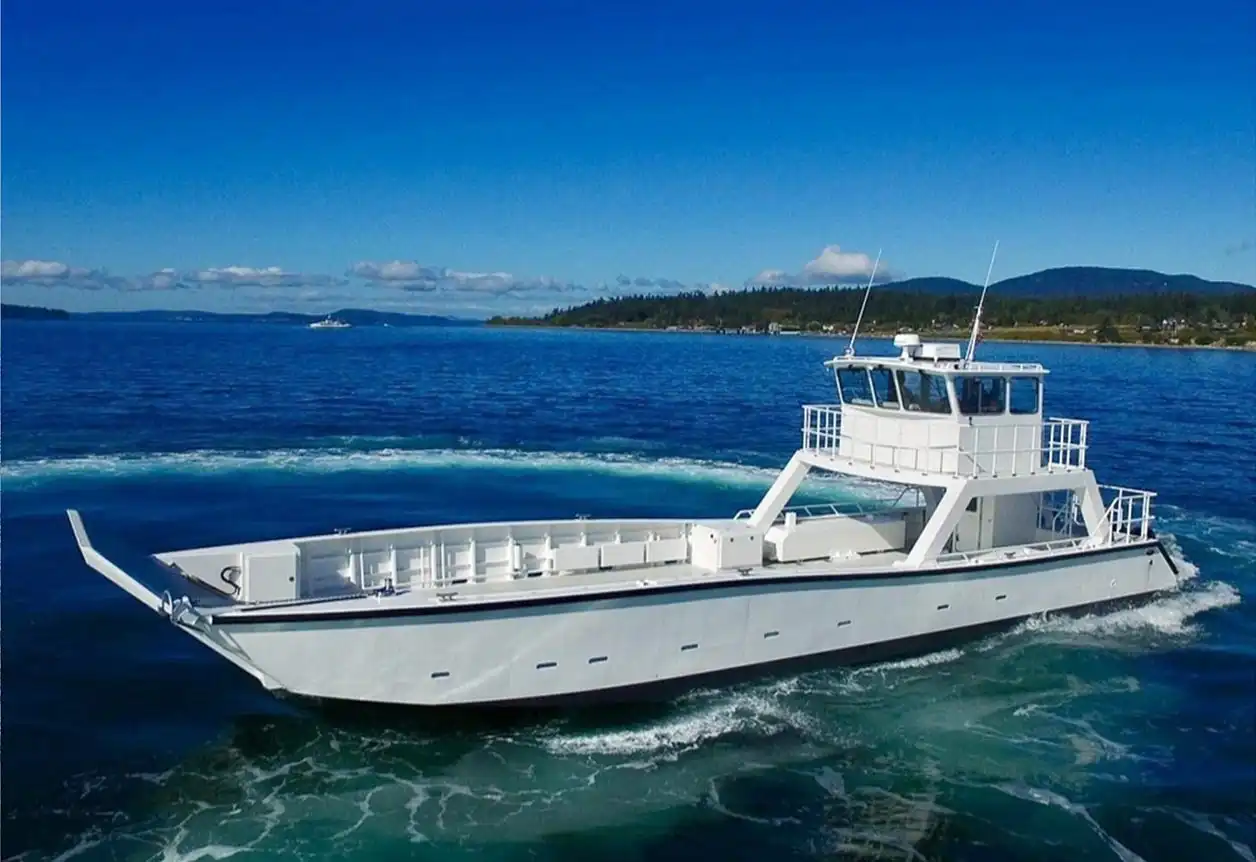
1. The Right Balance of Size and Payload: Large Enough, Yet Agile
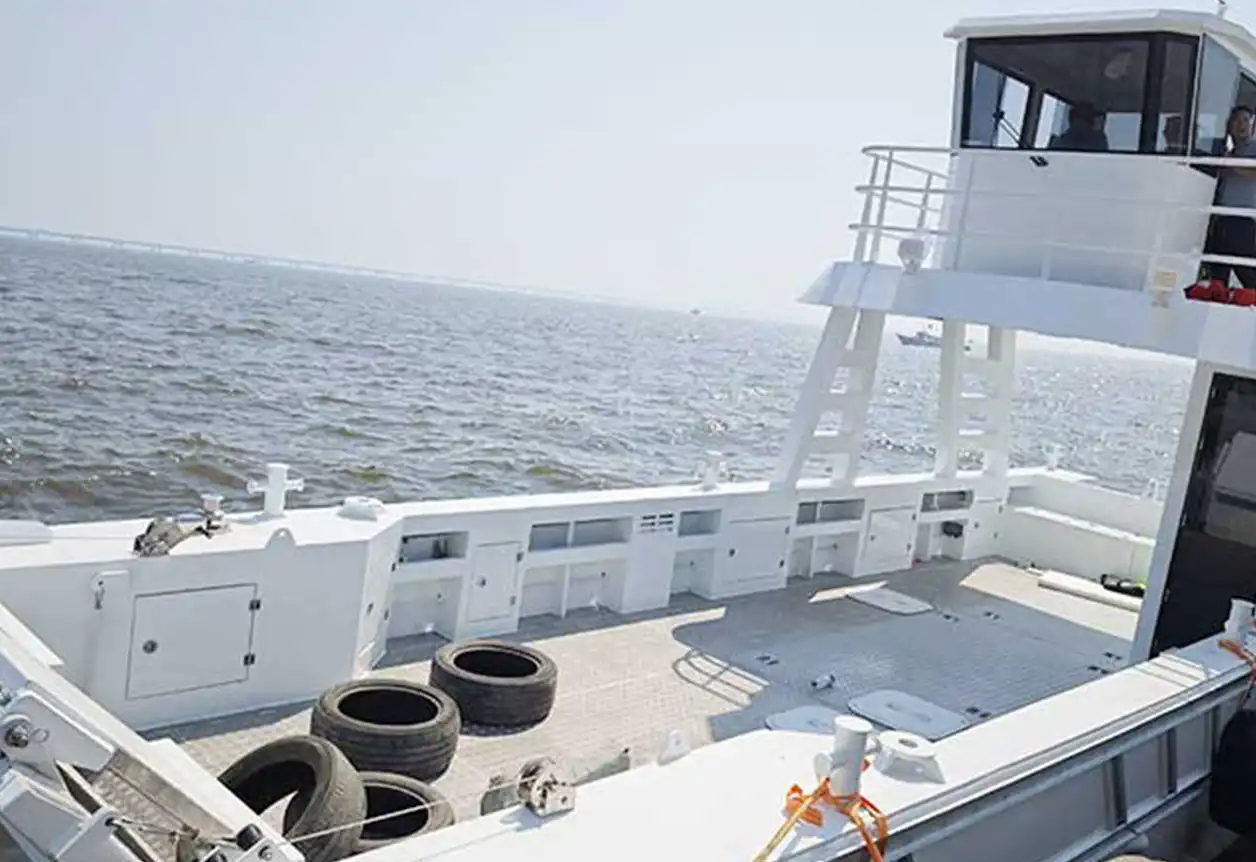
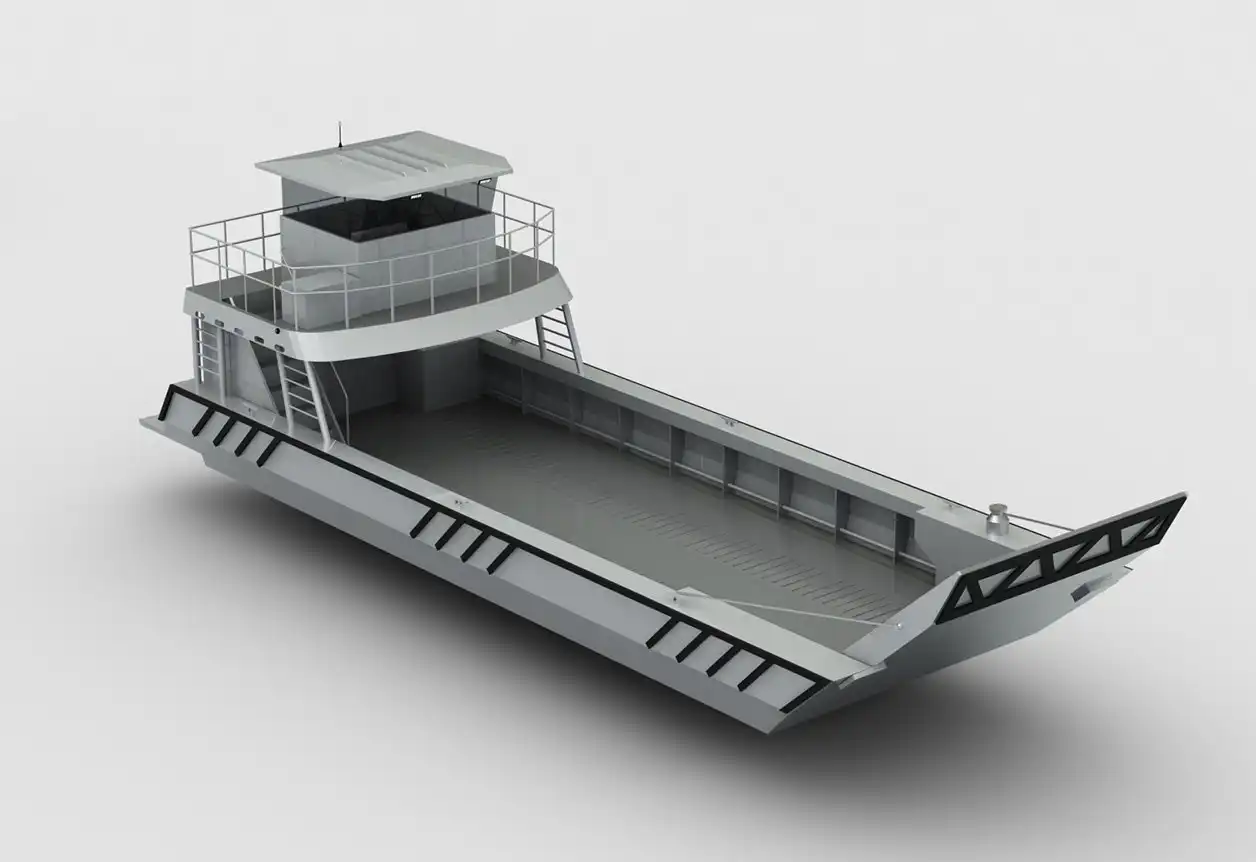
18 meters is an important size. Smaller landing craft limit payload and deck space; larger ones lose shallow-water maneuverability and berthing flexibility. The 18-meter aluminum landing craft has a beam of 5 meters, a depth of 1.3 meters, a draft of just 0.55 meters and a displacement of 20 tons. That lets it carry SUVs, small construction vehicles or large amounts of bulk cargo while still maneuvering well in shallow water and narrow channels. The deck area is about 85 square meters, roughly the size of a small truck parking area. For owners who need both carrying capacity and access to hard-to-reach places, the 18-meter model avoids compromise. A client who carries building materials to islands told us he used to need two smaller craft for the job; now a single 18-meter landing craft does it all, with two fewer crew.
2. Speed and Range: What 37 Knots Means in Operation
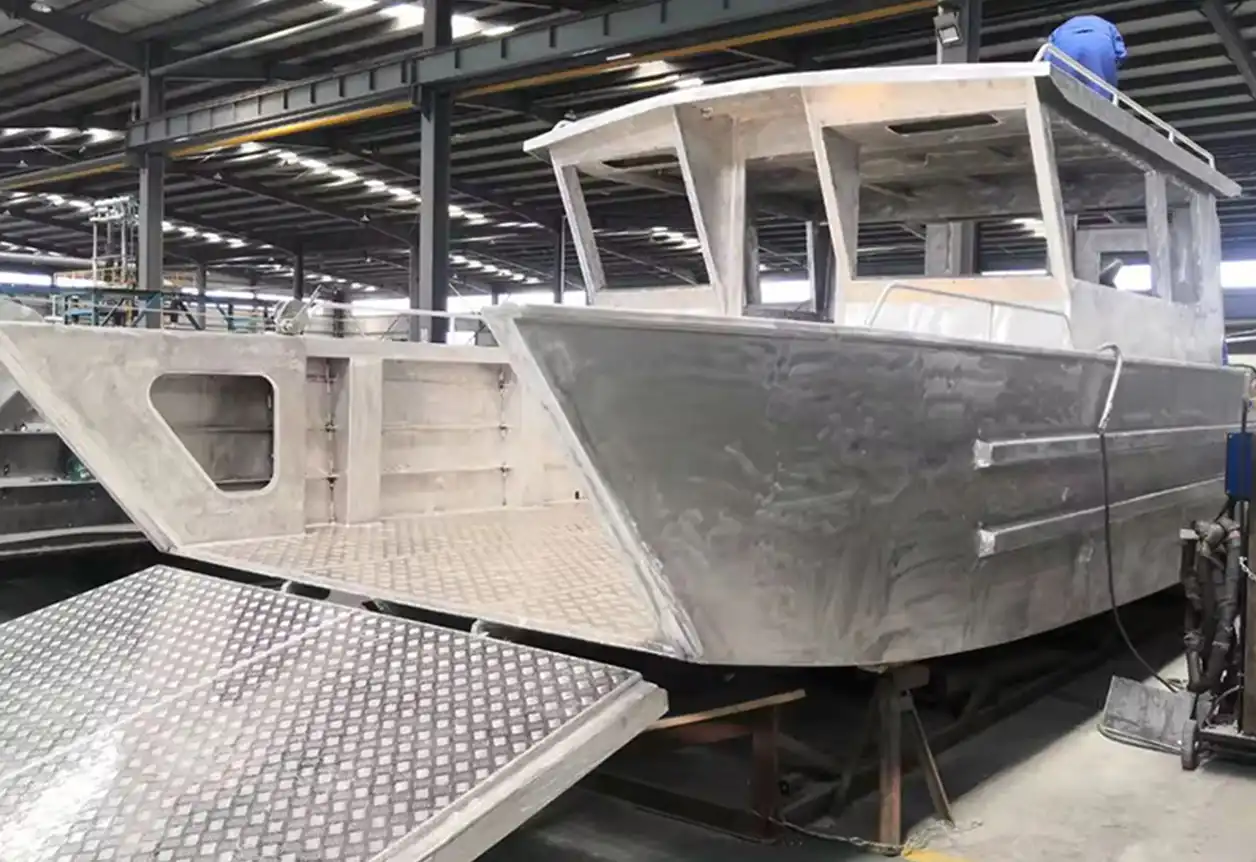
The 18-meter aluminum landing craft has a top speed of 37 knots, among the fastest in its class. At that speed, a 20-nautical-mile run from an island to the mainland takes only about half an hour, roughly three times as fast as a typical cargo boat running at 10 to 12 knots. For time-sensitive work such as perishable cargo, emergency resupply or offshore wind farm maintenance, higher speed means more round trips a day and happier customers. The light marine-grade aluminum hull is the key: a lighter hull goes faster and burns less fuel on the same power. As one 18-meter owner put it: “It used to take half a day for a single trip; now I can make two trips in the morning and still take on another job in the afternoon.” In commercial operations, time is revenue and speed is a competitive edge.
3. A Multi-Role Deck: Switching Easily from Cargo to Passengers
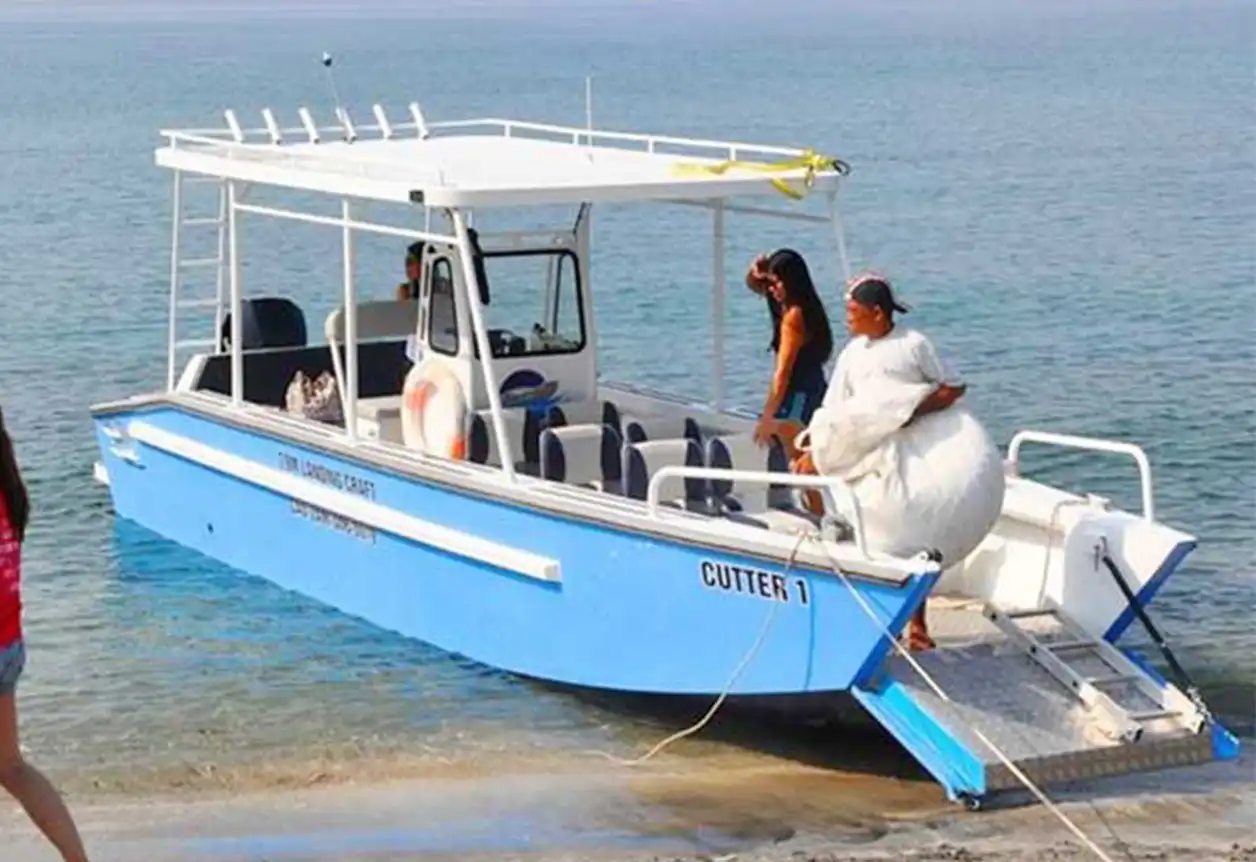
The deck layout of the 18-meter landing craft is very flexible. In cargo mode, the deck can take several standard containers or two small trucks. In passenger mode, it can be fitted with folding seats and a sunshade to carry more than 17 passengers. For engineering work, it can be fitted with a deck crane or an A-frame and become a marine work platform. Marine-grade aluminum is easy to fabricate, so switching is simple: seat bases, lashing rails and partitions are all designed to be removable, and a conversion usually takes no more than half a day. One landing craft covering several kinds of work is what all-purpose really means. A client running island-hopping tours in Southeast Asia uses an 18-meter landing craft to carry supplies to resorts in the off-season; in the peak season, the cargo partitions come out and seats go in to take tourists to uninhabited islands, so one craft earns from two businesses.
4. Shallow-Water Beaching: Even a Large Landing Craft Can Land on the Beach
Many people assume that the bigger the landing craft, the worse it is at beaching. The 18-meter landing craft proves otherwise. With a draft of 0.55 meters and a flat-bottomed hull, it can still run up onto the beach for roll-on/roll-off loading. Its draft is a little deeper than that of the 7.9-meter model, but 0.55 meters is excellent shallow-water performance for a landing craft of this size. It can unload directly on islands, mudflats and riverbanks without a dock or any port facilities. For operations that shuttle between several places with no docks, this ability is hard to replace. A client in Papua New Guinea told us his 18-meter landing craft sails straight onto the beaches of villages without docks and unloads building materials and everyday goods onto the sand, where villagers collect them with handcarts, something no conventional cargo ship can do.
5. Operating Economy: The Benefits of a Larger Landing Craft
The 18-meter landing craft’s operating economy comes from scale. Each trip carries more cargo or more passengers, so the cost per unit carried is lower. In island logistics, for example, one 18-meter landing craft carries as much per trip as about five 9-meter models (15 tons versus 3 tons), yet needs only one more crew member than a single 9-meter model. Fuel use per ton of payload is also lower. Aluminum landing craft also have low maintenance costs and strong resale value, so long-term ownership costs are lower than for steel boats of the same size. One fleet operator worked it out: using 18-meter landing craft on the main routes and 9-meter craft for secondary deliveries raised overall fleet efficiency by 40%. For owners looking for economies of scale, a larger landing craft brings not just more capacity but a real step up in overall efficiency.
6. The Limits of Versatility: When the 18-Meter Model Isn’t the Best Choice
Versatile as it is, the 18-meter landing craft does not suit every job. If your waters are very shallow (less than 0.5 meters at low tide), or you often need to pass through narrow channels and under low bridges, a smaller 9- to 11-meter model may suit you better. If your volumes are very high and you need to carry more than 15 tons per trip, consider our 21-meter cargo and passenger models (20 to 30 tons) or a larger boat. The 18-meter model is an all-rounder, not the right choice for every possible job. Before you buy, define your core operations and maximum loads, and we will recommend the most suitable model for your situation. Choosing a landing craft is like choosing a vehicle: there is no single best option, only the one that best fits your business.
To compare the 18 m model with the rest of the range, see the model table in our aluminum landing craft buyer’s guide.