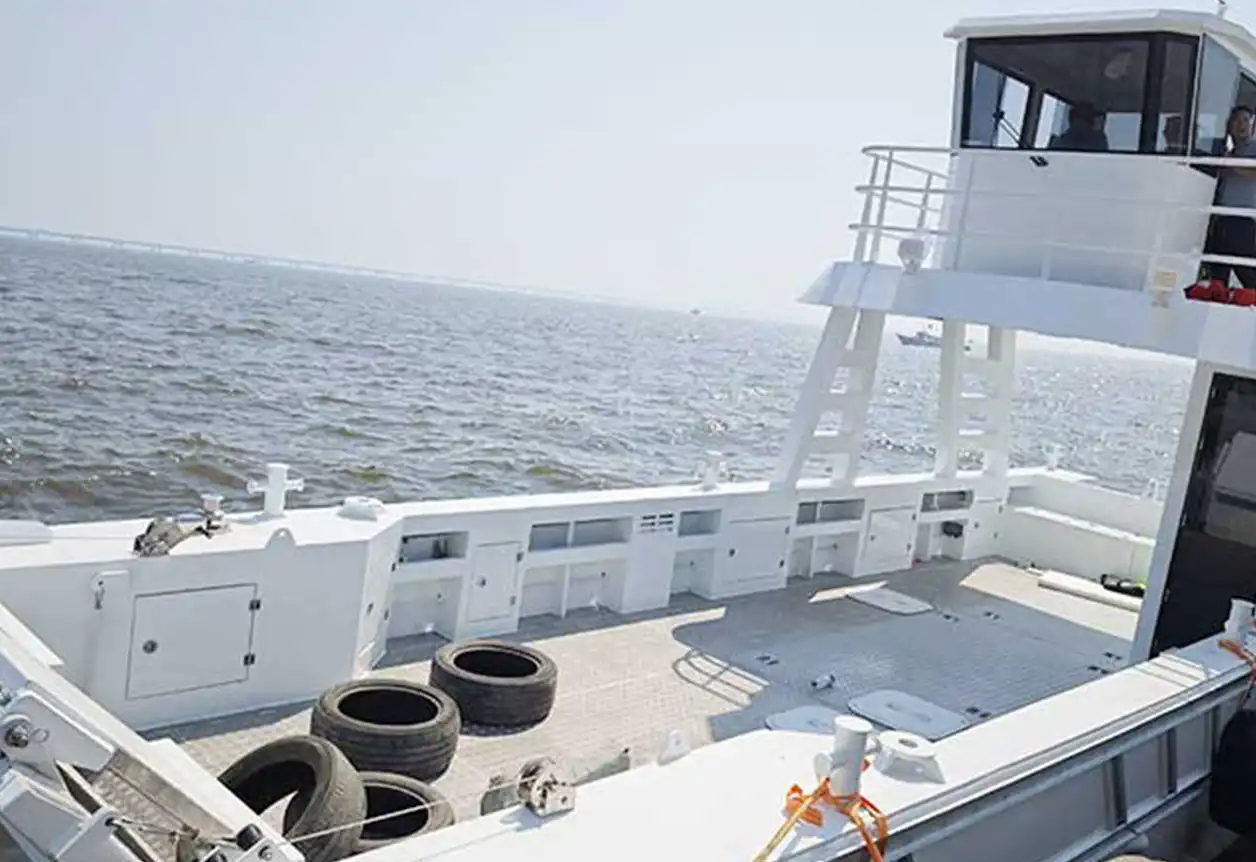
1. Shallow Draft: Trading Displacement for Beach Access
A boat’s carrying capacity comes from displacement: the deeper the hull sits, the more water it displaces and the more cargo it can carry. Standard cargo boats usually draw 1.5 meters or more to maximize capacity. Landing craft must run onto beaches and work in shallow water, so their full-load draft is usually kept between 0.3 and 0.7 meters. A 9-meter aluminum landing craft, for example, draws 0.31 meters, so most of the hull sits above the waterline and the payload is limited to 3 tons. This is the first trade-off a landing craft makes in order to reach the shore, and it is fundamental to the design. If most of your work is between deep-water docks, a cargo boat may suit you better; if you need to deliver to beaches without docks, shallow draft is worth far more than a few extra tons of capacity.
2. Flat-Bottomed Hull: Stability Over Carrying Efficiency
Cargo boats usually have round-bilge or deep-V hulls, which have a large underwater volume and low resistance and suit long-distance, heavy-load transport. Landing craft use flat or shallow-V hulls so the bottom sits evenly on the beach and does not dig into sand or silt. Because the flat bottom is kept very shallow, the hull sits far less deeply in the water than a round-bilge cargo hull, so its underwater volume, and therefore its displacement, is smaller at the operating draft. For the same hull dimensions, a landing craft therefore carries less than a cargo boat. In return, the flat bottom is less likely to ground awkwardly in shallow water, and when beached it spreads loads evenly across the structure, which is safer. For operators who work often in the intertidal zone, that stability is a real safety benefit.
3. Ramp and Bow Door: Essential Equipment That Uses Cargo Space
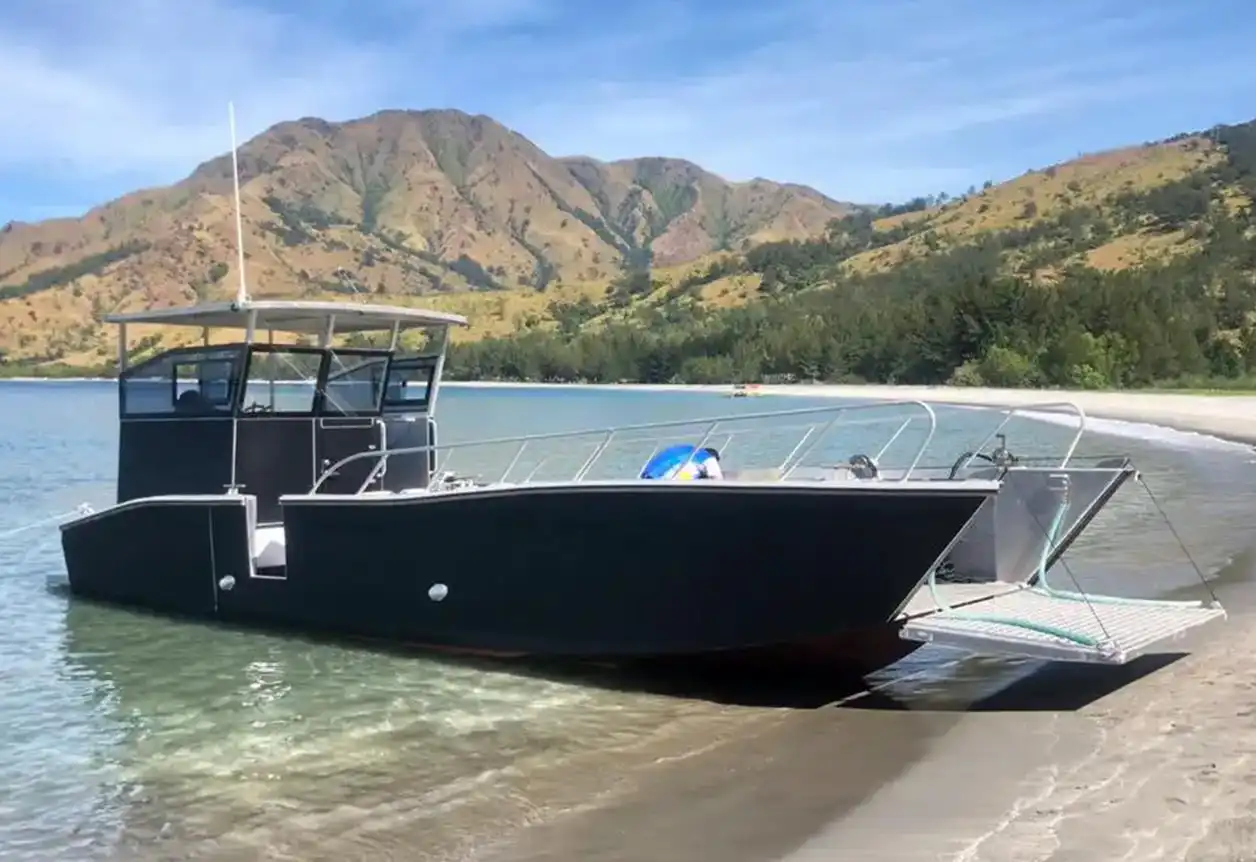
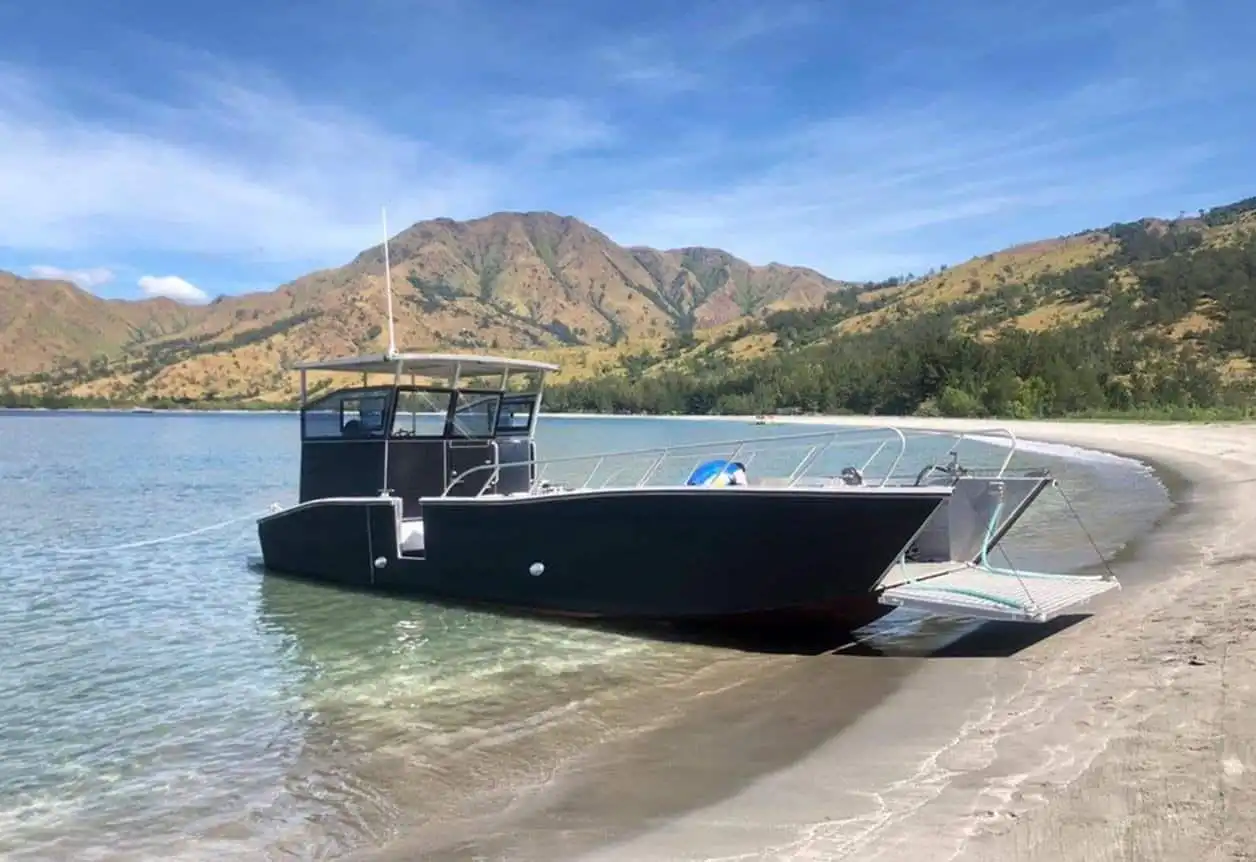
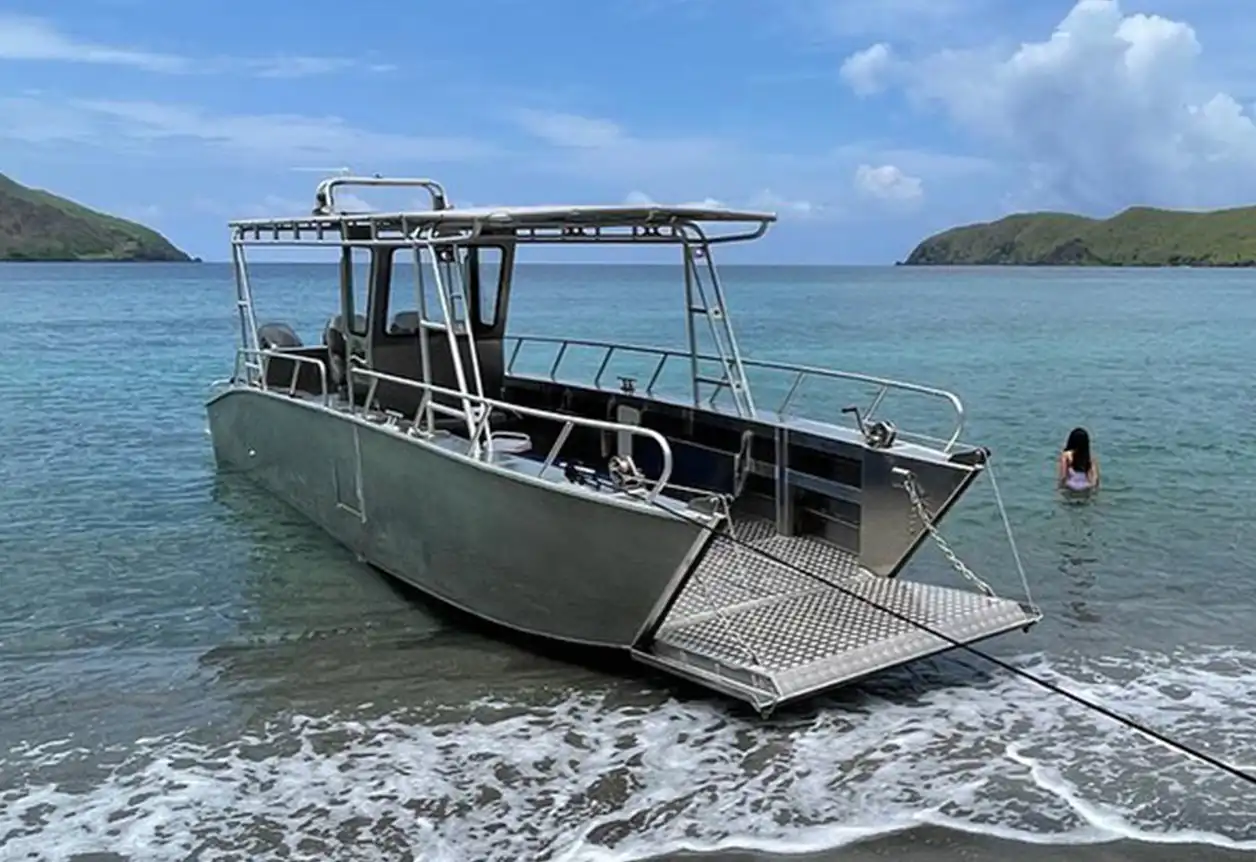
The most distinctive feature of a landing craft is its bow ramp and bow door, operated by a manual winch on smaller models or hydraulically on larger ones. The system is about 1.2 to 1.8 meters long and takes up a significant part of the bow. On a 12-meter aluminum landing craft, for example, the ramp system takes 1.5 meters, leaving about 10.5 meters of usable cargo length, while a cargo boat of the same length can use its whole length for cargo. The ramp uses space, but it is what makes roll-on/roll-off work possible: without it, vehicles and equipment cannot drive on or off. For operators who load and unload heavy cargo often, giving up a little length for that efficiency is well worth it. A customer who regularly carries excavators said: “The ramp takes up an extra meter, but it saves two hours of loading and unloading time—it’s a win-win no matter how you look at it.”
4. Structural Reinforcement: Strength for Repeated Beaching
Cargo boats spend their time in deep water, where hull loads are fairly even. Landing craft beach again and again, so the bottom must take hard impacts with the sand as well as bending loads when part of the hull is unsupported while aground. That is why landing craft usually have 6 to 7 mm bottom plating, with extra reinforcement in critical areas. The additional structure adds weight and reduces payload; even though aluminum hulls are lighter than steel, the reinforcement still costs some capacity. It is essential for safe beaching, however. As one veteran captain put it: “It’s better to carry one ton less cargo than to have the ship fall apart on the beach.” In commercial service, strength and durability also keep long-term maintenance costs and downtime down.
5. Cargo Type: Roll-On/Roll-Off Cargo vs Bulk Cargo
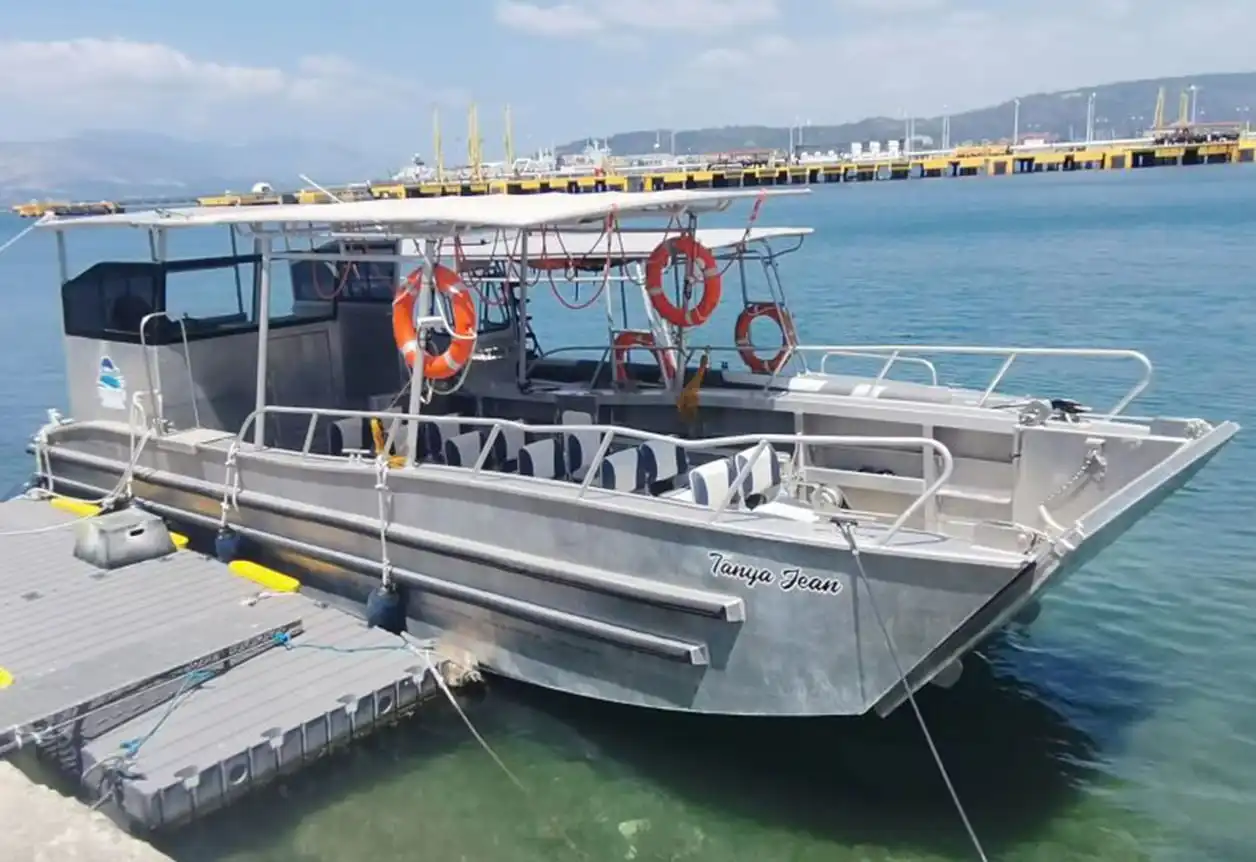
Cargo boats mainly carry bulk cargo such as sand, gravel, grain and liquids, which can fill every corner of the hold. Landing craft mostly carry roll-on/roll-off (Ro-Ro) cargo such as vehicles, construction machinery and containers. This cargo needs space for driving lanes, securing equipment and crew access, so only about 60% to 70% of the deck is usable. A 10-meter aluminum landing craft rated for 4 tons, for example, has little room left for other large items once it carries a pickup truck of about 2.5 tons. This is a feature of the cargo, not a weakness of the craft. If you carry vehicles, choose a landing craft by the vehicle’s dimensions as well as the payload figure; we often run loading simulations with clients to make the best use of the deck.
6. The Business Case: Carrying Less to Avoid Dock Costs
This brings us back to the core buying question: do you need a boat that carries a lot, or one that can reach the shore? If your destination has a wharf, a cargo boat is the more economical choice. Many islands, aquaculture farms and construction sites have none, however, and even a basic wharf can cost around $200,000. Giving up a few tons of capacity to avoid that investment, while gaining direct point-to-point delivery, is very cost-effective for small and medium-sized businesses. A resort owner in the Philippines calculated that the barge fees and dock rental he saved over three years of using a landing craft already exceeded its purchase price. Tell us what you need to carry and where, and we will recommend the right balance of payload and access.
To weigh payload against draft, layout and running costs when choosing a model, see our aluminum landing craft buyer’s guide.