1. Berthing Contact: Protecting the Hull and Absorbing Impact
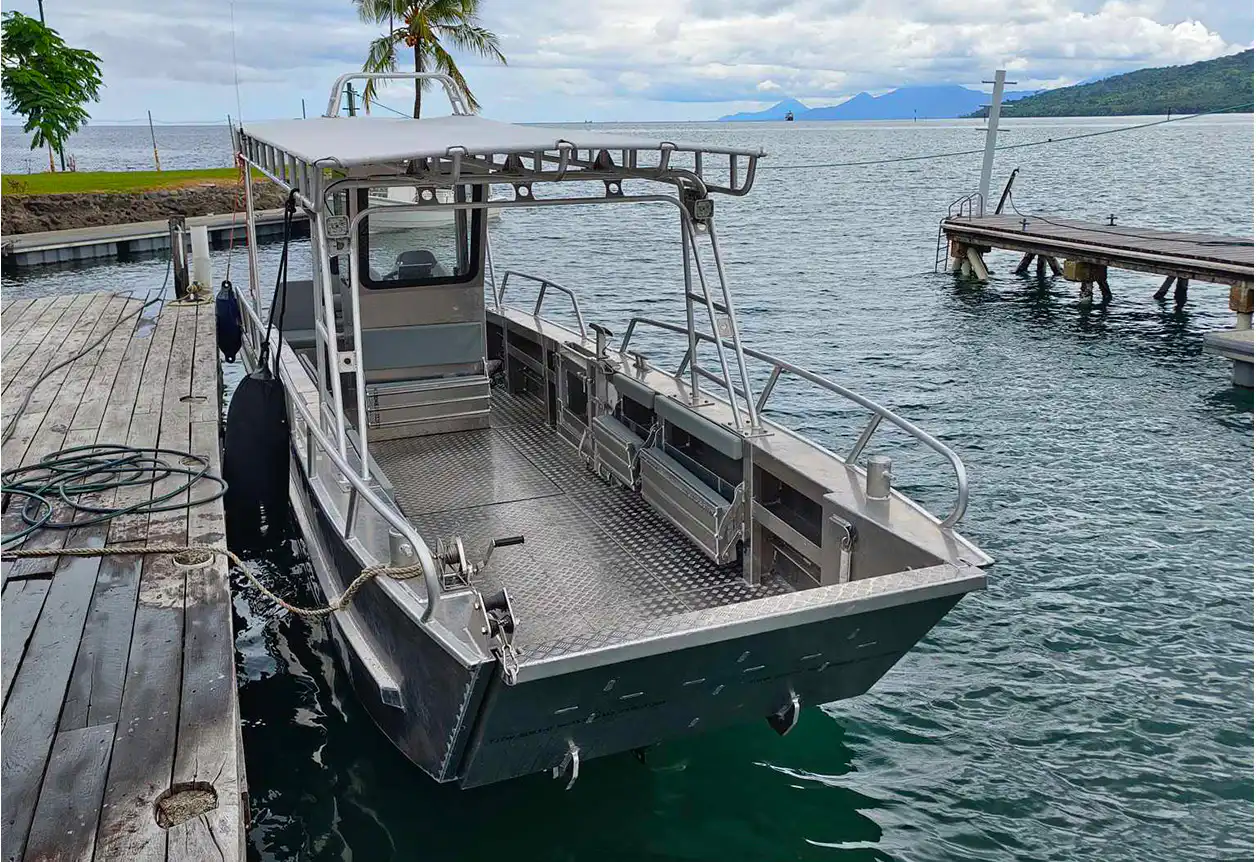
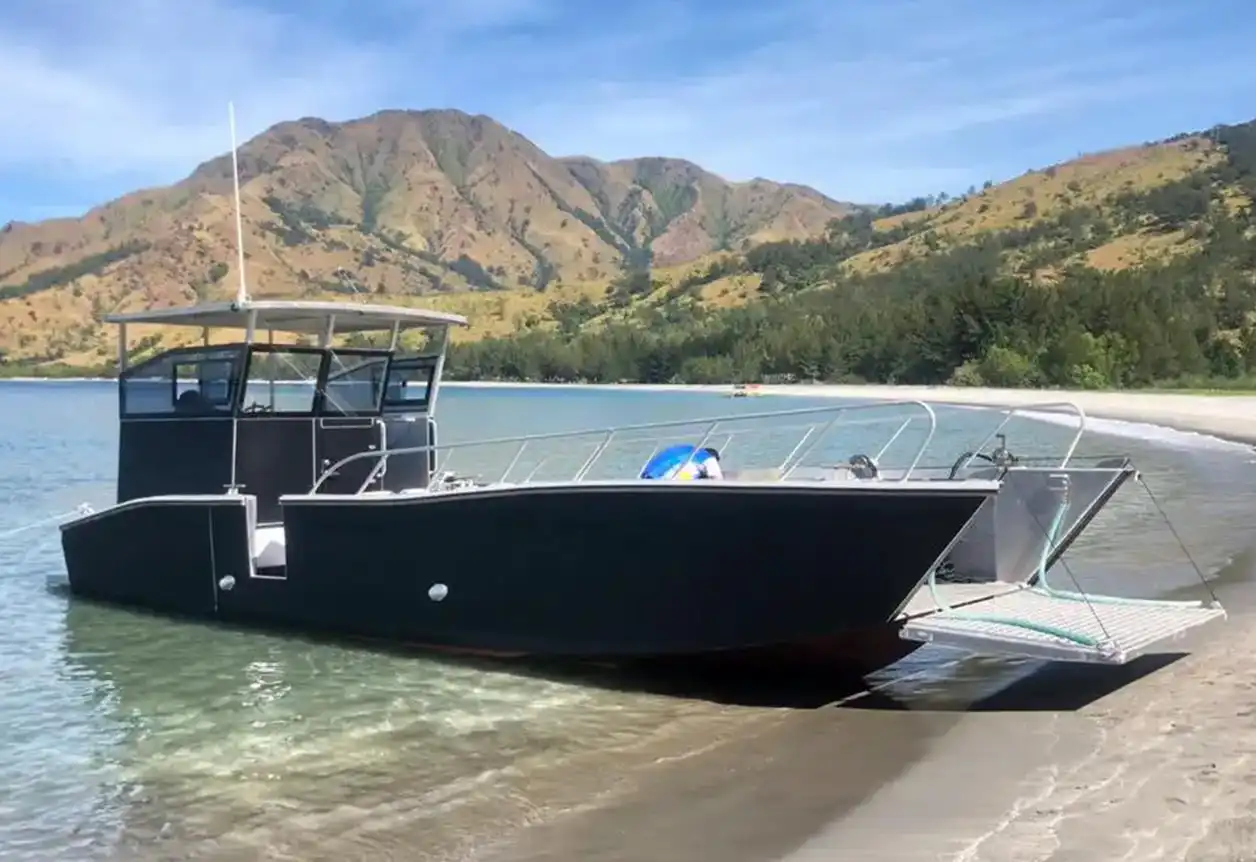
When a landing craft berths at a dock, ties up alongside another boat or works near mudflats, the hull side is the first part to make contact. Modern aluminum landing craft usually have rubber fenders or bumpers along the sides to absorb impact when berthing and protect the hull structure and paint. For commercial operations that dock often, the quality of the side fenders directly affects maintenance intervals and hull life. A client in port logistics told us his landing craft docks more than a dozen times a day; without fenders, the hull would have been badly damaged long ago. Berthing protection may seem basic, but it is where the hull makes contact most often in daily work. Choose fenders of the right thickness and hardness for your berthing frequency and dock material: fenders that are too hard can damage the dock, while fenders that are too soft do not cushion enough.
2. Side Doors and Ladders: Access for Crew and Divers
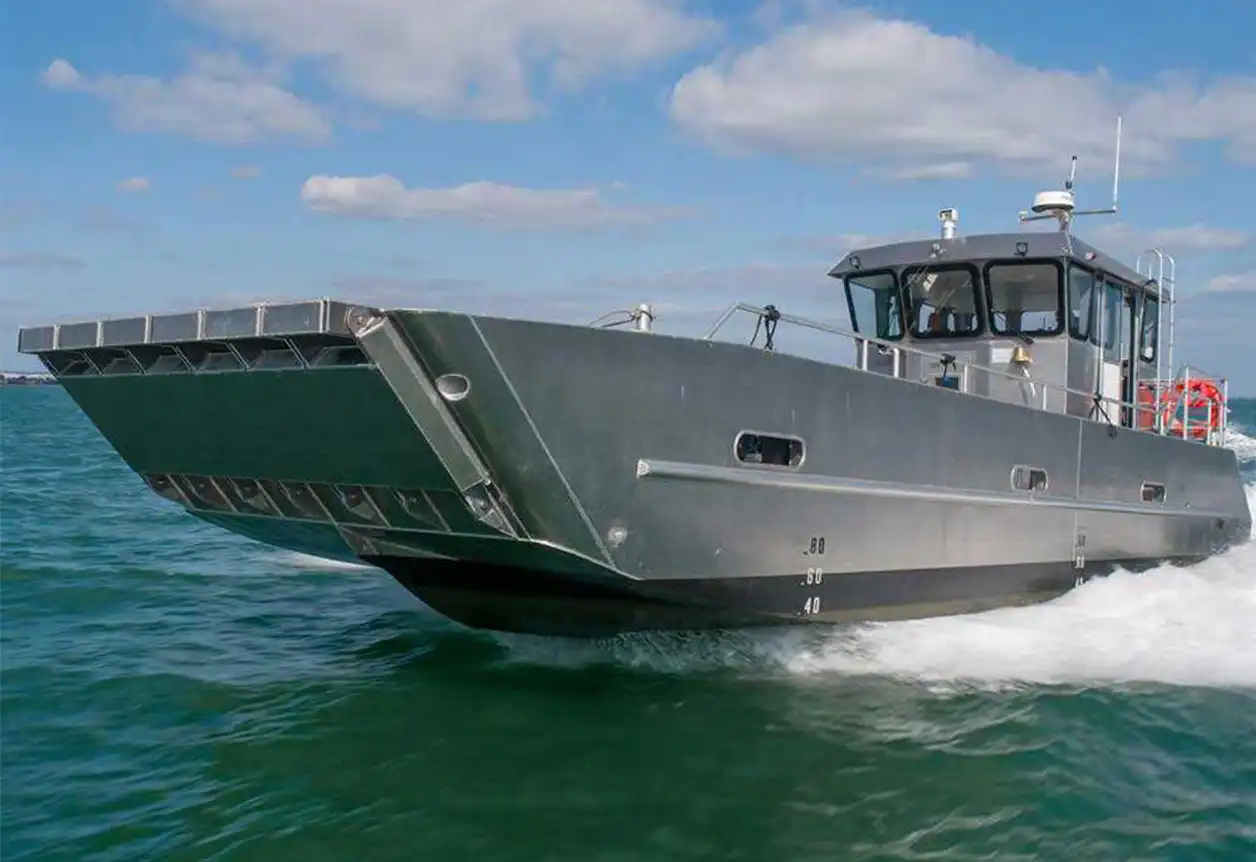
Side doors can be built into the hull sides of a landing craft and fitted with folding boarding ladders or dive ladders, which is very useful for diving, research and crew transfer work. Divers can enter the water through the side door and down the ladder instead of climbing over the side, which is much safer and easier. Side doors also provide a second access point when berthing, so crew and light supplies can get on and off from the side when the bow ramp cannot be lowered. On an 11-meter aluminum landing craft, for example, an optional side door and dive ladder let a single craft handle both cargo runs and dive support, making much better use of the asset. A customer who runs a dive club in Hainan told us that since adding a side door and dive ladder, guests get into the water much more easily, and repeat business has grown.
3. Side Handrails and Safety Rails: The Last Line of Defense for the Crew
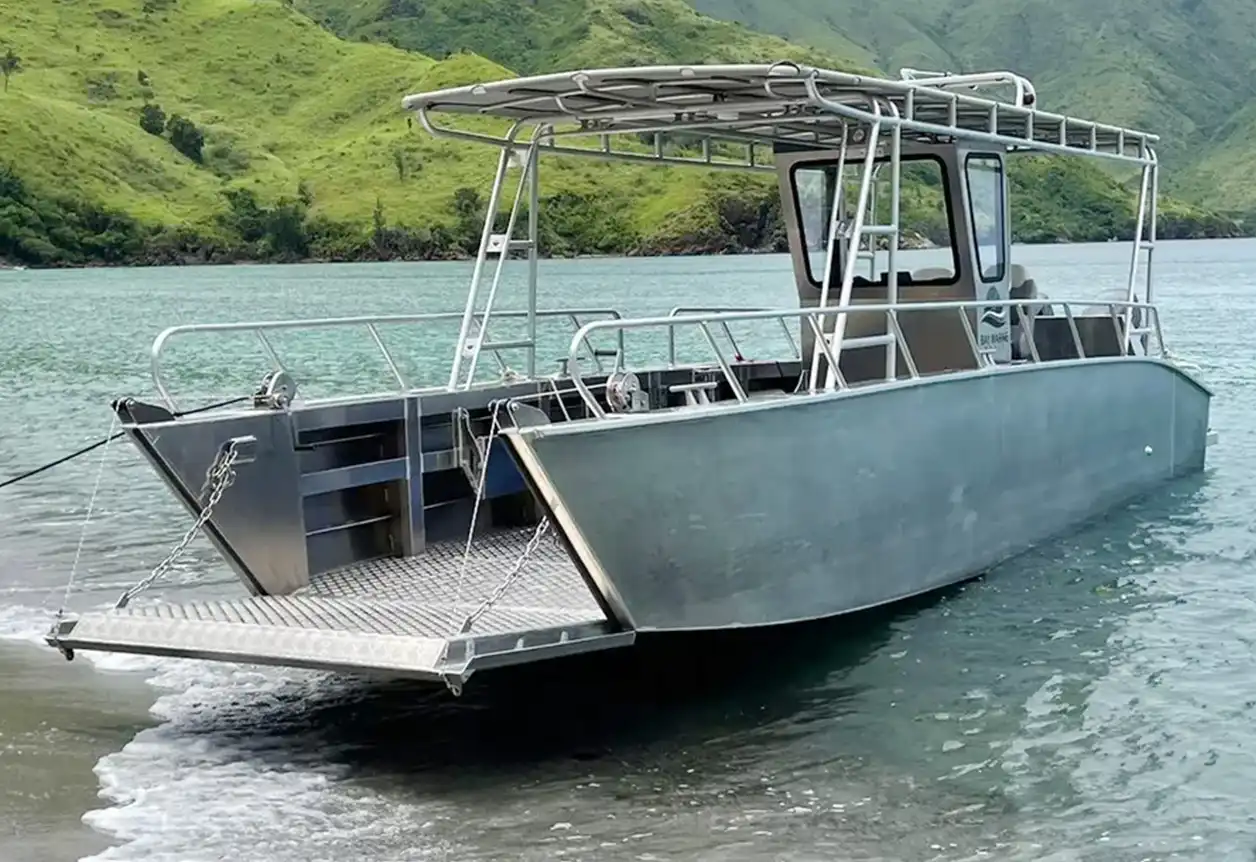
Landing craft usually have handrails along the gunwales at the edge of the deck. They give the crew something secure to hold while moving around the deck and double as extra tie-down points for cargo. In wind and waves, gunwale handrails are a vital aid for keeping balance, and on passenger landing craft, handrails and guardrails are essential safety features. On aluminum landing craft, side handrails are usually welded or bolted in place and made from the same material as the hull, so they stay secure and corrosion-free for years. An owner who runs island-hopping tours told us that the first thing passengers notice when they board is whether the side handrails feel sturdy, and that shapes how safe they feel on board. It is a small detail, but it is the first step in earning a customer’s trust.
4. Side Mounting Points: Adding Equipment Without Using Deck Space
The sides of a landing craft also make good mounting points for external equipment. Common side-mounted items include removable outboard brackets, spare fuel tank racks, life raft cradles, dive tank racks and mounts for work tools. These fittings take up no deck space but greatly extend what the landing craft can do. For work-focused craft that carry a lot of tools, side mounts also make tools easier to reach and stow. Our engineers can build standardized mounting points into the hull sides to suit your operation, making it easy to add or change equipment later. Adding these mounts at the design stage is cheaper and safer than welding them on afterwards.
5. Special Operations: From Rescue to Scientific Research
In emergency response and research work, the hull sides take on even more roles. In rescues, the sides give people in the water something to climb onto, and together with boarding ladders and life rings, they make rapid recovery possible. In research work, the sides can carry hydrographic monitoring equipment, sampling tools or sonar transducers. The strong hull sides of aluminum landing craft can take a range of external equipment without compromising the hull. A client doing nearshore environmental monitoring mounted water samplers and current meters on the gunwales to collect data in real time during operations, which made the work several times more efficient than relying on fixed monitoring stations as before. For research missions that deploy and recover equipment often, easy working access at the side directly affects how efficiently data can be collected.
6. Specifying the Hull Sides: Matching the Layout to Your Operation
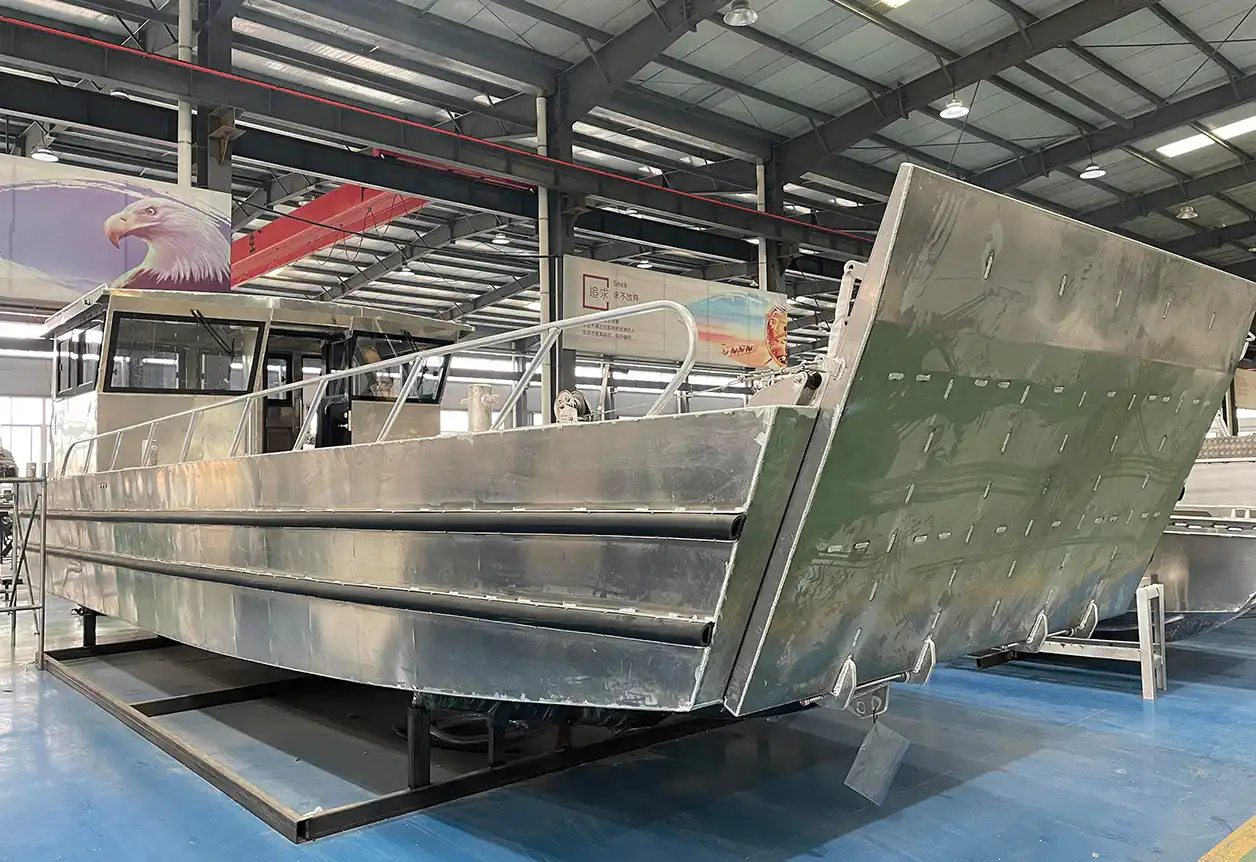
Not every landing craft needs every side feature. Base your choices on your core operation: for cargo work, fenders and mooring points are essential; for diving or crew transfer, side doors and boarding ladders are needed; for engineering work, plan mounting points on the hull sides in advance. The sides of an aluminum landing craft are highly customizable, and building in mounting points and reinforcement during construction is cheaper and more reliable than retrofitting later. Talk through your operation with the manufacturer before you buy, so the hull sides become a working area that truly serves your business, not just part of the hull. Send us your application and the size you have in mind, and our engineers will suggest a side layout to match.
To plan fittings together with the rest of your specification, see our aluminum landing craft buyer’s guide.