1. The Numbers: Speed Ranges by Model
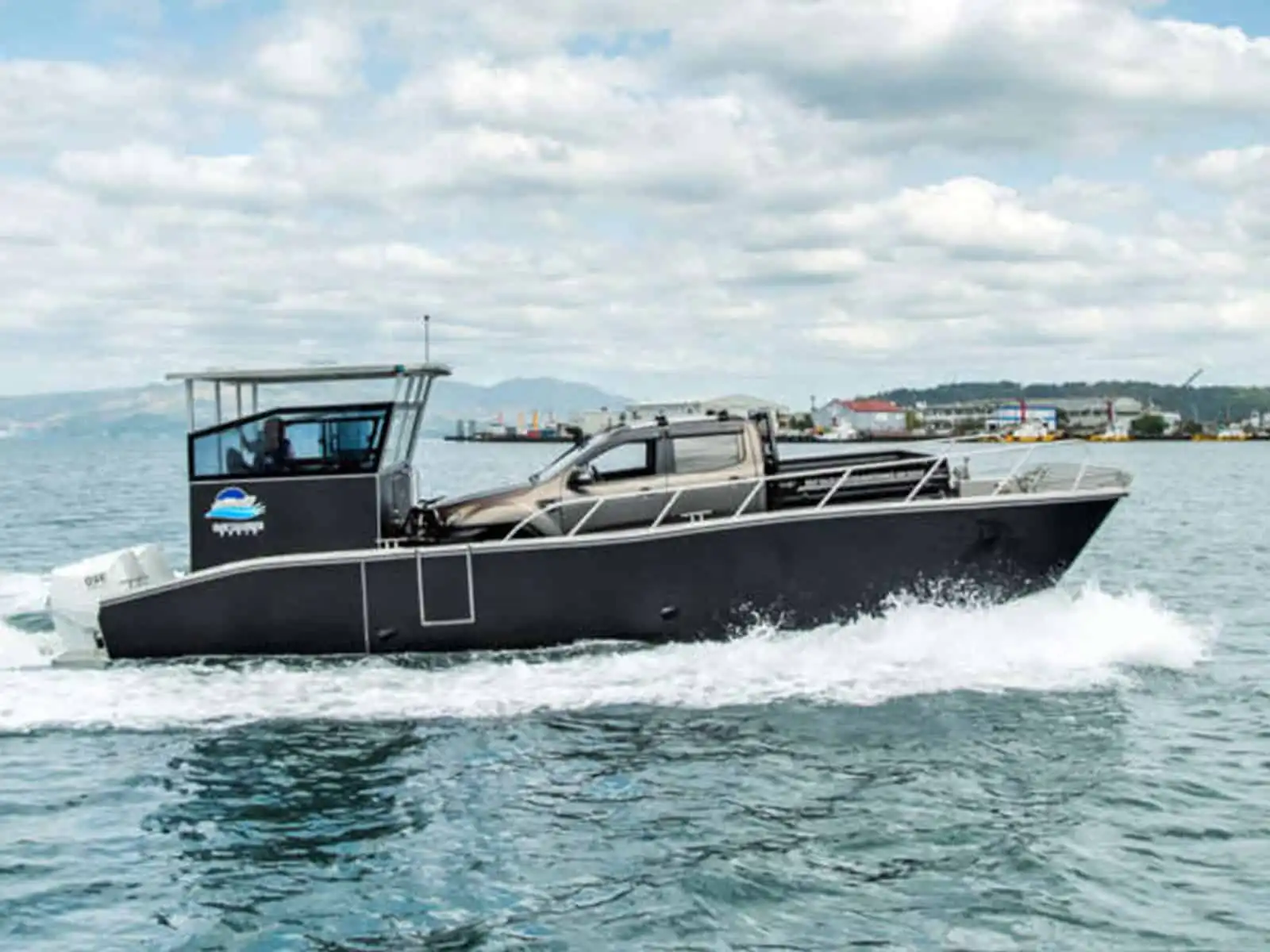
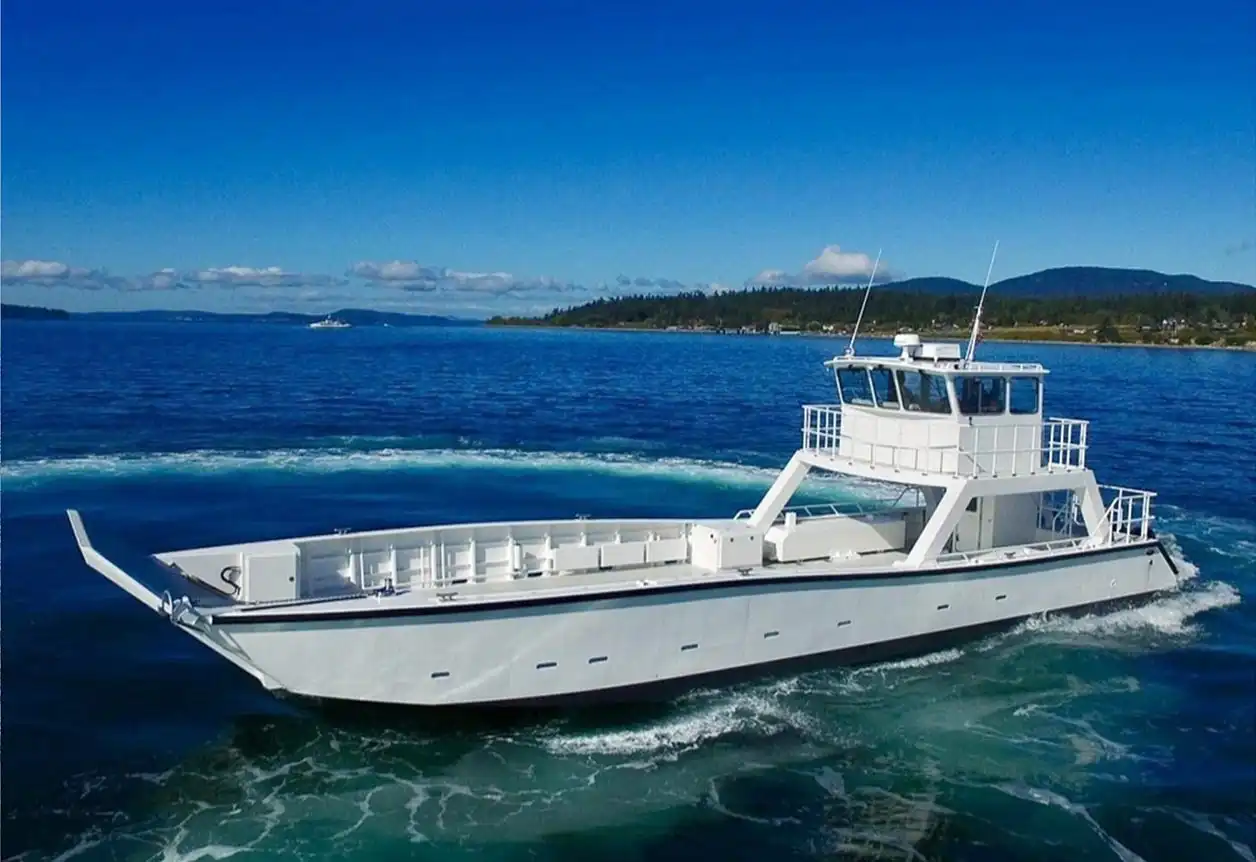
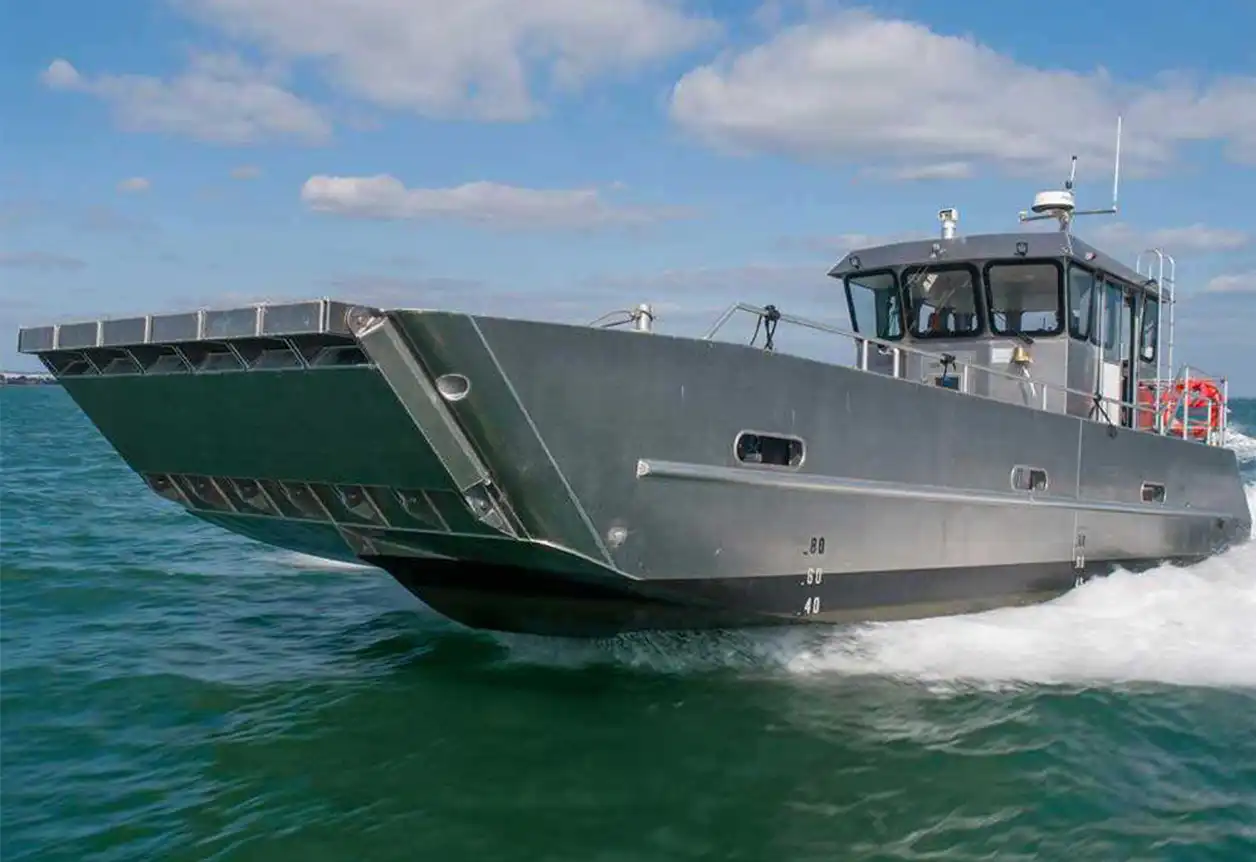
A landing craft’s speed depends on its size, engines and load. In our range, a 9-meter aluminum landing craft with 300–500 hp of outboard power reaches about 25 to 28 knots empty and about 18 to 22 knots fully loaded. The 12-meter model, with three 200 hp outboards, reaches up to 25 knots. The 14-meter model, with two 300 hp engines, makes about 20 knots fully loaded, and the 18-meter model can reach up to 37 knots. Standard steel cargo boats, by comparison, usually run at about 10 to 12 knots. Their light hulls give aluminum landing craft a clear speed advantage, which matters wherever a fast response is needed: on a 20-nautical-mile route, a steel boat may take close to two hours, while a landing craft needs only about one.
2. The Biggest Factor: Hull Weight and Material
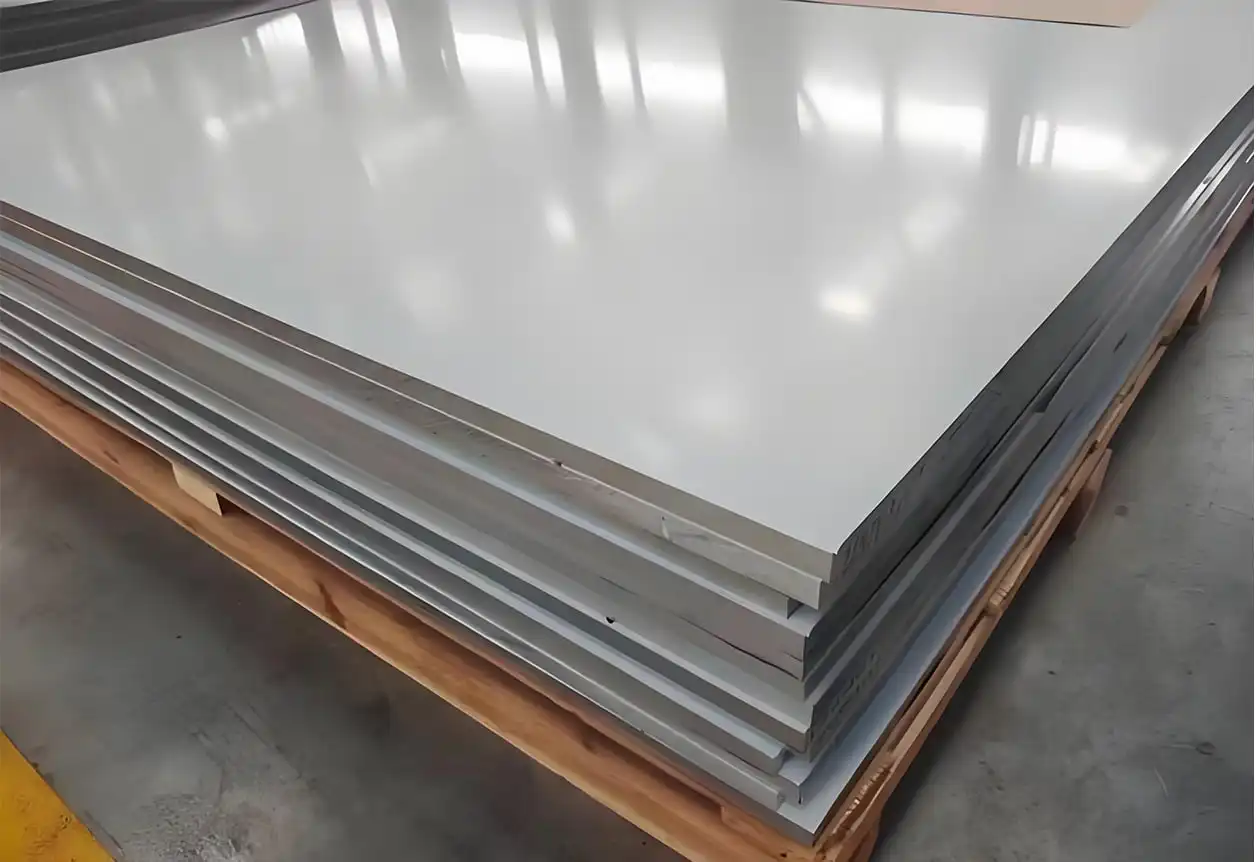
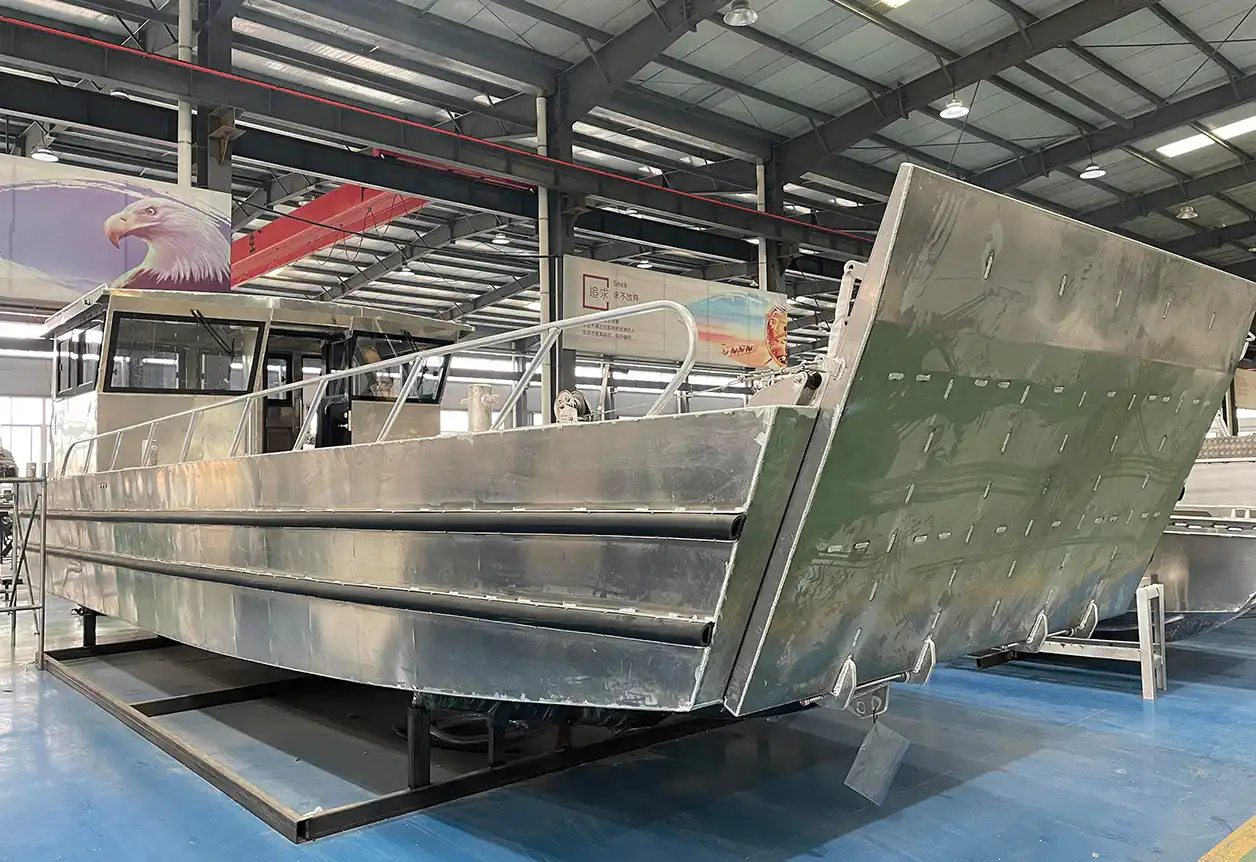
All else being equal, a lighter hull needs less power to reach the same speed, one of the basic principles of hull design. Steel hulls are heavy and need more power to move. Aluminum landing craft are built from marine-grade aluminum such as 5083 alloy and weigh 30% to 50% less than steel boats of the same size, so they go faster on the same power or burn less fuel at the same speed. With the same 300 hp engine, a steel boat might reach only 15 knots, while an aluminum landing craft can reach 25 knots. On longer routes, that difference changes how many round trips you can make in a day, and for time-critical work such as perishable cargo and emergency rescue, shorter trip times are worth more than the speed figure itself.
3. Choosing Engines: Single, Twin or Triple?
The engine setup directly affects top speed. Smaller landing craft (7.9 to 9 meters) typically use 150 to 500 hp of outboard power, an economical choice for short supply runs. Mid-sized models (10 to 11 meters) often use twin engines with a combined 300 to 800 hp, balancing speed and reliability: if one engine fails, the other keeps the craft moving. Larger models (12 to 14 meters and above) can use three engines or a more powerful twin setup, with 600 to 1,200 hp in total, for high speed even under heavy loads. Choosing the setup means balancing purchase cost, fuel use and speed. On long, time-sensitive routes, the extra speed of twin or triple engines can quickly pay for itself in saved time. One customer with a 12-meter aluminum landing craft told us that although the three engines cost more up front, the extra trip they made each day paid back the difference in less than two years.
4. Speed and Payload: Empty vs Fully Loaded
A landing craft’s speed changes considerably with its load. A 12-meter aluminum landing craft, for example, can reach 25 knots empty but drops to 18 to 20 knots with a full 6-ton load, a reduction of about 25%. This is normal physics, not a performance problem. When planning operations, calculate the outbound trip at the loaded speed and the return at the empty speed to get an accurate daily capacity. Many owners look only at the empty top speed and overlook the loaded cruising speed, which is what really decides how many trips you can make in a day. If you carry heavy cargo, plan directly around the fully loaded speed for a more reliable schedule.
5. Beyond Top Speed: Cruising Speed and Range
Top speed tells you how fast a craft can go; cruising speed tells you how far it can go economically, and for commercial work that usually matters more. A landing craft’s economical cruising speed is typically about 65% to 75% of its top speed, where fuel use per mile is lowest. A 9-meter aluminum landing craft, for example, has a top speed of about 28 knots and an economical cruising speed of about 18 to 20 knots; at that speed, 100 nautical miles takes about 5 to 6 hours and burns much less fuel than running flat out. For B2B operations, knowing a landing craft’s cruising speed and range is more useful than chasing top speed. Experienced owners run fast when they need to catch the tide and cruise economically the rest of the time, keeping both schedules and costs under control.
6. What Speed Is Worth in Commercial Operations
So how much is a few extra knots worth? Take a 20-nautical-mile route: at 20 knots it takes 1 hour, at 15 knots 1 hour and 20 minutes. Saving 20 minutes a trip on four trips a day saves more than an hour daily, or hundreds of hours a year. For time-critical work such as perishable cargo, urgent spare parts or offshore wind farm maintenance, faster trips mean happier customers and room for more orders. The light weight of aluminum landing craft gives them a natural speed advantage over steel boats, and that advantage shows up directly in your revenue. Tell us your route length and cargo, and we will recommend a model and engine setup that fit your schedule.
For the other factors to weigh when you choose a model, see our aluminum landing craft buyer’s guide.