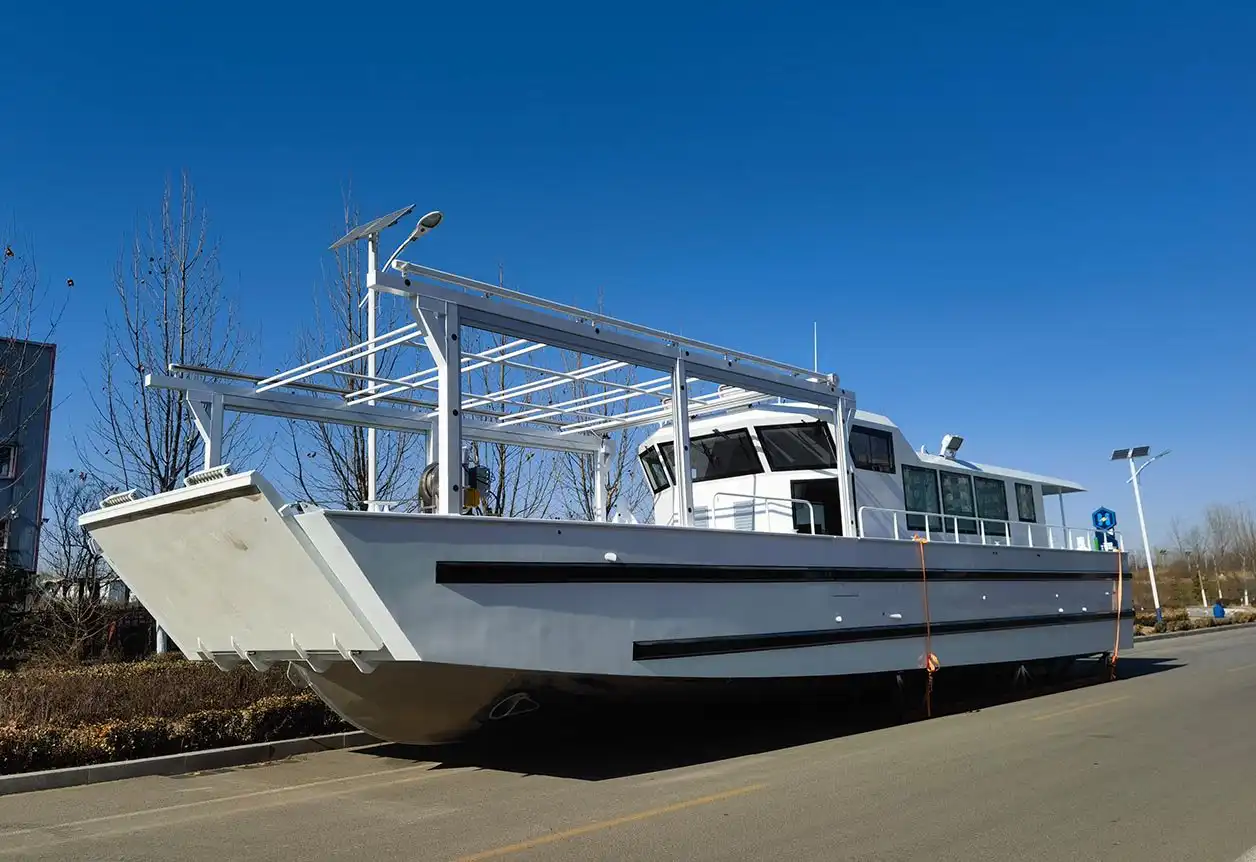
1. Aluminum Alloy Landing Craft
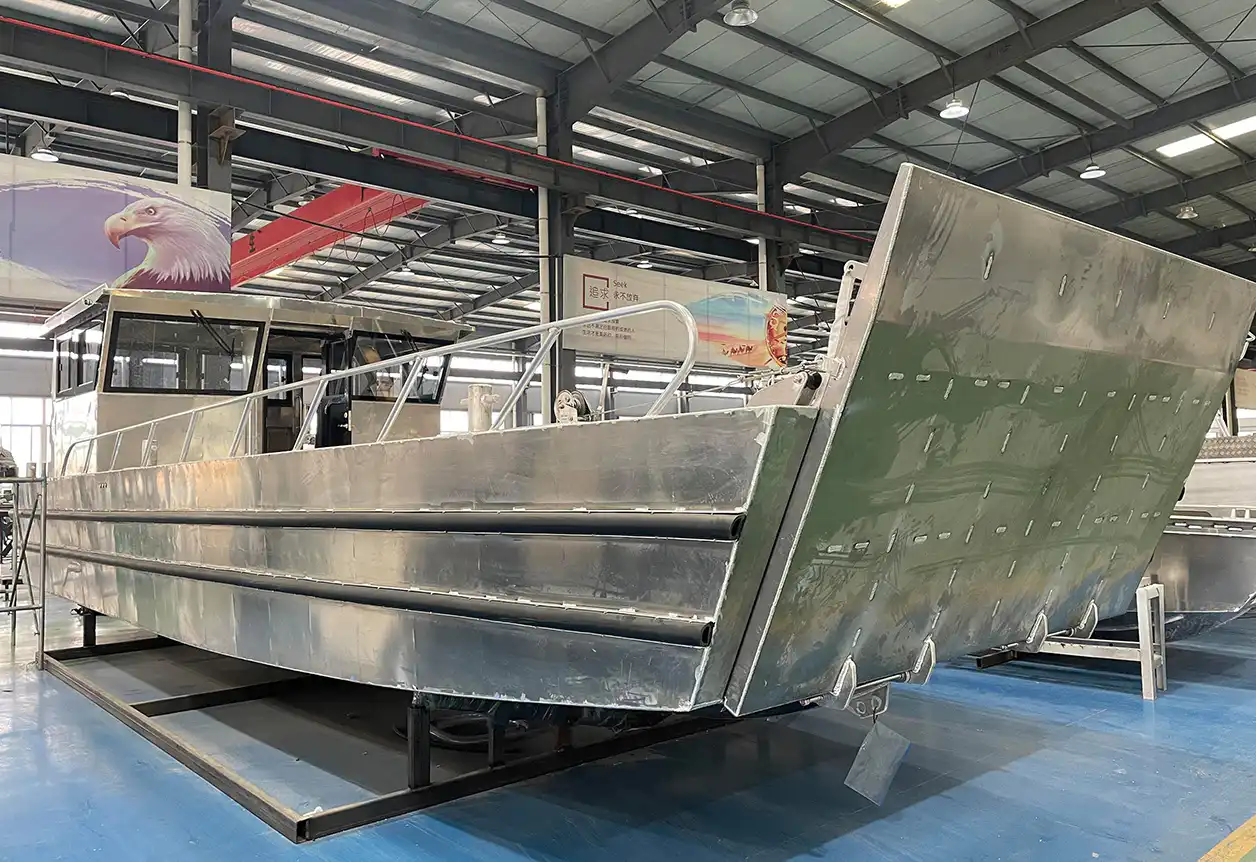
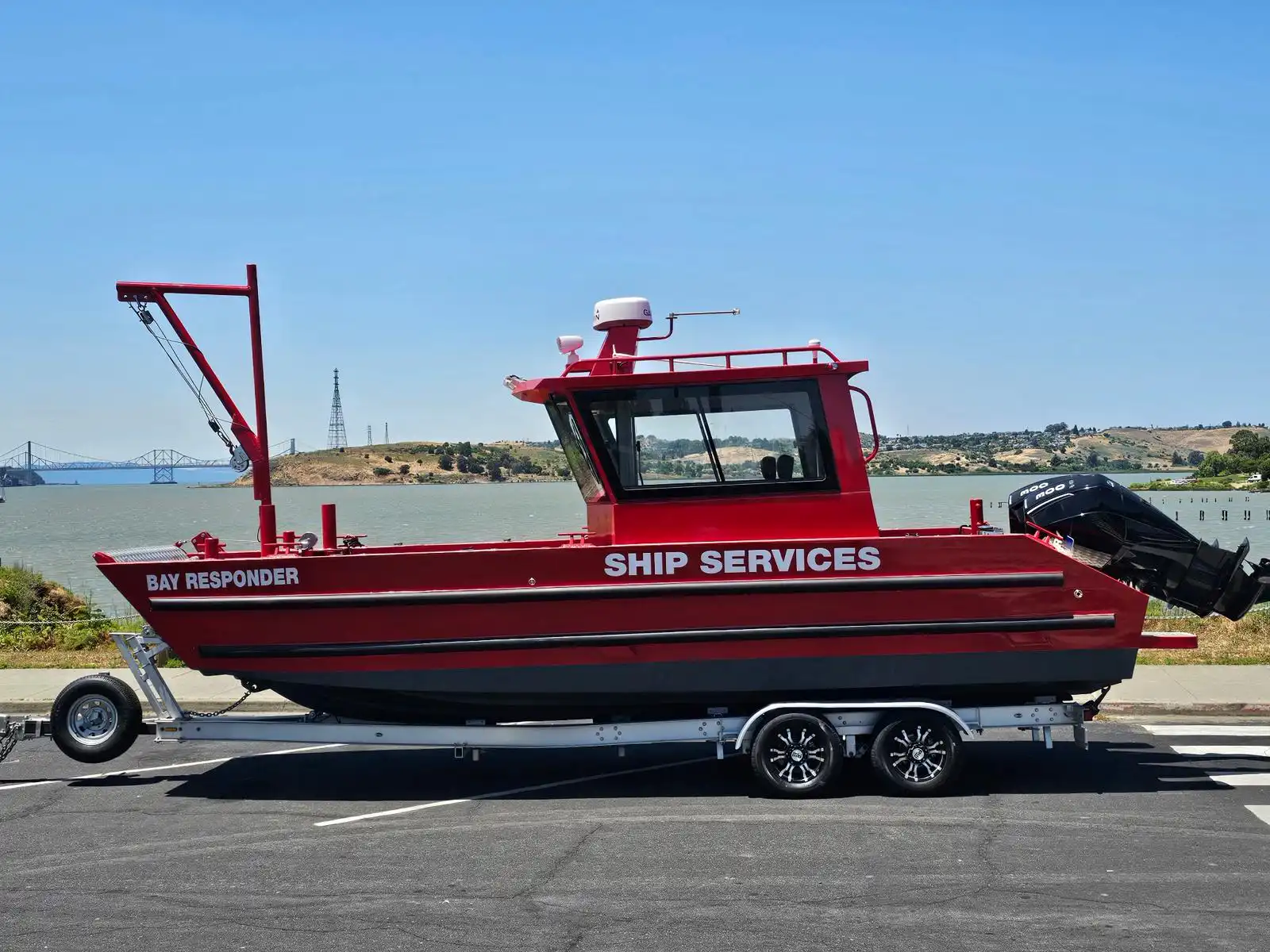
Aluminum, especially marine-grade alloys such as 5083-H116, is the most widely used material for modern commercial landing craft.
Advantages:
- Light and strong, for higher speeds and lower fuel consumption.
- Excellent corrosion resistance in saltwater and long-term coastal use.
- Shallow draft thanks to the lower weight, so the craft can land on beaches and reach undeveloped shores.
- Low maintenance, with no anti-rust coatings needed.
- Fully recyclable, in line with modern sustainability standards.
- Easy to customize, with options such as bow ramps, wide decks and double-deck wheelhouses.
Disadvantages:
- Higher material cost than steel.
- Requires skilled welding and fabrication.
- Less suited than thick-plate steel to extremely heavy industrial loads.
Overall, aluminum gives commercial operators the best mix of versatility, durability and life-cycle value.
2. Steel Landing Craft
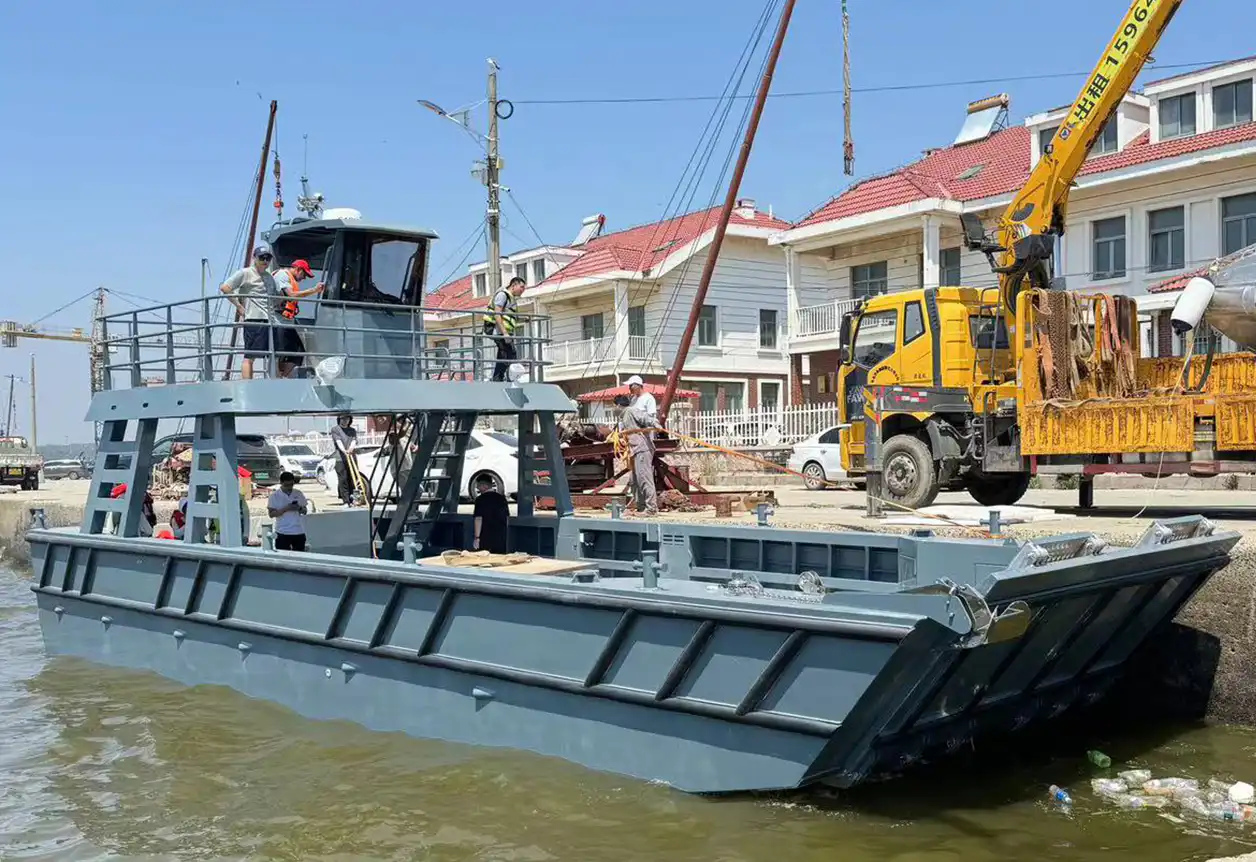
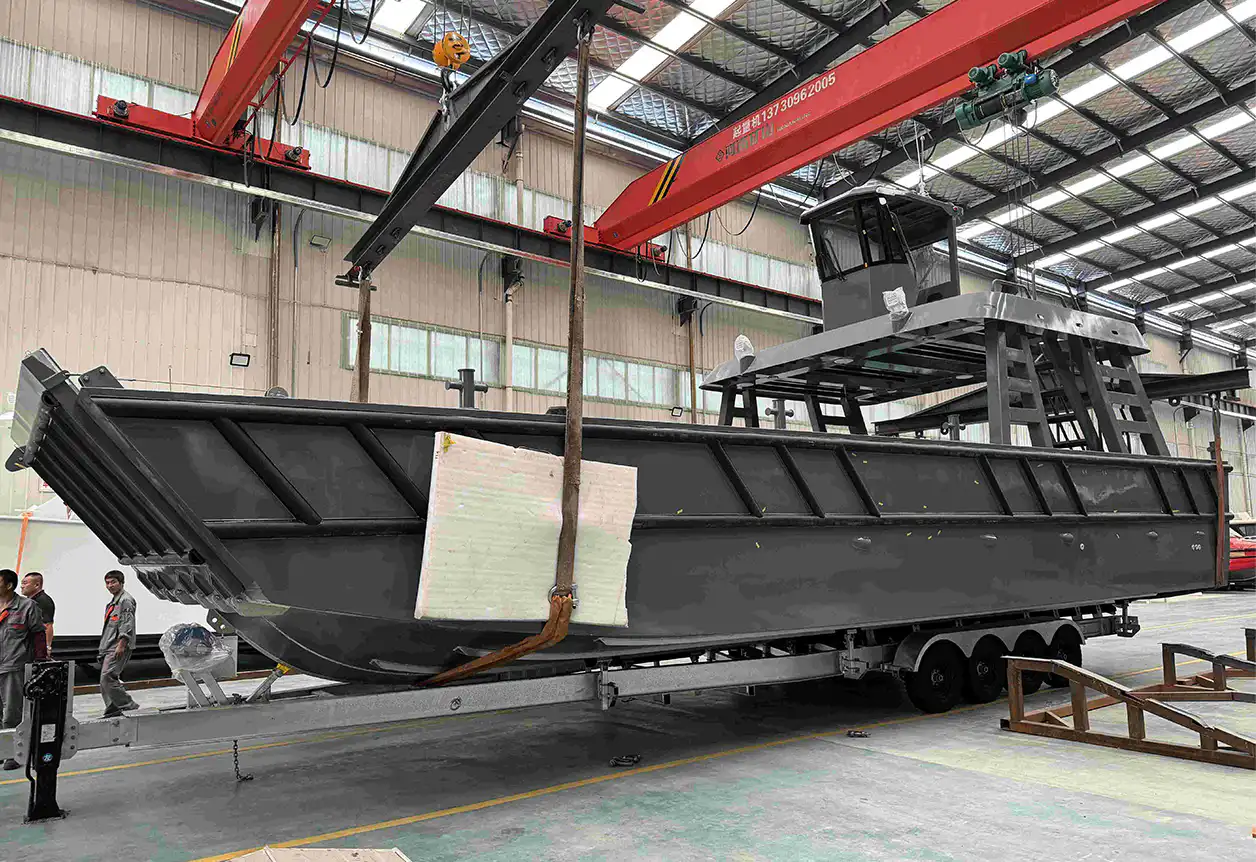
Steel has long been the traditional material for large industrial landing craft and barges.
Advantages:
- Very high strength and load capacity for heavy cargo, vehicles, machinery or fuel.
- Tough structure that withstands harsh environments and heavy impacts.
- Low raw-material cost, especially for large hulls.
Disadvantages:
- Heavier weight, which means higher fuel use and lower speed.
- Prone to corrosion, so regular painting, coating and maintenance are required.
- Deeper draft, so it is less suited to shallow beaches and small islands.
Steel landing craft suit heavy logistics, military supply and large-scale marine construction.
3. Fiberglass (FRP) Landing Craft
Fiberglass (FRP) landing craft are less common for heavy-duty work but are used in small-scale commercial and recreational settings.
Advantages:
- Low cost for small hulls, and easy to mold into complex shapes.
- Naturally corrosion-resistant, with little painting needed.
- Smooth, attractive finish, often preferred in tourism.
Disadvantages:
- Lower structural strength than aluminum or steel.
- Vulnerable to impact damage and cracking.
- Less suited to heavy cargo and high-load work.
- Hard to repair in the field and not recyclable.
FRP landing craft are best for light passenger transport, small resort operations and recreational use.
4. Conclusion
The right hull material depends on the job. Aluminum offers the best balance of strength, weight, corrosion resistance and versatility, which is why most modern commercial fleets choose it. Steel suits heavy industrial work that needs maximum load capacity, while fiberglass fits lighter, low-cost applications.
Every Poseidon landing craft, from 7.9 to 21 m, is built from 5083-H116 marine aluminum. Tell us what you need to carry and where you operate, and we will recommend a model and send you a quote.
Once you have chosen the material, our aluminum landing craft buyer’s guide covers size, layout, power and the rest of the specification.