1. High Strength-to-Weight Ratio for Better Efficiency
Aluminum’s biggest advantage is its strength-to-weight ratio. Marine-grade alloys such as 5083-H116 provide high structural strength while weighing far less than steel. For operators who run their landing craft every day, that means higher speeds, lower fuel use and better efficiency. The lighter hull also accelerates and maneuvers better, which matters when beach landings and shallow-water work are frequent.
2. Excellent Corrosion Resistance in Saltwater Environments
Commercial landing craft often operate in harsh coastal or tropical areas where saltwater corrosion is unavoidable. Aluminum naturally forms a protective oxide layer that resists corrosion far better than steel, eliminating the need for constant repainting or anti-rust treatments. This resistance not only improves the hull’s longevity but also reduces maintenance downtime, ensuring more consistent and profitable operations.
3. Shallow Draft and Beach-Landing Capability
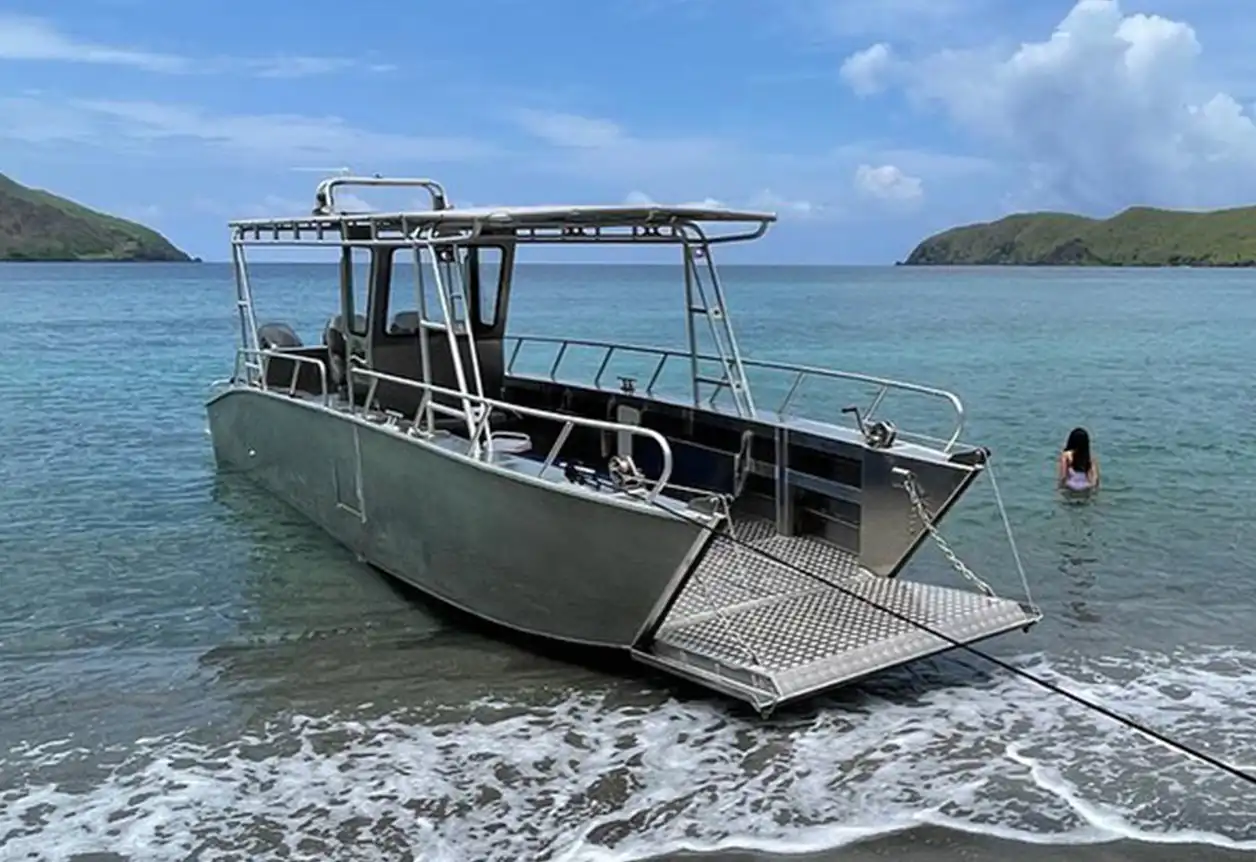
Because aluminum is light, a landing craft can keep a shallow draft even with a substantial load. That matters for commercial work that involves:
- Beach landings
- Access to undeveloped shorelines
- Navigation through shallow rivers or lagoons
- Supplying remote islands without ports
Steel boats sit deeper in the water, which limits where they can go. Aluminum landing craft can reach places that heavier boats cannot.
4. Versatile and Customizable for Multiple Commercial Roles
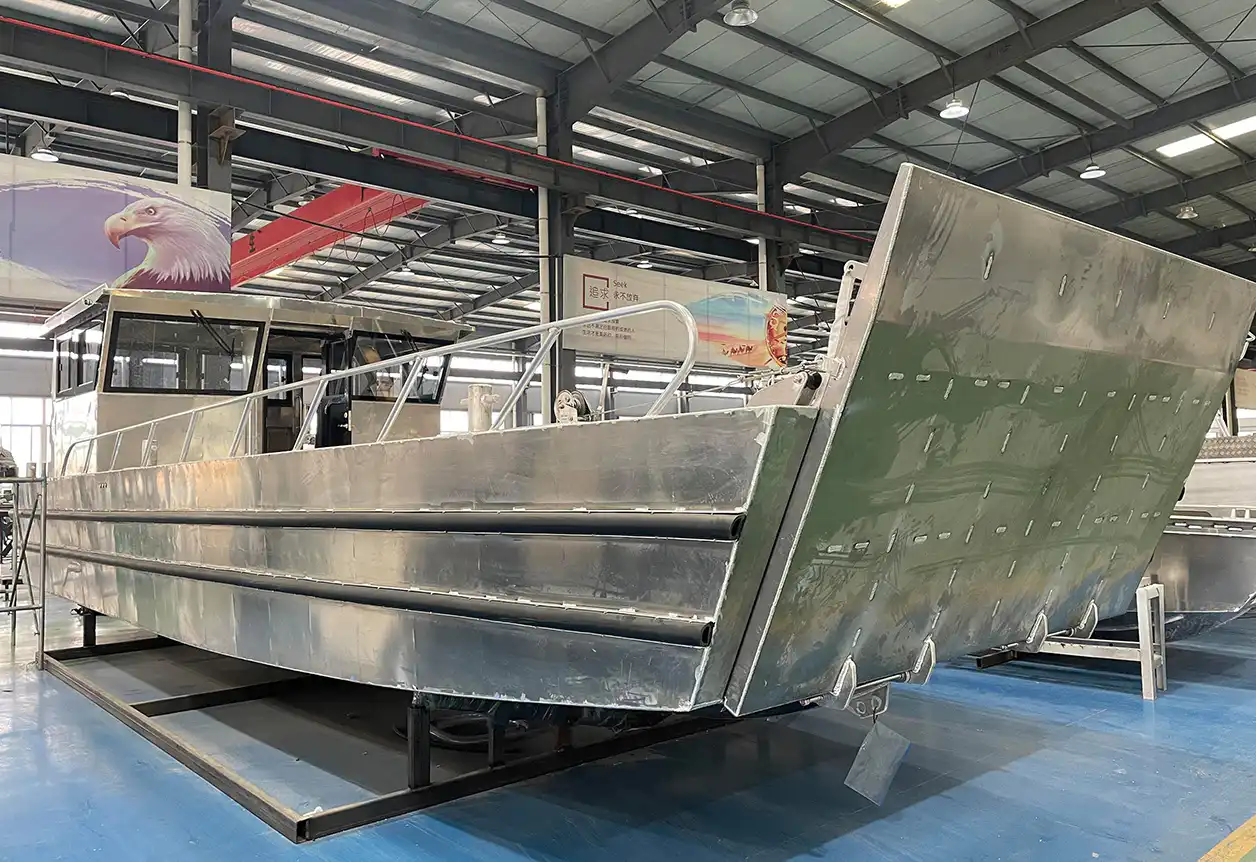
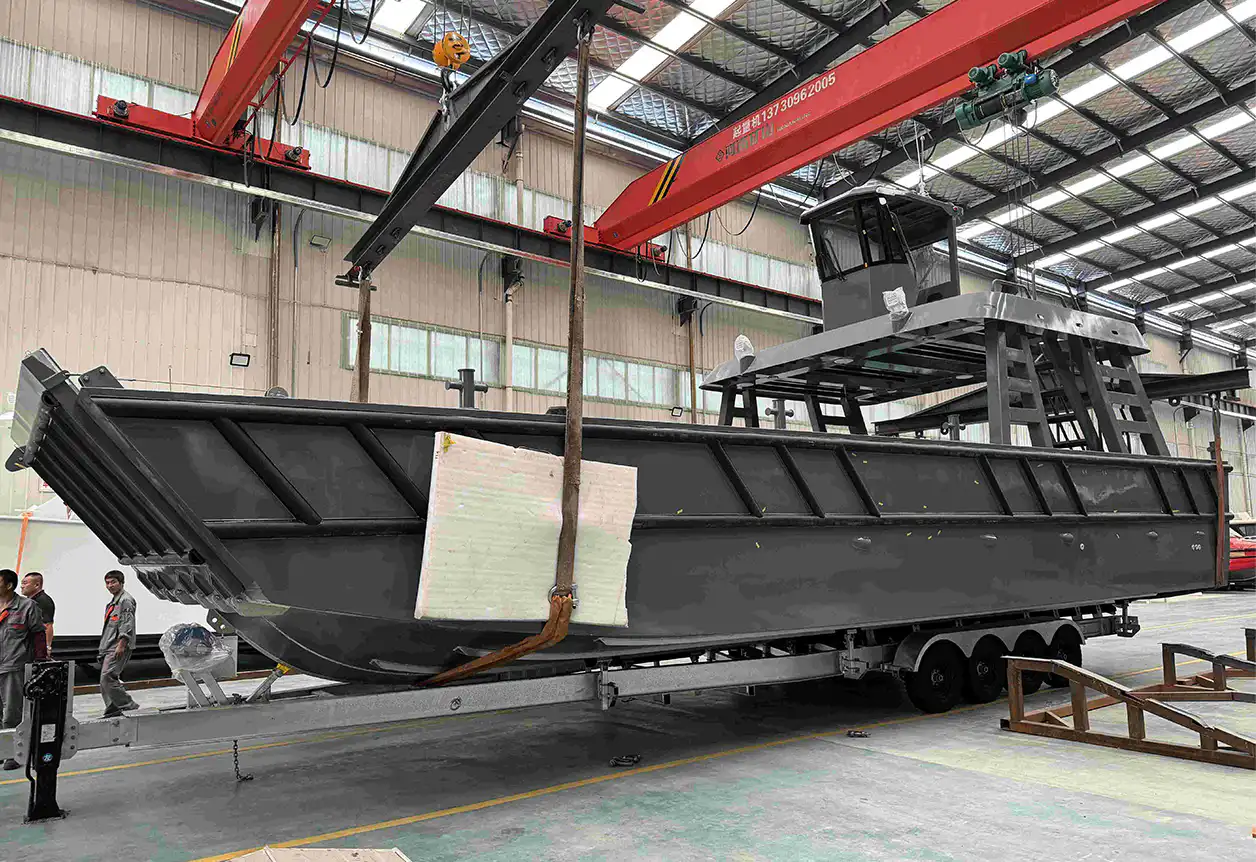
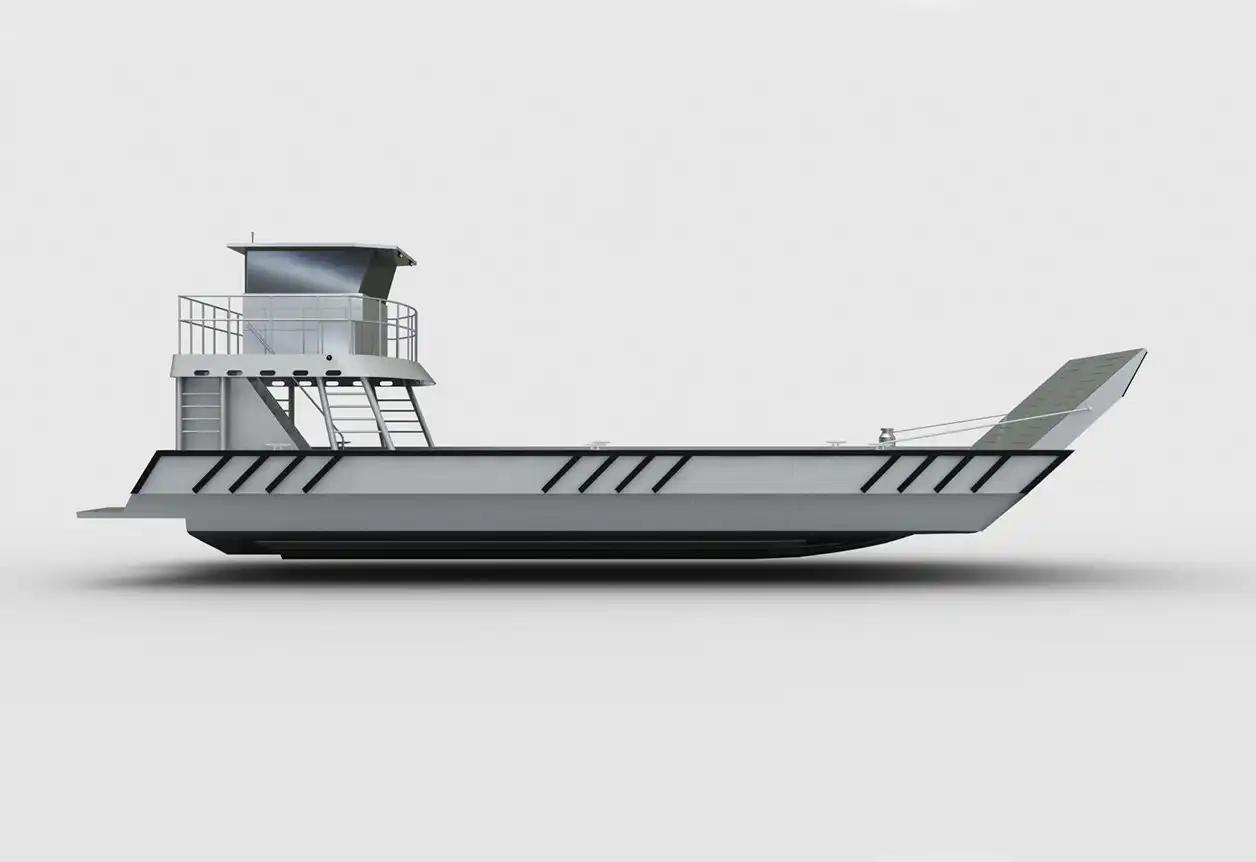
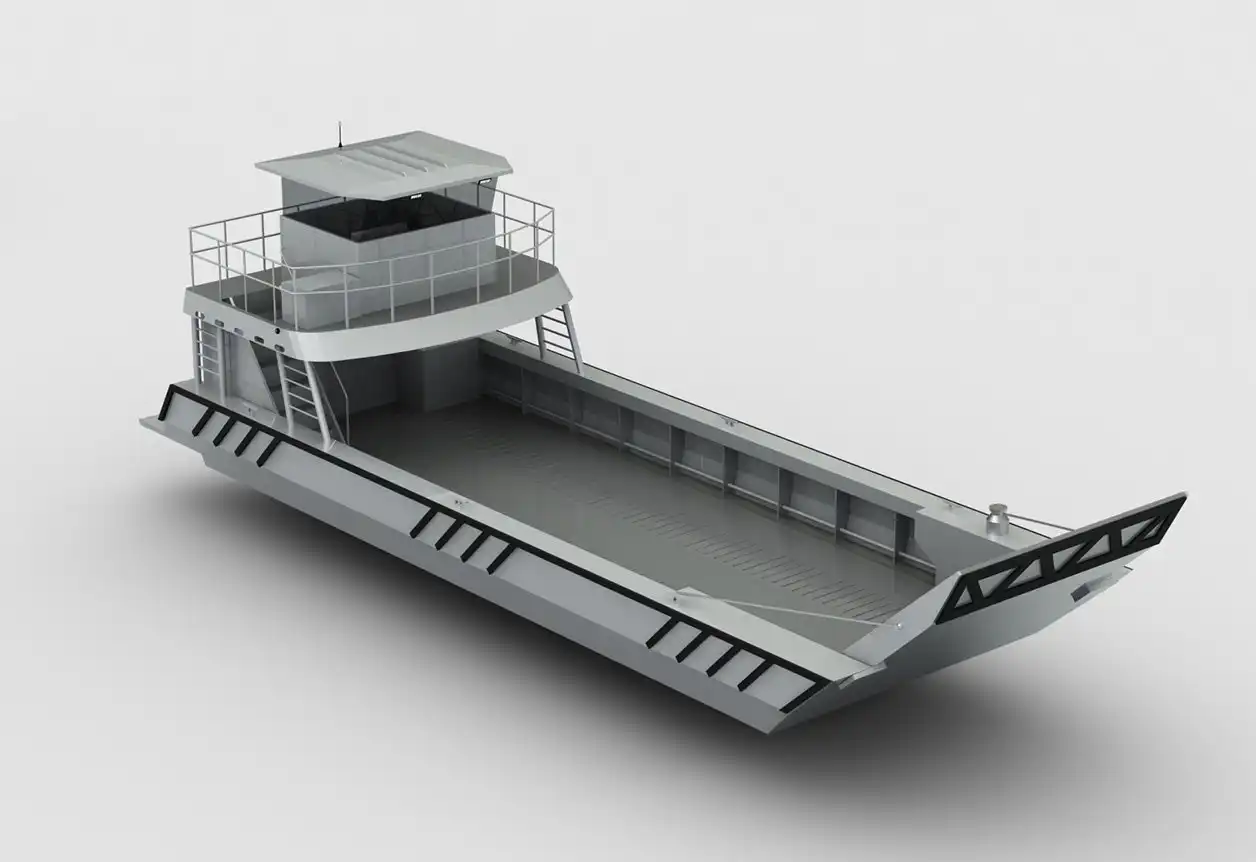
Commercial operators value flexibility. Aluminum is easy to form and weld, so builders can design landing craft with:
- Wide bow ramps
- Large open decks
- Double-deck wheelhouses
- Passenger cabins
- Dive platforms
- Tank storage rooms
This makes aluminum landing craft suitable for cargo transport, tourism, construction support, aquaculture, research and emergency services, and a single craft can serve several business roles to improve your return on investment.
5. Lower Lifetime Operating Costs
An aluminum hull may cost more up front than steel or fiberglass, but its total cost of ownership is much lower. The savings come from:
- Lower fuel consumption
- Minimal corrosion treatment
- Fewer repairs
- Longer service life
- High resale value
For commercial fleets, where operating cost is critical, aluminum delivers measurable long-term savings.
6. Eco-Friendly and Fully Recyclable
Environmental responsibility matters more and more in maritime operations. Aluminum is fully recyclable and has a smaller environmental footprint than steel or FRP, which makes aluminum landing craft a more sustainable choice that supports green initiatives and regulatory requirements.
7. Conclusion
Aluminum landing craft offer a strong balance of durability, efficiency, versatility and cost-effectiveness. Their light structure, corrosion resistance, shallow draft and customizable layout make them a reliable choice for commercial operators in many different marine environments.
We build aluminum landing craft from 7.9 to 21 m, with payloads from 1 to 30 tons, for cargo, passenger, construction and rescue work. Contact us with your requirements for a recommendation and a quote.
To turn these advantages into the right specification, see our aluminum landing craft buyer’s guide.