1. What Is a Flybridge? The Second Helm Station on a Landing Craft
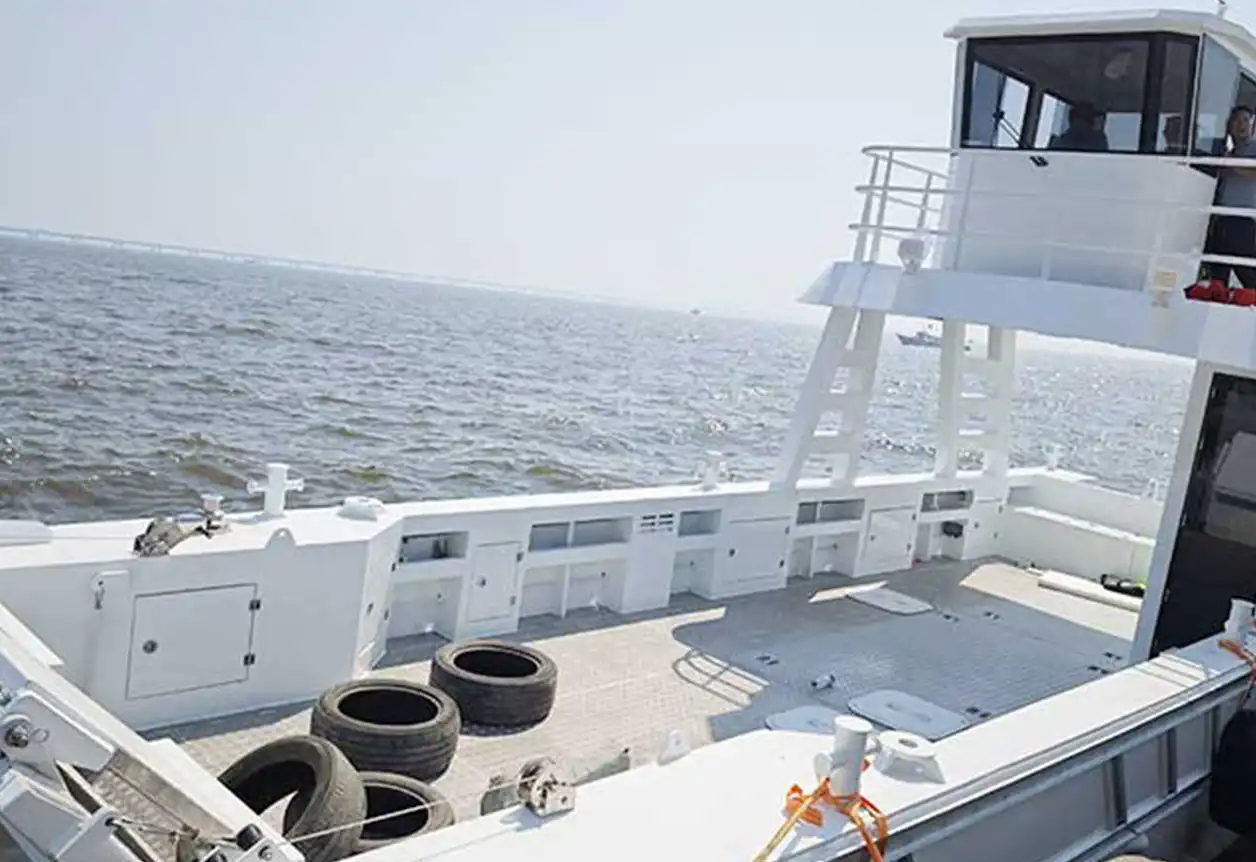
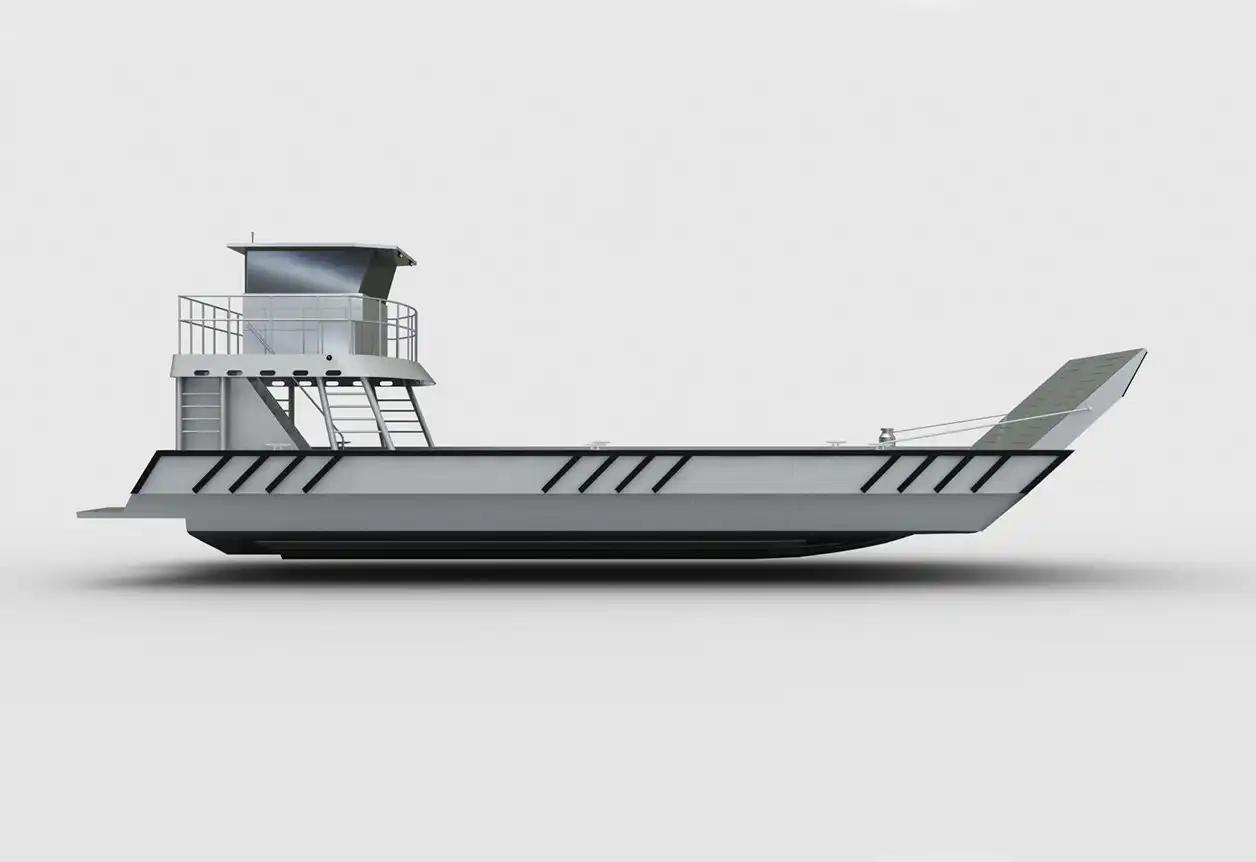
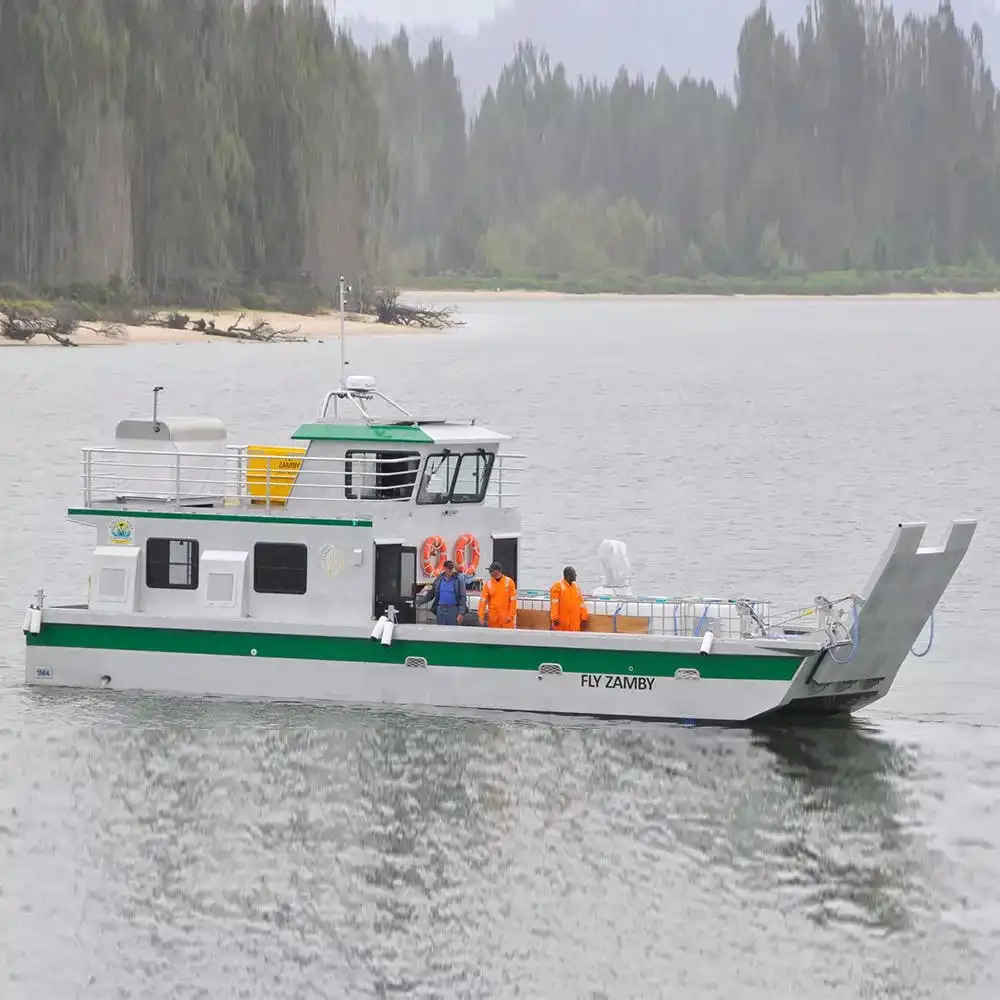
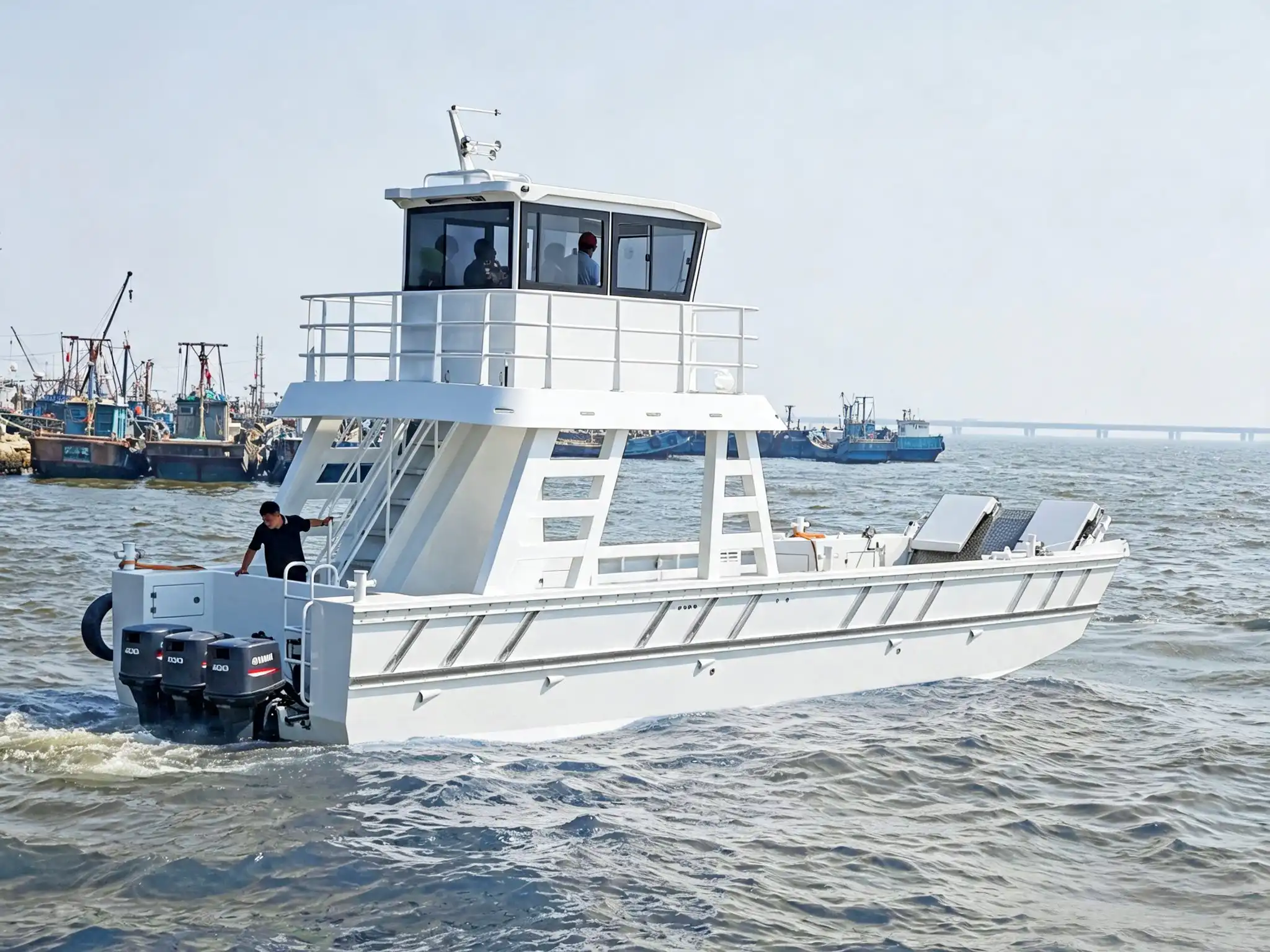
A flybridge is an open or semi-open helm station on the upper deck, usually on top of the wheelhouse or superstructure. On a landing craft, it serves as a second helm station, letting the operator drive the craft from a higher vantage point. Because it sits higher than the main wheelhouse, it offers a much wider view, and it usually has its own steering, engine controls and navigation equipment. On larger landing craft of 12 meters and above, a flybridge is an important option that gives owners more flexibility in how they operate. If you have seen a landing craft with a flybridge, it looks rather like an upper observation deck, except this one has a steering wheel and throttles.
2. Visibility: A Clear View from Above
The most immediate benefit of a flybridge is visibility. Landing craft have a wide bow ramp, and because the main wheelhouse sits relatively low, the bow structure can easily block the operator’s view. The flybridge sits at the highest point of the craft, giving the operator an almost unobstructed 360-degree view. This matters most when docking, navigating narrow channels and beaching: the operator can clearly see the bow ramp in relation to the shoreline and control the beaching angle and speed precisely. As one experienced captain put it: “Sitting on the flybridge, you have a clear view of the entire beachhead and the surrounding waters—a sense of control that a lower-level wheelhouse simply cannot provide.” For commercial landing craft that often work in difficult waters, good visibility is the first line of defense for safety.
3. Space Efficiency: Raising the Helm to Free Up the Deck
The flybridge also makes better use of space. With a helm station on the upper deck, the cabin on the main deck can be made much smaller or even removed, freeing more room for cargo or passengers. On a 14-meter aluminum landing craft, for example, a flybridge gives the operator a panoramic view while keeping the full cargo area below. Owners do not have to choose between a comfortable helm and cargo capacity; they get both. For commercial users who need to make the most of their deck, this is a very practical design. As one client put it with a smile: “With the flybridge, the entire lower deck can be used for cargo, and I can still navigate comfortably from above—this design is a real bargain.”
4. Operational Efficiency: Better Visibility, Faster Work
In commercial operations, the value of a flybridge ultimately comes down to efficiency. Better visibility lets the operator make decisions faster, whether choosing the best approach angle when docking or steering around obstacles in narrow channels, with less hesitation and fewer repeated corrections. When beaching, the operator on the flybridge can see exactly where the ramp meets the beach and control speed and angle precisely enough to land in one attempt. For operations that dock several times a day, a few minutes saved each time adds up to a lot of time over a year, and in logistics, time is money. Where tidal windows are tight, the extra visibility can be the difference between making the tide and waiting for the next one.
5. Which Landing Craft Suit a Flybridge? Matching Size and Application
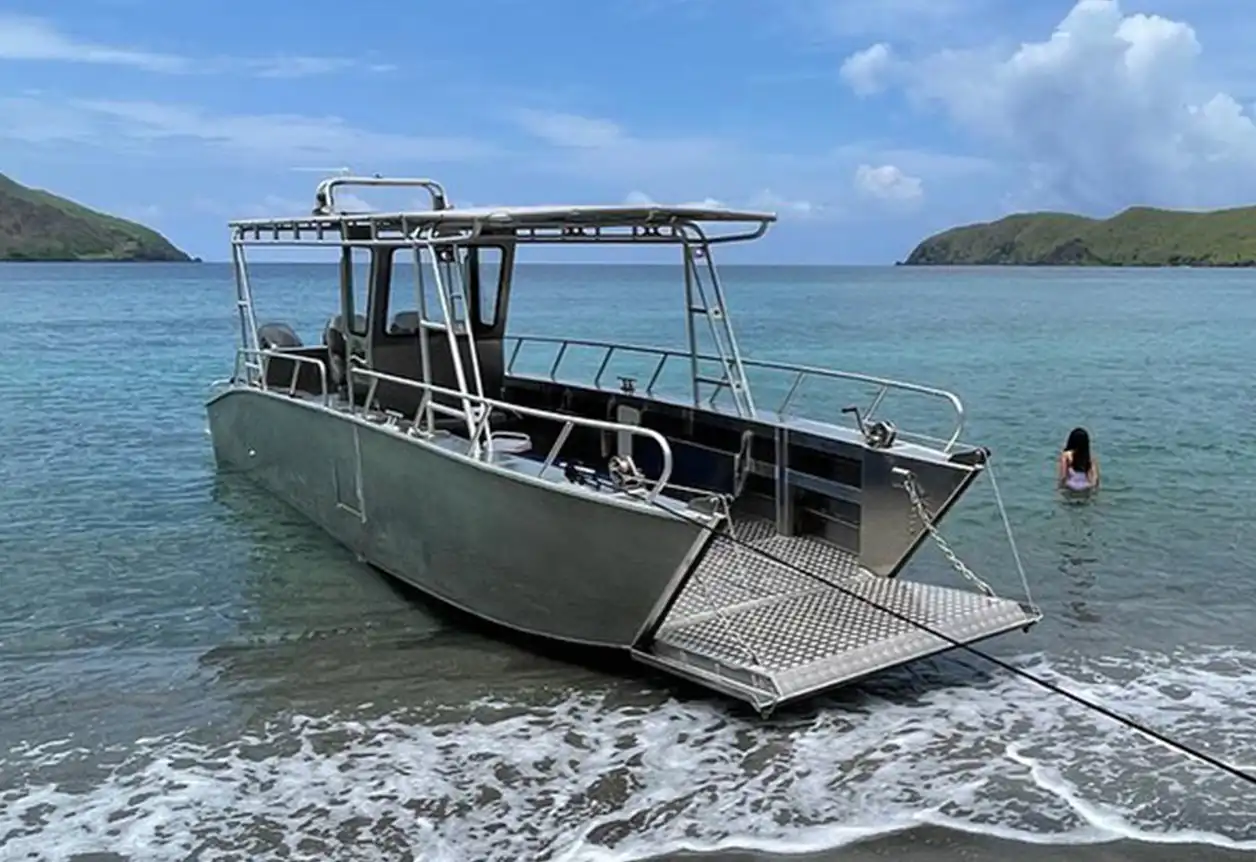
A flybridge is not standard on every landing craft. It is generally considered only on aluminum landing craft of 12 meters and above. On smaller landing craft (7.9 to 11 meters), a flybridge would add considerable height and windage and reduce stability, so they are better suited to a compact console or a single-level cockpit. Landing craft of 12 to 14 meters are the ideal size for a flybridge: the hull is large enough to carry the extra superstructure, and the better visibility pays off most in mid-sized operations. On craft over 14 meters, flybridges are common, and some designs use a two-level layout with an open flybridge above and an enclosed wheelhouse below for different weather. When deciding whether to add a flybridge, weigh the craft’s size, operating waters and budget, and choose what you actually need rather than following trends.
6. Practical Value: From Sightseeing Tours to Construction Work
A flybridge brings different benefits in different applications. On sightseeing trips, it doubles as an observation deck where passengers can enjoy open sea views and the breeze, a real selling point for tours. In construction and engineering work, the operator on the flybridge can see the whole deck and work area and direct lifting and loading precisely, avoiding miscommunication caused by blind spots. In island logistics, it gives the operator a better view when beaching, so fewer course corrections are needed. Simply put, a flybridge takes the operator from seeing only what is ahead to seeing the whole picture, which often makes a big difference in complex operations. If you are considering an aluminum landing craft of 12 meters or more for commercial work, a flybridge is well worth adding to your option list. Tell us how you will use the landing craft and we will advise whether a flybridge suits your layout.
For the other layout choices, from center consoles to enclosed cabins, see our aluminum landing craft buyer’s guide.