1. Lightweight Does Not Equate to “Unstable”—The Fundamentals of Aluminum Hull Stability
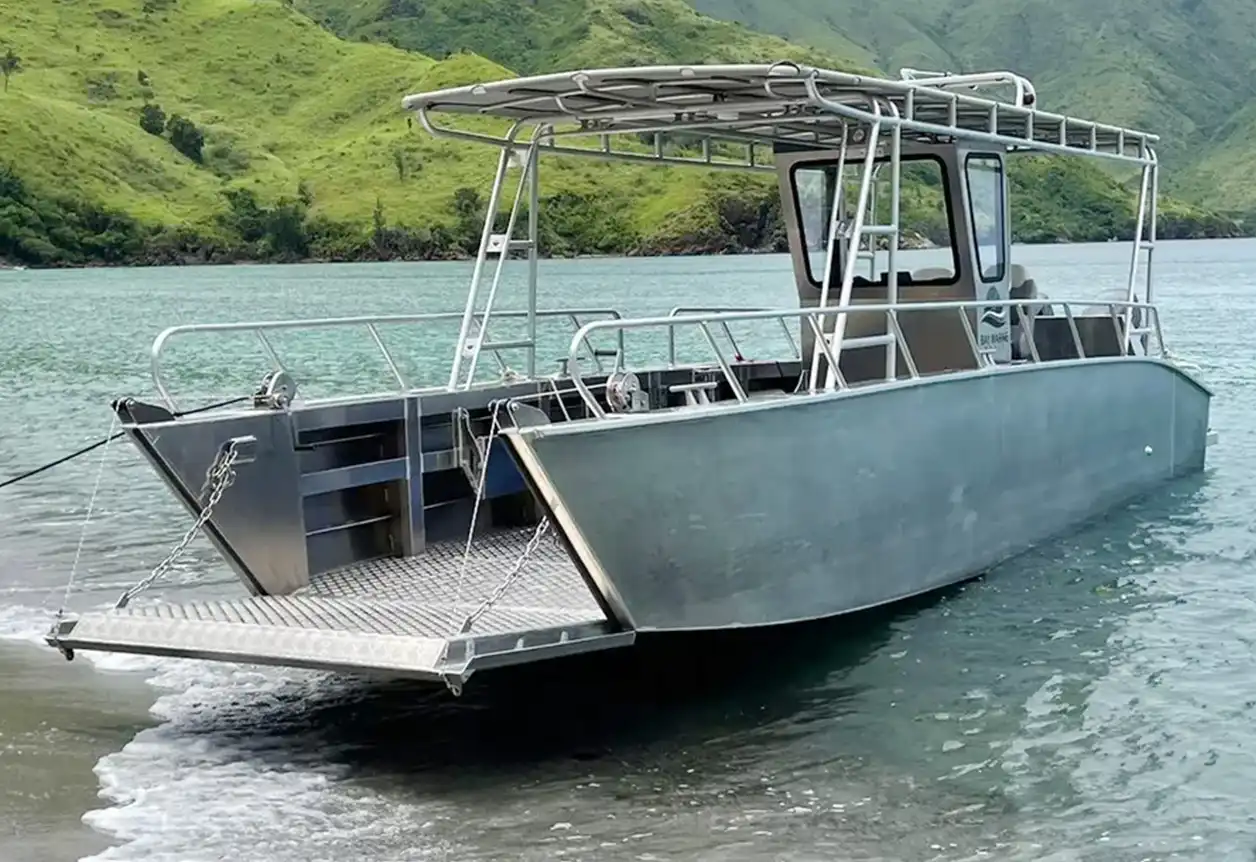
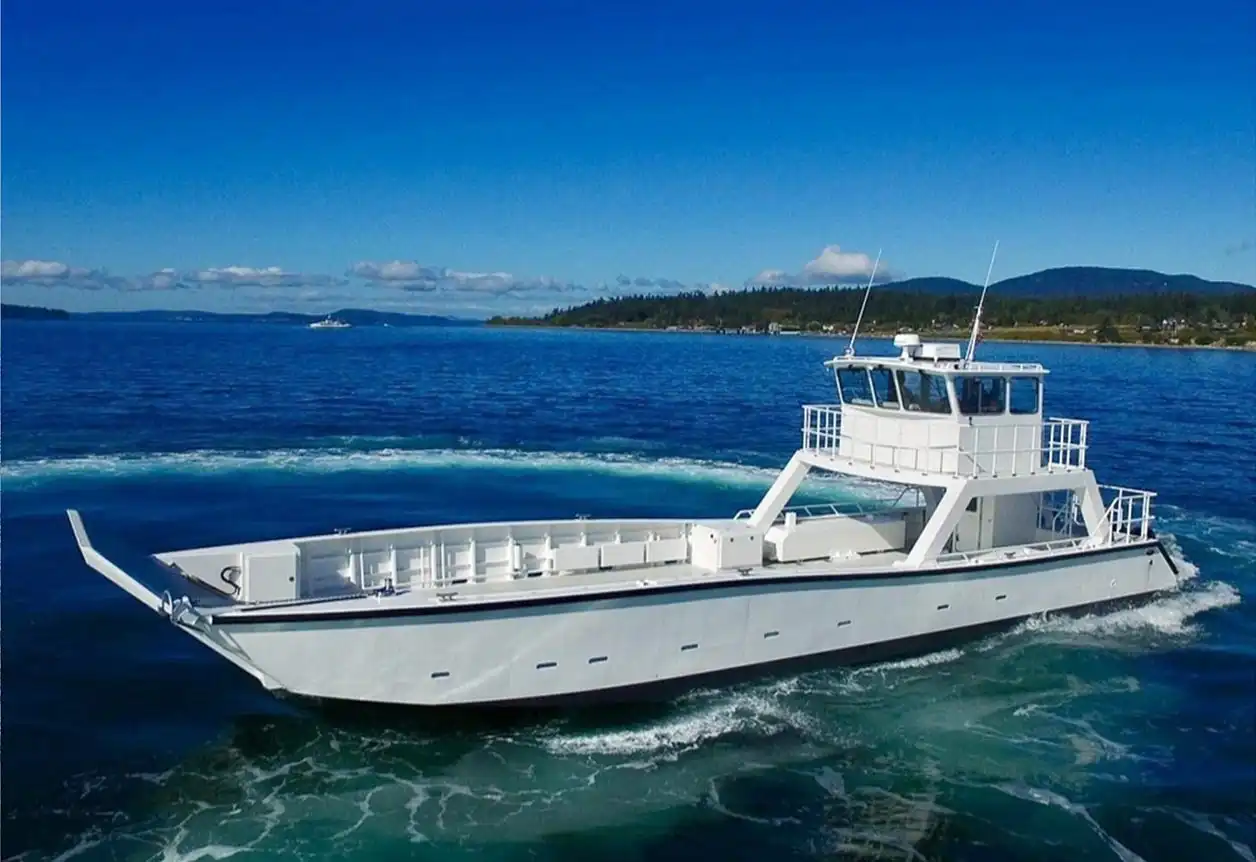
Many people intuitively assume that because aluminum landing craft are lightweight, they have poor resistance to wind and waves. This assumption overlooks a key fact: the stability of an aluminum landing craft depends on the design alignment of the center of gravity and the center of buoyancy, rather than simply on weight. Marine-grade 5083 aluminum has a density of about one-third that of steel. With the reduction in the hull’s deadweight, designers can allocate the saved weight to ballast, equipment, and structural reinforcements, thereby maintaining the craft’s center of gravity at an optimal position. An 18-meter aluminum landing craft has a beam of 5 meters and a waterline length of 13.3 meters; this wide waterline area provides the geometric foundation for transverse stability. Simply put, aluminum landing craft are not “unstable simply because they are light,” but rather “light yet wide”; it is the design of the beam and center of gravity that is the true source of stability. An experienced surveyor once remarked that to assess a boat’s stability, one should first examine its beam and center of gravity, and only then consider the material—the material determines durability, not stability itself.
2. Hull Form Determines Seakeeping Capability—Differences in Applicable Limits Between Flat-Bottomed, Shallow-V, and Deep-V Designs
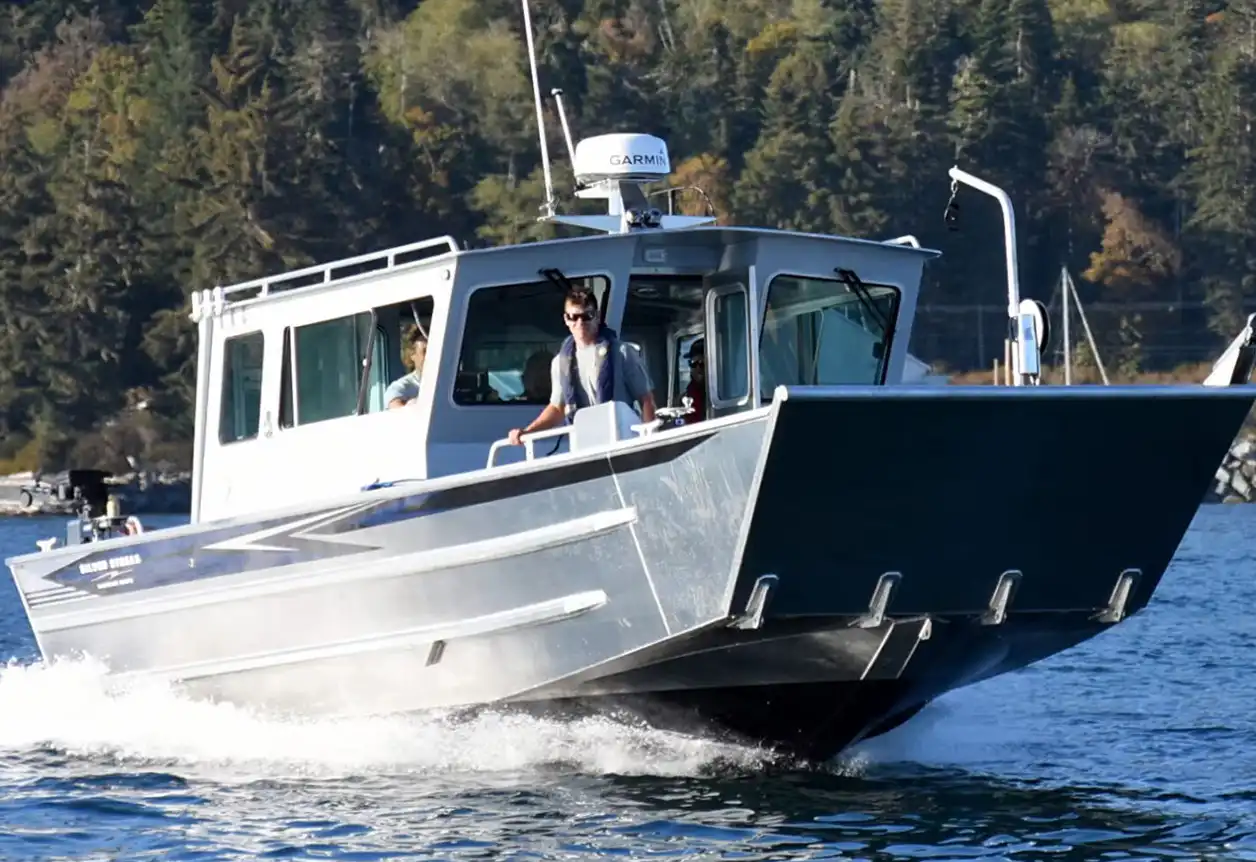
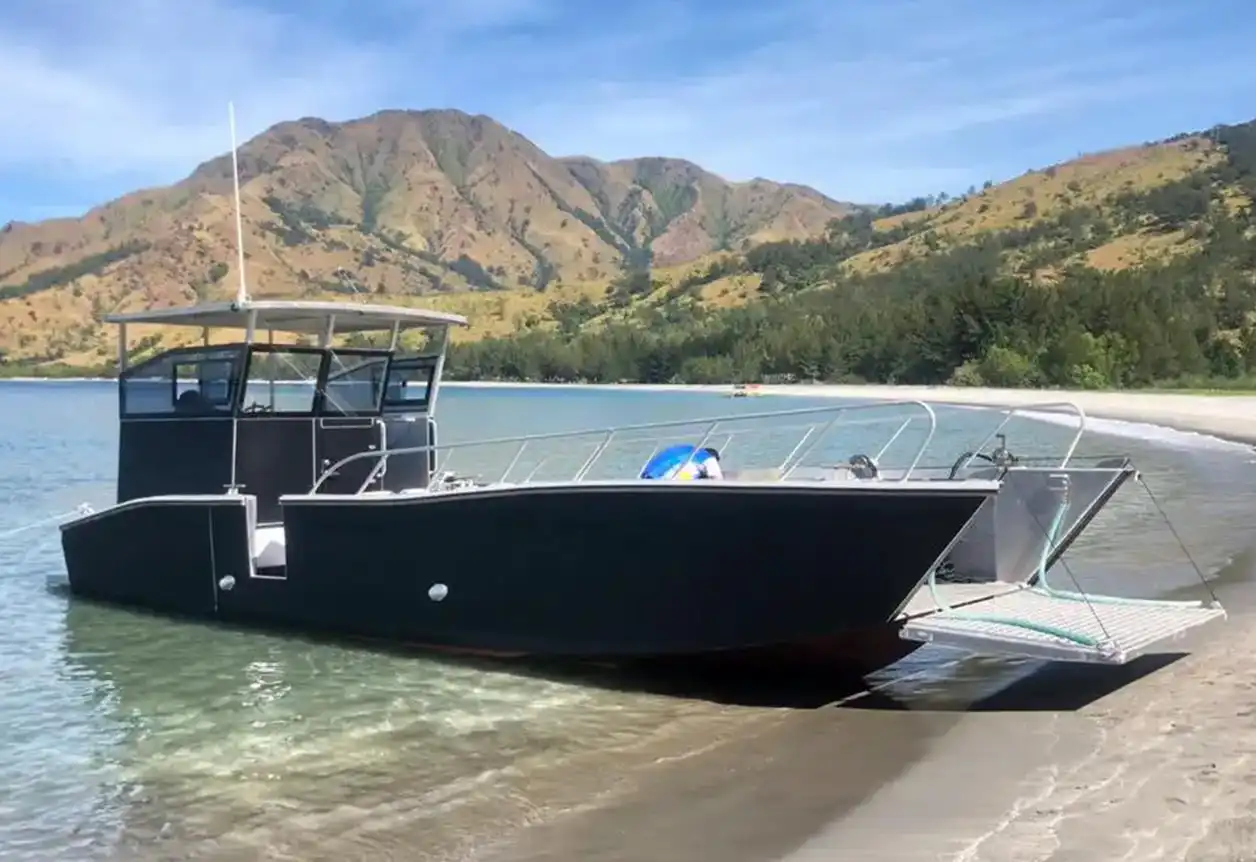
The hull shape of a landing craft directly determines its performance in wind and waves. Flat-bottomed and shallow-V designs prioritize shallow-water passage and beaching capability; they perform stably in the common swells found in nearshore, inland, and sheltered waters, but the sensation of pounding is relatively pronounced when sailing into the waves. Some aluminum landing craft employ deep-V hulls, specifically designed for “smooth operation in severe weather and sea conditions.” The aluminum fast landing craft designed by BMT for the UK Ministry of Defense experiences a speed loss of less than 1 knot in Sea State 4, while maintaining “excellent seakeeping and maneuverability.” This means that the ability of aluminum landing craft to withstand wind and waves is not a fixed value; when selecting a model, you must choose a hull form that matches your primary operational waters—opt for a flat-bottomed or shallow-V hull for nearshore shallow waters, and prioritize deep-V or semi-deep-V designs if you frequently encounter offshore swells. If you choose the wrong hull type, even the largest landing craft will not be comfortable in rough seas.
3. Stability is not a matter of perception, but a standard—the correlation between CE design categories and wave height
The most direct way to determine how severe wind and wave conditions an aluminum landing craft can handle is by its CE design category. Under the EU Recreational Craft Directive, Class C design corresponds to wind forces up to Force 6 and significant wave heights up to 2 meters. Class B corresponds to wind forces up to Force 8 and significant wave heights up to 4 meters, while Class A is intended for offshore conditions where wind forces may exceed Force 8 and significant wave heights reach 4 meters and above. High-quality aluminum landing craft are typically designed and built to Class C or Class B standards and have passed stability audits by classification societies such as DNV, ABS, BV, and CCS. When purchasing, you can directly request the CE Design Category Certificate and stability calculation report from the manufacturer—the wave height and wind force limits specified therein represent the craft’s “legal upper limit” for withstanding wind and waves. Without this documentation, any verbal promises are unreliable.
4. Selection Recommendations—What Wind and Wave Resistance Rating Does Your Route Require?
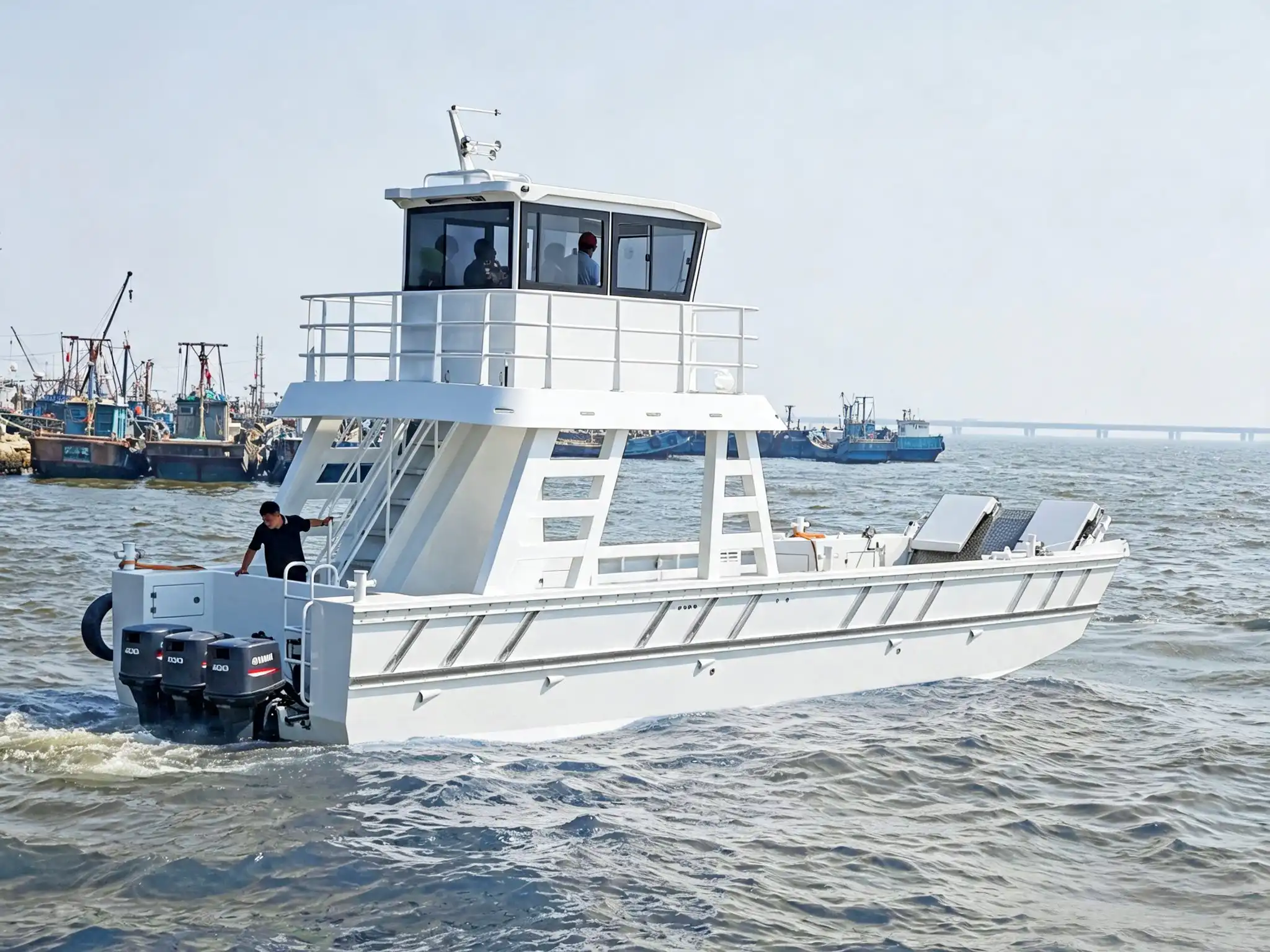
The most practical way to answer the question, “Do aluminum landing craft have strong wind and wave resistance?” is to consider your specific route. First, identify the typical significant wave height and wind force in the waters you frequently navigate. Second, select the corresponding CE design category based on this information: Class C is sufficient for inland waterways and sheltered coastal areas; for routes requiring passage through open bays or the open sea, prioritize Class B or models built to higher standards. Third, determine the hull size based on the route’s exposure level—the larger the exposed water area, the more advisable it is to choose a model over 11 meters in length. The corrosion resistance and structural toughness of marine-grade aluminum hulls provide a reliable physical foundation for these designs, but the ultimate safety margin is determined by how well your route requirements align with the craft’s design parameters. Share your route conditions with our engineers, and we can help you translate “seaworthiness” into a specific hull type and configuration plan.
Sea conditions are one step in choosing a landing craft; our landing craft buyer’s guide covers the others.